
When anxiety hits, focus on nutrient-dense foods that support your brain and mood. Eat fatty fish like salmon or mackerel for omega-3s, opt for eggs and turkey to boost serotonin, and include antioxidant-rich fruits like blueberries and citrus. Drink herbal teas like lemon balm or lavender, and incorporate turmeric for its anti-inflammatory benefits. Avoid sugary snacks, caffeine, and alcohol, which can worsen anxiety. To find out more tips, continue exploring how diet can help calm your mind.
Key Points
- Consume omega-3 fatty acids from fatty fish to support brain health and reduce anxiety symptoms.
- Eat tryptophan-rich foods like eggs and turkey to boost serotonin and mood regulation.
- Incorporate antioxidant-rich fruits such as blueberries and citrus to combat oxidative stress linked to anxiety.
- Drink calming herbal teas like lemon balm and lavender to promote relaxation.
- Limit intake of sugar, refined carbs, caffeine, and alcohol to prevent blood sugar spikes and nervous system overstimulation.
Nutrients That Support Brain Function and Mood
When anxiety strikes, what you eat can considerably influence your mood and brain function. Nutrients like omega-3 fatty acids, found in fatty fish such as salmon and mackerel, support brain health and help reduce anxiety symptoms. Foods high in tryptophan, like eggs and turkey, promote serotonin production, which plays a key role in mood regulation. Antioxidants present in blueberries and citrus fruits combat oxidative stress, a factor linked to anxiety disorders. Vitamin D, found in eggs and fatty fish, is essential for mood regulation and may lower anxiety levels. Additionally, probiotics in foods like yogurt strengthen the gut-brain connection, influencing neurotransmitter production and helping to reduce anxiety. Incorporating these nutrients into your diet supports overall brain health, balances mood, and provides a solid foundation for managing anxiety through proper nutrition.
Top Foods Rich in Omega-3 and Vitamin D
Focusing on specific foods that are high in omega-3 fatty acids and vitamin D can make a meaningful difference in managing anxiety. Fatty fish such as salmon, mackerel, sardines, herring, tuna, and lake trout are excellent sources of omega-3s, particularly EPA and DHA, which support brain health and help reduce inflammation linked to anxiety. Consuming at least two servings of these fish weekly has been associated with better mood regulation. Vitamin D, mainly obtained from fatty fish and fortified foods, plays an essential role in neurotransmitter function and emotional stability, with deficiency often correlating with heightened anxiety symptoms. Including these foods in your diet can help mitigate deficiency-related issues and promote overall mental well-being. For individuals unable to get enough from food, supplementation with omega-3 and vitamin D may be beneficial, especially in supporting mood regulation and reducing inflammation related to anxiety.
Herbs and Spices With Calming Properties
Herbs and spices with calming properties, such as chamomile and turmeric, have garnered attention for their potential to reduce anxiety through natural, plant-based compounds. Chamomile contains antioxidants and compounds that may help regulate mood-related neurotransmitters like serotonin and GABA, supporting anxiety relief and relaxation. Turmeric, especially its active component curcumin, offers anti-inflammatory and neuroprotective effects that could help lower anxiety levels. Studies with nano-curcumin supplementation have shown significant reductions in anxiety scores after eight weeks. While most research focuses on supplements, incorporating turmeric as a spice may also provide stress reduction benefits. These herbs and spices contribute to relaxation by combating oxidative stress and inflammation, which are linked to anxiety symptoms. Including chamomile and turmeric in your diet is a simple, nutrient-rich way to support mental well-being, leveraging their antioxidant and anti-inflammatory properties for a natural approach to stress management.
Antioxidant-Packed Foods for Stress Relief
Incorporating antioxidant-packed foods into your diet can considerably help reduce stress and support mental well-being. Foods rich in antioxidants, like blueberries and citrus fruits, provide vitamins such as vitamin C that combat inflammation linked to stress. Blueberries contain flavonoids proven to lower depression and anxiety symptoms, while citrus fruits offer high levels of vitamin C to decrease inflammation and cortisol levels. Dark chocolate, especially varieties containing flavonoids like epicatechin, improves brain blood flow and reduces stress-related inflammation, promoting brain health. These nutrients support neuroprotective pathways and enhance your resilience to stress. Consuming these foods regularly can help protect brain cells from oxidative damage, leading to a calmer mood and improved stress management. By adding berries, citrus, and dark chocolate to your diet, you’re actively supporting your brain’s ability to handle anxiety and fostering overall mental well-being through powerful antioxidants.
Gut-Healthy Foods and Probiotics
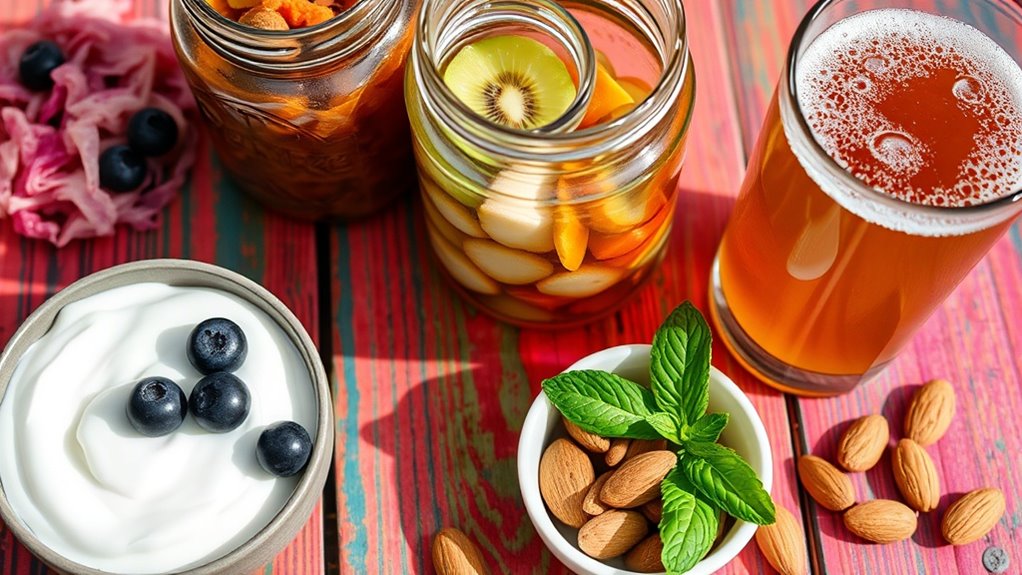
Including probiotic-rich foods like yogurt, kefir, and sauerkraut can help support a healthy gut microbiome, which is linked to lower anxiety levels. These foods promote the production of mood-regulating neurotransmitters like serotonin and can reduce cortisol, the stress hormone. Adding fiber-rich vegetables such as spinach, carrots, and broccoli also feeds beneficial gut bacteria, enhancing overall mental well-being.
Probiotics and Mood
Since your gut health is closely connected to your mood, consuming probiotic-rich foods like yogurt, kefir, and sauerkraut can play a significant role in reducing anxiety. These probiotics help balance your gut microbiome, which influences mood regulation through the gut-brain axis. A diverse and healthy gut microbiome supports the production of neurotransmitters like serotonin, essential for mental health. Fermented foods introduce beneficial microbes that can decrease inflammation and improve stress responses, directly impacting anxiety symptoms. Studies show that regular intake of probiotic-rich foods enhances gut microbiome function, leading to better mental well-being. By supporting your gut microbiome, you can help regulate mood and reduce anxiety, emphasizing the importance of gut-healthy foods in your overall mental health strategy.
Fermented Foods Benefits
Fermented foods such as yogurt, kefir, and sauerkraut are rich sources of probiotics that support gut health and may help reduce anxiety symptoms. These foods enhance the gut microbiome, fostering a balanced microbial environment that can influence the gut-brain axis. Probiotics from fermented foods help improve digestion and reduce inflammation, both of which are linked to better mental health. A healthy microbiome promotes the production of neurotransmitters like serotonin, directly affecting mood regulation. Regular consumption of fermented foods can lead to a more resilient gut, potentially lowering anxiety levels by supporting the connection between gut health and mental well-being. Incorporating these foods into your diet offers a natural, nutrient-focused approach to managing anxiety through improved gut-brain communication.
Dietary Patterns That Promote Calmness
Adopting a dietary pattern that promotes calmness involves choosing foods that support brain health and help regulate mood. Focus on incorporating omega-3 fatty acids from fatty fish, chia seeds, and walnuts to reduce inflammation and enhance a calming effect on the brain. Additionally, magnesium-rich foods like leafy greens and seeds can lower stress levels and improve mood. Including probiotic-rich options such as yogurt and fermented vegetables strengthens the gut-brain axis, which plays a key role in anxiety regulation. Emphasizing antioxidants from fruits, vegetables, and whole grains supports overall brain health and reduces oxidative stress. It’s also *essential* to limit processed foods, high sugar, and high-fat options to prevent blood sugar spikes and mood swings that exacerbate anxiety symptoms. By prioritizing these nutrient-dense foods, you create a dietary pattern that fosters mental calmness and resilience against anxiety.
Beverages That Help Reduce Anxiety

Choosing the right beverages can be a simple yet effective way to help reduce anxiety. Green tea is a great option because it contains the amino acid theanine, which promotes relaxation by increasing calming neurotransmitters like serotonin and dopamine. Chamomile tea offers flavonoids and antioxidants that may lower inflammation and support mood regulation, aiding in anxiety reduction. Herbal infusions such as lemon balm or lavender tea are known for their calming effects and can provide stress relief during anxious moments. Staying well-hydrated is also vital; drinking water supports neurotransmitter production and brain function, helping to alleviate anxiety. Additionally, 100% fruit juices like orange or berry juice are rich in vitamin C and antioxidants, which help combat stress and improve mood. Incorporating these beverages into your routine can promote relaxation, support mood regulation, and provide natural stress relief when anxiety hits.
Foods and Drinks to Limit or Avoid
Limiting foods high in sugar and refined carbs can help stabilize your blood sugar levels and reduce mood swings that worsen anxiety. Cutting back on caffeine and stimulants may prevent your nervous system from becoming overstimulated, decreasing feelings of jitteriness. Additionally, reducing alcohol and trans fats can lower inflammation and improve your overall mood and sleep quality.
Sugar and Refined Carbs
Consuming too many foods and drinks high in sugar and refined carbs can greatly impact your mental health by causing blood sugar spikes and crashes, leading to increased anxiety symptoms. These foods, like processed snacks, white bread, and white rice, can trigger inflammation and disrupt serotonin production, worsening mood swings. Excessive sugar intake also harms gut bacteria, linked to heightened anxiety. Limiting refined carbohydrates and added sugars helps stabilize blood sugar levels, reduce inflammation, and support better mental health.
- Sugary candies, pastries, and soda
- White bread and white rice
- Processed snacks with added sugars
- Diet sodas with artificial sweeteners
- Excessive baked goods and desserts
Caffeine and Stimulants
Foods and drinks containing caffeine and other stimulants can considerably influence your anxiety levels by affecting your nervous system and sleep patterns. Caffeine stimulates the nervous system, increasing heart rate and jitters, which can worsen anxiety symptoms. Consuming high amounts of coffee, energy drinks, or caffeinated sodas may lead to sleep interference, making anxiety worse. Studies show that even moderate caffeine intake can raise cortisol—the body’s stress hormone—contributing to heightened anxiety. Sensitive individuals may experience increased stress, panic attacks, or nervous system overload. To help manage anxiety, it’s best to limit or avoid stimulants. Here’s a quick guide:
| Caffeine Sources | Effects on Anxiety |
|---|---|
| Coffee, energy drinks | Jitters, sleep interference |
| Caffeinated sodas | Increased cortisol, panic |
| Tea (high caffeine) | Nervousness, stress spikes |
| Energy shots | Elevated heart rate |
| Chocolate (dark) | Mild stimulant effects |
Alcohol and Depressants
Alcohol and depressants may initially seem to relax you, but in reality, they can worsen anxiety symptoms over time. Drinking alcohol or using depressants can disrupt sleep, increase inflammation, and elevate stress levels, all of which contribute to heightened anxiety. Additionally, alcohol withdrawal can trigger panic attacks and mood swings, negatively impacting your mental health.
To protect your mental well-being, consider limiting or avoiding:
- Alcohol consumption, especially during stressful periods
- Depressants such as sedatives or tranquilizers
- Excessive use of alcohol that may lead to dependency
- Drinking alcohol close to bedtime, causing sleep disruption
- Combining alcohol with other depressants, which amplifies adverse effects
Reducing these substances helps stabilize mood, improve sleep quality, and support overall mental health.
Common Questions
What Foods Can Help Calm Anxiety?
To calm anxiety, you should try herbal teas like chamomile and green tea, which promote relaxation. Incorporate magnesium-rich foods such as leafy greens and nuts, and eat omega-3 fats found in fatty fish. Probiotic foods like yogurt support gut health, linked to mood. Include complex carbs, lean proteins, berries for antioxidants, vitamin B-rich foods, and warm milk to boost serotonin and reduce stress naturally.
What Is the 3-3-3 Anxiety Rule?
The 3-3-3 anxiety rule acts like a gentle lighthouse guiding you through stormy seas. It prompts you to observe your symptoms for three minutes, then walk for three, followed by reassessment. This grounding technique, combined with mindfulness meditation, deep breathing exercises, and aromatherapy oils, helps reduce cortisol and calms your nervous system. Incorporate magnesium-rich foods, omega-3s, and stay hydrated to reinforce your mental resilience during stressful moments.
How to Calm Down When Anxiety Hits?
When anxiety hits, try mindful breathing and visualization exercises to calm your mind. Sip herbal teas like chamomile or green tea for their relaxing effects, and incorporate magnesium-rich foods such as spinach or dark chocolate. Avoid caffeine and use grounding methods or calming music to reduce stress. Aromatherapy oils and deep relaxation techniques can also help, while maintaining good omega-3 intake supports mood stabilization over time.
Which Drink Calms Anxiety?
Herbal teas like chamomile infusion, lemon balm, and lavender water are great for calming anxiety, thanks to their soothing compounds. Warm milk, especially golden milk with turmeric, provides tryptophan to support serotonin. Honey tea and peppermint extract can also help reduce stress. Decaffeinated coffee and valerian root are options, but they may vary in effect. Staying hydrated with these calming drinks can promote relaxation and ease anxious feelings.