
Exposure to natural environments for just 20 to 30 minutes can markedly lower your cortisol levels, activating relaxation responses that reduce stress. Engaging in outdoor physical activity or mindfulness practices further amplifies these benefits by releasing endorphins and activating the parasympathetic nervous system. While longer durations provide diminishing returns, the consistent practice in green spaces has profound physiological and psychological effects. Explore further to understand how blending these strategies can optimize your stress relief and resilience.
Key Points
- Spending 20-30 minutes in natural environments significantly lowers cortisol levels and activates relaxation responses.
- Exposure to green spaces reduces sympathetic nervous activity, helping to diminish physiological stress.
- Physical activity in nature releases endorphins, boosting mood and reducing anxiety.
- Mindfulness practices in natural settings activate the parasympathetic nervous system, promoting relaxation.
- Brief outdoor interactions, even as short as 10 minutes, can effectively improve mental well-being and reduce stress.
How Nature Exposure Lowers Stress Hormones
Spending at least 20 to 30 minutes immersed in natural environments has been shown to markedly lower cortisol levels, the body’s primary stress hormone. This outdoor exposure influences physiological stress by engaging your senses in natural spaces, prompting relaxation responses. Research indicates that even brief interactions with natural environments can effectively reduce stress hormones, promoting a sense of calm. The mechanism involves the calming effect of nature exposure, which diminishes sympathetic nervous system activity responsible for stress responses. Especially, longer durations beyond 30 minutes tend to yield diminishing returns, emphasizing the importance of regular short sessions. Whether you’re walking through a park or sitting in a natural setting, these interactions help reset your stress levels, supporting overall stress reduction. Integrating routine exposure to natural environments can serve as a practical approach to managing physiological stress and maintaining mental well-being through consistent relaxation and natural space engagement.
The Role of Physical Activity and Mindfulness in Stress Relief
Physical activity and mindfulness practices are powerful tools for reducing stress by targeting both the body and mind. Engaging in physical activity releases endorphins, which naturally elevate mood and alleviate anxiety, supporting stress relief and emotional regulation. Mindfulness techniques, such as meditation and deep breathing, activate the parasympathetic nervous system, promoting relaxation and lowering cortisol levels, which are vital for natural stress reduction. Regular exercise enhances brain plasticity and resilience, improving mental well-being and stress management. Additionally, mindfulness meditation decreases activity in brain regions associated with stress and negative thoughts, fostering mental calmness. Combining these approaches addresses physiological stress pathways and psychological factors simultaneously, amplifying stress relief. This integrated approach provides a scientifically supported pathway to better emotional regulation and overall mental health. Incorporating both physical activity and mindfulness into your routine can markedly boost your resilience to everyday stressors.
Optimal Duration and Settings for Maximum Benefits
To maximize the stress-reducing benefits of natural environments, dedicating at least 20 to 30 minutes to outdoor exposure is recommended. Research indicates that this duration considerably lowers cortisol, the primary stress hormone, enhancing stress relief. Exposure to green spaces or areas rich in vegetation amplifies these benefits, as natural environments facilitate a more profound reduction in stress levels. While shorter sessions of 10-15 minutes can provide some benefits, ideal stress reduction occurs within the 20-30 minute window, beyond which diminishing returns are observed. The duration of exposure is more critical than the specific time of day or the exact type of natural setting, emphasizing that consistent, focused time in nature yields the best results. This empirical evidence suggests that sustained, moderate-length exposure to natural environments enhances the benefits of stress reduction, supporting a therapeutic approach to managing stress through intentional outdoor activity.
Additional Natural Strategies for Enhancing Well-Being
Building on the benefits of outdoor exposure, incorporating additional natural strategies can further enhance overall well-being. Spending time in nature has a proven effect on reducing stress and improving mental health. Engaging in physical activity outdoors not only boosts endorphin levels but also helps you unwind and elevate feelings of happiness. To optimize stress relief, consider these strategies:
- Practice mindfulness meditation to decrease cortisol levels and enhance emotional regulation.
- Incorporate deep breathing exercises to activate your parasympathetic nervous system, lowering heart rate and blood pressure swiftly.
- Use aromatherapy with essential oils like lavender to stimulate your olfactory senses, promoting relaxation and better sleep.
These techniques work synergistically to lower stress and improve mood, supporting your capacity to manage daily pressures. By integrating these natural methods into your routine, you can create a sustainable approach to maintaining mental health and fostering resilience.
Practical Tips for Incorporating Nature and Relaxation Techniques
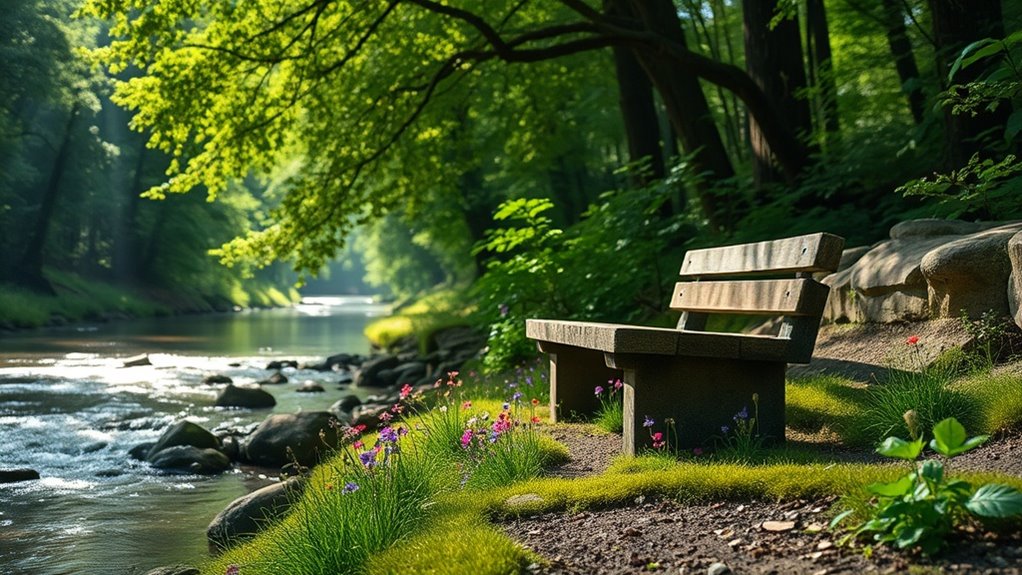
Integrating nature and relaxation techniques into your daily routine can be both practical and effective for managing stress. Spending at least 20-30 minutes immersed in green spaces, such as parks or gardens, has been shown to lower cortisol levels, supporting stress reduction and mental health. Even brief outdoor activities, like a 10-minute walk or sitting in a natural setting, can boost mood and provide anxiety relief. Incorporating accessible green elements—trees, flower planters, grassy areas—into urban environments enhances mental well-being without requiring extensive travel. These outdoor activities serve as valuable relaxation techniques that complement your stress management efforts. Regularly scheduling outdoor activity as part of your wellness routine can lead to sustained stress reduction and mood improvement. By consciously including nature in your daily life, you foster a holistic approach to mental health, making relaxation techniques more effective and fostering resilience against stress.
Common Questions
What Is Scientifically Proven to Lower Stress?
Oh, surely you’ve cracked the stress code—just a quick fix, right? Actually, scientifically proven methods include nature walks, deep breathing, yoga, and social support. Mindfulness meditation and progressive relaxation are backed by research, while herbal remedies and aromatherapy offer complementary benefits. Aerobic exercise boosts mood, and guided imagery can transport you away from stress. Embrace these evidence-based practices to lower stress and enhance your well-being effectively.
What Is the Nature Stress Reduction Theory?
The Nature Stress Reduction Theory suggests that exposure to natural environments activates your parasympathetic nervous system, promoting relaxation. Engaging in activities like nature exposure, mindfulness meditation, breathing techniques, or relaxation therapies enhances this effect. Incorporating social connection, gratitude exercises, herbal remedies, and aromatherapy practices can further boost stress relief. Time management helps prioritize these practices, making it easier to restore mental fatigue, reduce cortisol levels, and improve mood through the restorative power of nature.
How to Reduce Stress Naturally?
You can reduce stress naturally by spending at least 20-30 minutes in nature, which lowers cortisol levels. Incorporate mindfulness through breathing exercises, try forest bathing, or use aromatherapy and herbal remedies. Engaging in meditation, physical activity, or music therapy enhances relaxation. Social connection, journaling, and relaxation exercises also support mental health, activating your body’s calming responses efficiently and accessibly.
What Are the 5 R’s of Stress Management?
The 5 R’s of stress management are Recognize, Reframe, Relax, Replenish, and Reflect. You recognize stress through mindful breathing and physical activity, then reframe negative thoughts. Relaxation involves meditation techniques, aromatherapy benefits, and relaxation exercises like progressive muscle relaxation. Replenish with dietary adjustments, herbal remedies, and nature exposure, while social support and effective time management help you reflect and restore emotional balance naturally and empirically.