
The quiet art of evening mindfulness invites you to unwind from daily stresses and create a calming ritual that nurtures your well-being. By setting a cozy space with soft lights, gentle scents, and comfortable seating, you can cultivate presence through simple practices like mindful breathing, body scans, and journaling. Consistency, even in small moments, deepens your inner calm over time. If you explore these gentle techniques further, you’ll discover how to make mindfulness a soothing, lasting part of your evening.
Key Points
- Create a calming environment with soft lighting, cozy textiles, and gentle scents to enhance mindfulness practice.
- Incorporate gentle breathing exercises and body scans to settle the mind and promote relaxation.
- Use journaling to reflect on the day, process emotions, and cultivate gratitude for inner peace.
- Establish a simple, consistent evening routine with mindful activities like stretching or mindful eating.
- Remember that small, imperfect practices build resilience and deepen calm over time, dispelling myths of needing long or perfect sessions.
Understanding the Benefits of Evening Mindfulness
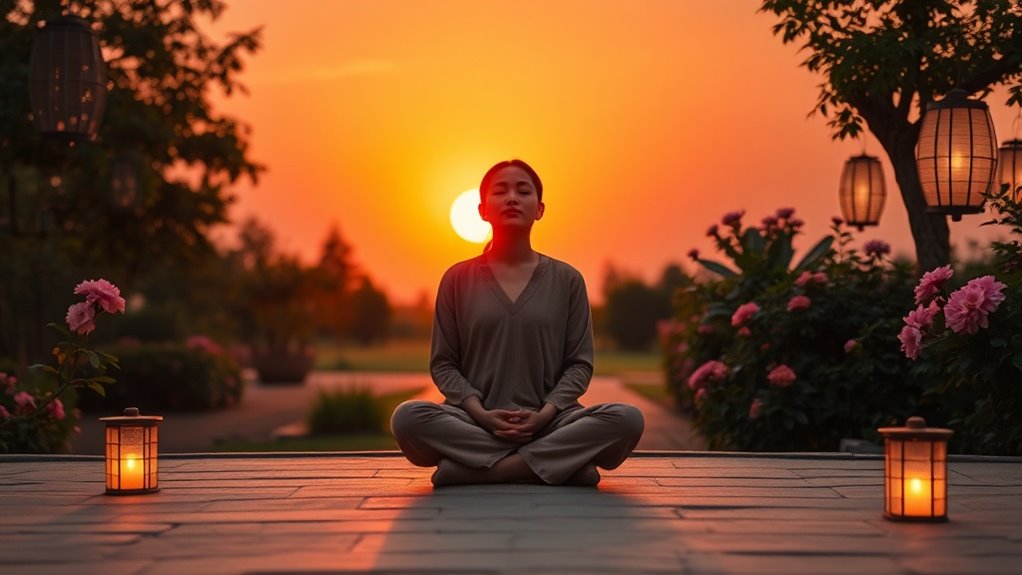
Evening mindfulness offers a gentle way to unwind from the day’s stresses and reconnect with yourself. By adopting a comfortable meditation posture, you create a stable foundation for relaxation and clarity. Sitting quietly with your back straight, shoulders relaxed, and hands resting gently can help quiet your mind and deepen your awareness. Incorporating evening journaling into your practice allows you to process emotions and reflect on your day with compassion. This act of writing helps release lingering worries and cultivates gratitude, making it easier to *shift* into restful sleep. Engaging in these mindful habits can reduce stress, improve sleep quality, and foster a sense of inner calm. Over time, you’ll notice increased resilience and emotional balance, as these practices help you stay present and centered amid life’s challenges. Embracing evening mindfulness isn’t just about relaxation—it’s a pathway to greater self-awareness and inner peace.
Creating a Calm and Cozy Environment for Practice
Creating a calm and cozy space sets the tone for your evening mindfulness practice. Soft lighting can gently ease your mind, while a comfortable setup invites you to settle in fully. When your environment feels nurturing, it becomes easier to let go of distractions and focus inward.
Soft Lighting Choices
Soft lighting can transform your space into a sanctuary of calm, gently guiding your mind into a peaceful state. To achieve this, consider the warmth of ambient hues—soft, muted tones that soothe your senses. Your candle choices matter: opt for gentle flickering flames that cast calming shadows and add a sense of intimacy. Imagine:
- A dimly lit room with walls bathed in warm amber or soft lavender.
- A single, unscented candle flickering quietly on a side table.
- Low-wattage lamps emitting a gentle, even glow.
- Ambient lighting that avoids harsh overheads, creating cozy pools of light.
These simple choices foster a tranquil environment, inviting you to settle in, breathe deeply, and embrace the present moment with gentle clarity.
Comfortable Space Setup
To establish a space where mindfulness can truly flourish, it’s essential to craft an environment that feels both calm and cozy. Thoughtful space organization helps create clarity, reducing distractions and inviting relaxation. Keep your area tidy, with minimal clutter, so your mind can settle more easily. Incorporate sensory elements like soft textiles, gentle scents, or calming sounds to deepen your experience. These touches help anchor you in the present moment, making your practice inviting and soothing. Choosing comfortable seating or cushions encourages you to settle in fully, fostering a sense of safety and ease. When your environment feels intentional and nurturing, it naturally supports your evening mindfulness journey, allowing you to unwind deeply and cultivate inner peace.
Simple Techniques to Cultivate Presence at Night

To nurture presence at night, simple practices like gentle breathing exercises can help you settle your mind. Reflecting mindfully on your day allows you to release tension and find gratitude, fostering peace. Additionally, unplugging from screens creates space for quiet awareness, making it easier to be truly present as you unwind.
Evening Breathing Exercises
As the day winds down, incorporating simple breathing exercises can help you shift into a peaceful evening state. Focus on your breath, allowing it to become slow and intentional. Imagine:
- Inhaling deeply through your nose, filling your lungs like a balloon expanding slowly.
- Holding that breath gently, feeling the stillness settle within.
- Exhaling softly through your mouth, releasing tension like a gentle wave washing away stress.
- Resting in this calm, noticing how each breath cultivates presence. These practices support stress reduction and promote sleep enhancement, helping your mind and body unwind naturally. With consistency, you’ll find yourself more centered and prepared for restful nights, embracing the quiet power of mindful breathing as a gentle *changeover* from day to night.
Mindful Reflection Practices
Evening is a natural moment to pause and reflect, allowing you to gently settle into the present before sleep. Mindful reflection practices, like mindful journaling, help you connect with your inner experience. Take a few quiet moments to write down your thoughts, feelings, or observations from the day. Focus on gratitude reflection, recalling specific moments or qualities you appreciated. This simple act nurtures a sense of appreciation and calm, helping you release lingering stress. As you write, avoid judgment—simply observe what arises. This gentle practice cultivates awareness and acceptance, making it easier to shift into rest. Over time, mindful journaling and gratitude reflection deepen your evening routine, fostering a peaceful, mindful closure to each day.
Digital Detox Strategies
After taking time to reflect mindfully on your day, you might notice how digital devices often pull you away from a sense of presence. Embracing digital minimalism and creating tech free zones can restore calm. Consider these strategies:
- Turn off notifications to avoid constant distractions.
- Designate your bedroom as a tech-free zone, fostering a peaceful environment.
- Set a specific hour each evening to disconnect completely.
- Replace screen time with calming activities like reading or gentle stretches.
Incorporating Mindful Breathing and Body Scans
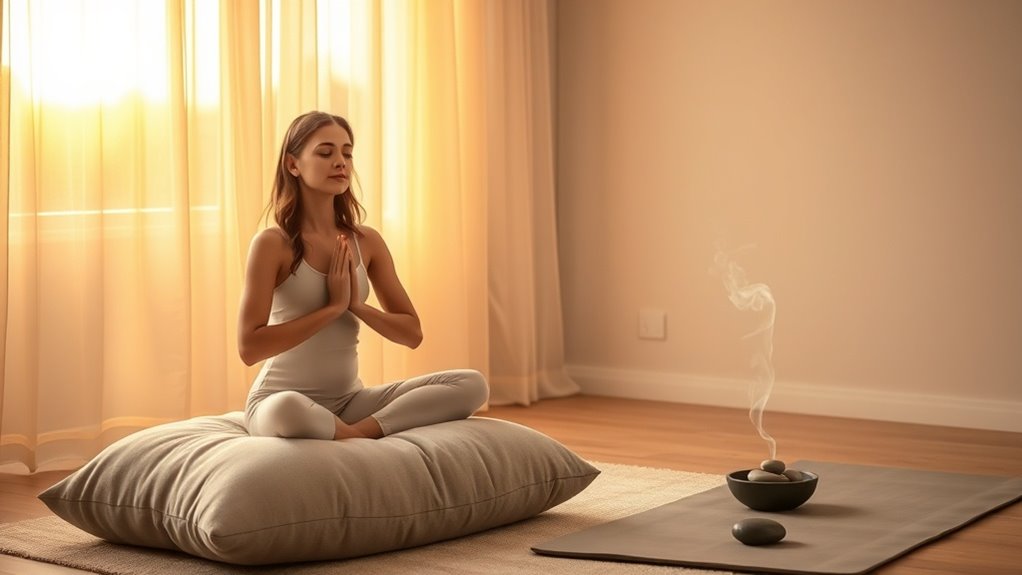
Incorporating mindful breathing and body scans into your evening routine creates a gentle space to unwind and reconnect with yourself. With mindful breathing, focus on each inhale and exhale, noticing the natural rhythm of your breath. This simple practice helps calm your nervous system and brings your attention to the present moment. Body scans deepen this awareness by guiding you through different parts of your body, from your toes to your head. As you observe sensations without judgment, you release tension and foster a sense of relaxation. These practices don’t require special equipment or extensive time; just a few quiet moments can make a difference. Regularly integrating mindful breathing and body scans helps you shift from the busyness of the day into a peaceful evening. Over time, they nurture a gentle, sustained sense of calm that prepares you for restful sleep and emotional balance.
Developing a Gentle Evening Routine for Lasting Calm
Creating a gentle evening routine can serve as a foundation for lasting calm and emotional well-being. Imagine winding down with a series of mindful choices that nurture your inner peace. First, you might prepare a nourishing meal, practicing mindful eating to savor each bite and connect with your senses. Second, set aside time for a brief meditation, perhaps inspired by practices from meditation retreats, to settle your mind. Third, incorporate gentle stretches or a calming bath to relax your body. Fourth, reflect on your day with gratitude, letting go of lingering tension. This routine creates a soothing rhythm, encouraging you to detach from screens and distractions. By cultivating these simple, mindful habits each evening, you lay the groundwork for tranquility that carries into the next day. Over time, your routine becomes a gentle sanctuary, guiding you toward lasting calm and emotional balance.
Tips for Maintaining Consistency and Deepening Your Practice
Maintaining consistency in your evening mindfulness practice can be challenging, but gentle adjustments and compassionate patience are key to deepening your experience. Remember, many meditation myths suggest you need perfect focus or long sessions to see benefits, but mindfulness myths often promote unrealistic expectations. It’s okay to start small—just a few minutes each night can build a sustainable habit. Consistency isn’t about perfection; it’s about gently returning your attention whenever it wanders. To deepen your practice, explore different techniques, like body scans or loving-kindness, to find what resonates. Be kind to yourself if motivation wanes; progress is gradual. Over time, these small, consistent moments can cultivate a profound sense of calm and clarity. Trust in your process, dispel meditation myths, and know that even imperfect practice enriches your life in meaningful ways.
Common Questions
How Long Should I Practice Evening Mindfulness Each Night?
You should aim for a mindfulness duration of about 10 to 20 minutes each evening. This gentle practice allows you to unwind, reflect, and find calm without feeling overwhelmed. Follow your intuition—some nights you might need just a few minutes, while others might benefit from a longer session. Consistency matters more than duration, so create a calming routine that feels sustainable, helping you cultivate peace and presence before sleep.
Can Evening Mindfulness Help Improve Sleep Quality?
Absolutely, evening mindfulness can be your secret weapon for better sleep. Think of it as bedtime relaxation with a side of stress reduction—no more tossing and turning, just calmness washing over you. By practicing mindfulness, you create a peaceful mental space, helping you unwind from the day’s chaos. It’s a gentle, insightful way to improve sleep quality, making your nights more restful and your mornings brighter.
Is It Normal to Feel Restless During Evening Mindfulness?
Feeling restless during evening mindfulness is completely normal, especially as emotional fluctuations often surface in the evening. Restlessness during practice can be part of the process as your mind begins to settle. Instead of fighting it, gently acknowledge these feelings with compassion. Over time, with patience, you’ll find it easier to observe these sensations and cultivate a sense of calm, allowing your practice to deepen naturally.
What if I Struggle to Stay Present at Night?
If you struggle to stay present at night, don’t fret—your mind’s just practicing its own version of a comedy show. Try gentle breathing techniques and body scanning; they’re like lullabies for the restless mind. Be patient, compassionate, and remember, even the most seasoned meditators have nights when focus slips away. Embrace the journey, and soon, staying present will feel less like a chore and more like a peaceful habit.
Are There Any Common Mistakes to Avoid in Evening Mindfulness?
To avoid mindfulness pitfalls, stay gentle with yourself and recognize evening distractions without judgment. Don’t force yourself to be perfectly present; instead, accept wandering thoughts as natural. Maintain a calm routine and create a peaceful space, which helps prevent common mistakes like rushing or becoming frustrated. Remember, evening mindfulness is about cultivating compassion and patience, allowing yourself to gradually deepen your awareness without pressure or self-criticism.