
High performers prioritize consistent sleep rituals, such as winding down with calm activities like reading or gentle stretching, to signal your brain it’s time to sleep. They enhance their environment by maintaining a cool, dark, and quiet space, and turn off electronic devices 30-60 minutes beforehand to prevent blue light suppression of melatonin. Incorporating relaxation techniques like deep breathing or aromatherapy further enhances sleep quality. Continue exploring these evidence-based strategies to refine your bedtime routine for ideal recovery.
Key Points
- High performers establish consistent bedtime routines that include calming activities like reading, meditation, or gentle stretching to signal winding down.
- They optimize sleep environments by maintaining cool, dark, and quiet bedrooms, often using blackout curtains and white noise to promote deep sleep.
- Many incorporate relaxation techniques such as deep breathing or aromatherapy (e.g., lavender) to enhance relaxation before sleep.
- They turn off electronic devices 30-60 minutes prior to bed to reduce blue light exposure and prevent melatonin suppression.
- Routine and punctual sleep schedules reinforce circadian rhythms, ensuring restorative sleep and better daily performance.
Optimizing Sleep Through Rituals and Environment
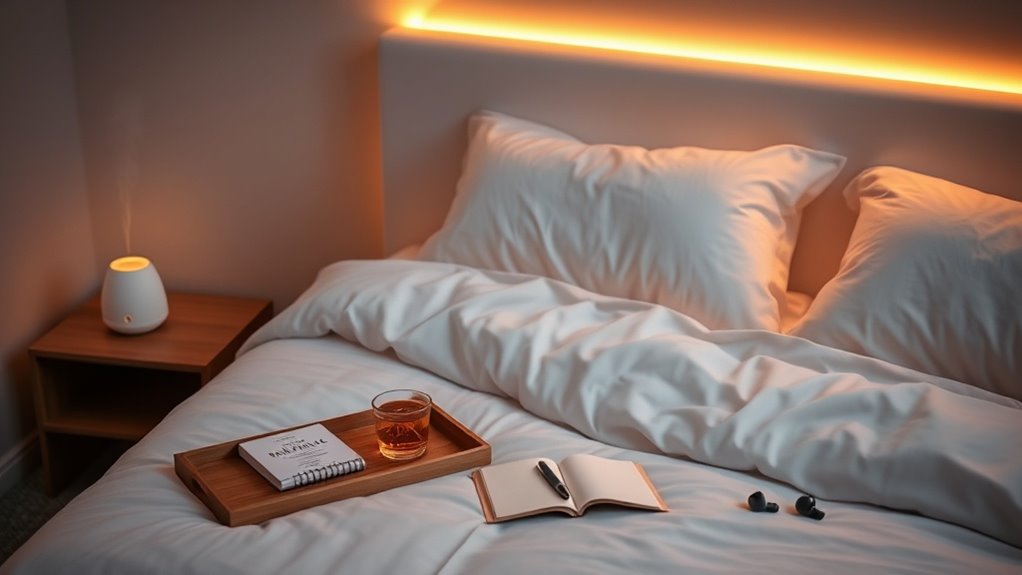
High performers often leverage specific sleep rituals to optimize sleep quality and enhance overall performance. Among these rituals, establishing consistent bedtime routines and optimizing the sleep environment are fundamental strategies supported by empirical research. These practices are designed to synchronize circadian rhythms, reduce physiological arousal, and promote rapid sleep onset, thereby maximizing restorative sleep stages essential for cognitive and physical functioning.
High performers optimize sleep through routines and environment to enhance performance and recovery.
A well-structured bedtime routine involves a series of deliberate activities that signal to your brain that it’s time to wind down. Evidence indicates that engaging in calming behaviors—such as reading, gentle stretching, or practicing mindfulness—can reduce sympathetic nervous system activity and lower cortisol levels, thereby facilitating sleep initiation. Consistency in performing these activities at the same time each night reinforces circadian entrainment, which is critical for maintaining a stable sleep-wake cycle. For example, high performers often turn off electronic devices at least 30 to 60 minutes before bed, since exposure to blue light suppresses melatonin secretion, delaying sleep onset. Incorporating relaxation techniques like deep breathing or progressive muscle relaxation into your bedtime routine further diminishes physiological arousal, creating an ideal transition from wakefulness to sleep.
Equally important is the enhancement of the sleep environment, which greatly influences sleep quality. A sleep environment that is cool, dark, and quiet supports sleep continuity and reduces disruptions. Empirical data suggest that maintaining a bedroom temperature around 18-20°C (64-68°F) aligns with the thermoregulatory processes conducive to sleep. Darkness is vital because even minimal light exposure can inhibit melatonin production, so using blackout curtains or eye masks is recommended. Noise levels should be minimized; if necessary, white noise machines or earplugs can be used to mask disruptive sounds. Additionally, limiting the presence of electronic devices in the bedroom prevents electromagnetic interference and reduces temptation to engage with stimulating content, both of which can delay sleep onset and fragment sleep architecture.
High performers also recognize that their sleep environment extends beyond physical conditions to include psychological comfort. Creating a space that feels safe and free of stressors promotes relaxation. Some individuals incorporate ambient sounds or aromatherapy—such as lavender—to enhance relaxation, supported by studies showing these interventions can improve perceived sleep quality. Moreover, maintaining a consistent sleep schedule aligns your internal clock with external cues, reinforcing the efficacy of your bedtime routines and sleep environment. This regularity ensures that your body anticipates sleep at consistent times, leading to more efficient sleep cycles and heightened alertness during wakefulness.
Common Questions
How Do Sleep Rituals Vary Across Different High-Performance Industries?
Sleep rituals vary across industries due to industry-specific routines and cultural sleep practices. For instance, athletes often prioritize wind-down routines involving meditation and hydration, while entrepreneurs may adopt flexible sleep schedules aligned with global time zones. Cultural practices, like siestas in Mediterranean regions, influence sleep patterns. Evidence suggests tailored rituals enhance sleep quality and performance, emphasizing the importance of customizing routines to industry demands and cultural norms for ideal rest.
Can Sleep Rituals Be Tailored for Shift Workers or Irregular Schedules?
Sure, adapting sleep rituals for shift workers isn’t a myth—it’s called flexible scheduling and personalized routines. Ironically, irregular hours demand even more precise sleep strategies, like blackout curtains or timed naps, backed by research on circadian rhythm management. Personalized routines help mitigate sleep deprivation effects, improving alertness and performance. Evidence suggests that tailoring sleep habits to individual schedules, despite unpredictability, is essential for maintaining health and productivity in shift work.
Are There Specific Foods or Drinks That Enhance Sleep Rituals?
Certain foods and drinks can enhance your sleep rituals. Nutritional supplements like magnesium or melatonin may support sleep onset, while herbal infusions such as chamomile or valerian root have calming effects backed by evidence. Consuming these about 30-60 minutes before bed can improve sleep quality. However, individual responses vary, so it’s best to consult with a healthcare professional before incorporating supplements or herbal infusions into your routine.
How Long Does It Typically Take to See Benefits From New Sleep Rituals?
Typically, you’ll notice sleep improvement within one to two weeks of maintaining ritual consistency. Consistent adherence to your new sleep routine helps regulate your circadian rhythm, leading to better sleep quality over time. Evidence suggests that behavioral changes take at least this period to produce measurable benefits. For ideal results, track your progress and remain committed, as sustained ritual consistency is key to experiencing the full benefits of your new sleep practices.
What Role Does Technology Play in Modern Sleep Rituals?
Technology acts as your nocturnal compass, guiding better sleep through tools like sleep tracking devices and meditation apps. These innovations provide real-time data, helping you identify patterns and optimize routines. Evidence shows they enhance sleep quality by promoting mindfulness and detecting disruptions. By integrating these technologies into your sleep rituals, you harness data-driven insights to improve rest, ultimately boosting your overall performance and well-being.