
If you need instant peace, try starting your day with a few minutes of mindful silence, focusing on your breath and body. Follow that with deep breathing or gentle stretches to relax your mind and body. Take time to write in a gratitude journal or practice positive affirmations. Minimizing noise and setting boundaries helps preserve your calm. Keep exploring ways to nurture your inner peace—more simple rituals await to support your well-being.
Key Points
- Start your day with five minutes of mindful silence to center yourself and promote calm throughout the day.
- Practice deep breathing techniques like 4-7-8 or box breathing to quickly activate relaxation responses.
- Engage in gentle stretching or movement combined with breath to release tension and foster instant tranquility.
- Use a quick physical reset, such as palm pressing or posture adjustments, to ground and calm your nervous system.
- Spend a few minutes visualizing positive memories or expressing gratitude to shift focus and cultivate inner peace.
Start Your Day With Mindful Silence
Starting your day with a few moments of mindful silence can set a gentle, calming tone that stays with you throughout the day. Engaging in simple mindfulness practices first thing in the morning helps you connect with your breath and body, fostering a sense of presence and emotional stability. These quiet moments can reduce cortisol levels and promote lasting peace, easing anxiety before your busy day begins. By dedicating just five minutes to silent reflection—perhaps sitting quietly with eyes closed or listening to natural sounds—you create a steady foundation of inner calm. Research shows that even brief periods of morning mindfulness can boost mood and resilience to stress. Incorporating this peaceful ritual into your routine helps you start centered, clear-minded, and ready to face daily challenges with greater ease. It’s a gentle, effective way to nurture your mental well-being from the moment you wake.
Practice Deep Breathing for Instant Calm
After taking a moment of mindful silence to center yourself, you can amplify that sense of calm through deep breathing. When you focus on your breath, you activate your parasympathetic nervous system, which quickly signals your body to relax. Techniques like 4-7-8 or box breathing influence your vagus nerve, helping you shift from stress to calm in just minutes. Even a few deep breaths can lower your cortisol levels, slow your heart rate, and ease anxiety, providing immediate relief. Practicing deep breathing for just 60 seconds can sharpen your focus, reduce feelings of overwhelm, and boost your emotional resilience. Over time, regular deep breathing exercises strengthen your body’s ability to manage stress, making relaxation a natural response. Whenever you need instant peace, simply pause, breathe deeply, and let your body reconnect with its innate calm. This simple practice can transform moments of tension into a sense of serenity.
Engage in Gentle Movement or Stretching
Taking a moment to gently stretch or move can quickly ease tension and calm your mind. Simple routines like neck rolls or spinal twists activate your relaxation response, helping you feel more centered. Even a minute of mindful movement can make a meaningful difference in your sense of peace.
Simple Stretching Routines
Gentle stretching routines can be a simple yet powerful way to quickly soothe your mind and body. As you start, take a few deep breaths to center yourself, then move into gentle stretches like neck rolls or shoulder shrugs. These stretching routines activate your parasympathetic nervous system, helping you feel calmer almost instantly. Focus on slow, deliberate movements from your toes to your head, releasing tension stored in your muscles and easing mental stress. Incorporate deep, diaphragmatic breathing during each stretch to enhance oxygen flow and lower cortisol levels, fostering a sense of peace. Even just a minute of mindful stretching can create a quick physical reset, making it easier to face challenges with clarity and calmness.
Mindful Breathing Integration
Incorporating gentle movement into your mindful breathing practice can deepen your sense of calm and help your body relax more fully. As you breathe deeply and intentionally, add simple movements like arm lifts or spinal twists to enhance your awareness and emotional steadiness. Synchronizing your movement with your breath—raising your arms on inhale and lowering on exhale—anchors your attention and fosters a profound sense of relaxation. This gentle integration stimulates the parasympathetic nervous system, reducing stress and lowering cortisol levels within minutes. Regularly practicing mindful breathing combined with movement not only eases muscle tension but also cultivates a feeling of groundedness, making even brief moments of stress melt away. It’s a simple, accessible way to invite instant peace into your day.
Movement for Calm
When you slow down and move mindfully, even simple stretches or gentle movements can create a profound sense of calm. Moving with awareness activates your parasympathetic nervous system, helping you relax and feel safer. Try shoulder rolls or spinal twists, paying close attention to how your body feels. A quick walk in nature or around your home for five minutes can lower cortisol and lift your mood. Incorporating deep, diaphragmatic breathing during movement amplifies these calming effects, resetting your stress response. Gentle yoga poses like Child’s Pose or Legs-Up-The-Wall stimulate your vagus nerve, fostering feelings of peace. Moving slowly with mindful attention shifts your focus away from stress and cultivates a present-moment calm that’s accessible anytime.
Savor a Slow, Mindful Meal
Taking a moment to eat slowly and truly notice your food can bring a deep sense of calm. When you pay attention to its colors, textures, and smells, you create a peaceful ritual that centers you in the present. This simple practice not only relaxes your mind but also nurtures your body and emotional well-being.
Mindful Eating Practices
Because your body deserves attention and care, slowing down to truly savor your meal can create a peaceful moment amid a busy day. Mindful eating encourages you to focus fully on each bite, engaging your senses with taste, aroma, and texture. This practice not only enhances your enjoyment but also promotes relaxation by calming your mind and reducing stress. Take small bites, chew thoroughly, and pause between bites to fully experience the flavors and sensations. Setting an intention to savor your meal transforms eating into a calming ritual, helping you recognize hunger and fullness cues. Regularly practicing mindful eating can improve digestion, increase satisfaction, and deepen your connection with your body’s needs—all while fostering a sense of peace in the midst of daily life.
Sensory Food Awareness
Engaging fully with your food through sensory awareness can transform a simple meal into a calming, grounding experience. When you practice mindful eating, slow down and truly notice the flavors, textures, and aromas around you. Pay attention to the vibrant colors on your plate, the scent of herbs or spices, and the way each bite feels in your mouth. This sensory awareness helps activate your parasympathetic nervous system, encouraging relaxation and reducing stress hormones like cortisol. Creating a distraction-free space for eating deepens your presence, allowing you to savor each moment. As you develop this mindful eating habit, you’ll find a greater appreciation for nourishing your body, turning mealtime into a sacred ritual that fosters peace and calmness.
Creating Ritualistic Calm
Creating a ritual around your mealtime can transform eating from a hurried task into a calming, mindful experience. When you turn off distractions and truly focus on each bite, it becomes a form of meditation that cultivates peace within you. Notice the colors, textures, and aromas of your food, allowing yourself to be fully present. Chewing slowly and thoroughly signals your body to release calming hormones, promoting instant peace. Establishing simple rituals like lighting a candle or expressing gratitude helps create a mental cue for calm throughout your day. This intentional approach to eating reduces stress and nurtures your emotional well-being, turning mealtime into a sacred moment of self-care and tranquility.
Write in a Gratitude Journal
Taking just 10 minutes to write in a gratitude journal can be a powerful way to find calm amidst life’s chaos. When you focus on what you’re thankful for, it shifts your attention from worries to positive experiences, fostering a sense of peace. This simple practice can boost your overall happiness and help reduce stress, making challenges feel more manageable. Research shows that expressing gratitude through journaling not only improves mental health by lowering symptoms of depression and anxiety but also enhances resilience. Spending these few moments reflecting on the good in your life rewires your brain to notice more positives, encouraging a more optimistic outlook. Regularly keeping a gratitude journal can even improve your sleep, strengthen your immune system, and increase your overall well-being. So, take this small step—you might be surprised at how quickly it brings a sense of peace and clarity to your day.
Create a Physical Reset With Palm Press or Posture
When stress starts to build, taking a moment to press your palms together for 15 seconds can gently activate your relaxation response. Sitting up straight and pulling your shoulders back helps boost confidence and ease tension, while tensing and relaxing your muscles from head to toes can break the cycle of stress. These simple gestures reconnect your mind and body, offering instant calm and clarity.
Palm Press Grounding Technique
If you’re feeling overwhelmed or disconnected, the Palm Press grounding technique offers a simple way to center yourself in moments of stress. By pressing your palms together for about 15 seconds, you focus on the physical sensation, grounding your mind in the present. This tactile action activates your parasympathetic nervous system, helping to lower stress hormones like cortisol and promote relaxation. You can do this discreetly anywhere—at work, in line, or during a break. To deepen its calming effect, combine palm pressing with slow, deep breaths. This quick, effective grounding technique restores mental clarity and emotional calm, giving you a moment of peace whenever you need it most.
- Activates relaxation response in seconds
- Easily done anywhere, anytime
- Enhances mindfulness through tactile focus
Posture for Calmness
Adjusting your posture can be a simple yet powerful way to reset your mind and body during stressful moments. When you straighten your spine and pull your shoulders back, you activate confidence hormones that help reduce stress. Lifting your chin slightly can boost alertness and foster a calm, assertive presence. Small posture adjustments, like sitting up straight or gently pressing your palms together, stimulate your vagus nerve, calming your nervous system. Good posture increases blood flow and oxygen to your brain, sharpening mental clarity when you need it most. These quick, easy changes can be performed anywhere—on a crowded train, at your desk, or before a meeting—to interrupt stress responses and cultivate instant calmness. Your posture truly holds the power to ground you.
Physical Tension Release
Creating a quick physical reset can help you release built-up tension and regain a sense of calm. Simple actions like palm pressing or adjusting your posture activate your body’s relaxation response, supporting your physical health and mental clarity.
Try these techniques:
- Press your palms together for 15 seconds to stimulate your parasympathetic nervous system, encouraging calm.
- Straighten your posture by lifting your chin and pulling your shoulders back to boost confidence hormones and reduce tension.
- Tense and relax muscles from your toes to your forehead in a progressive release, interrupting stress symptoms.
These quick, equipment-free actions leverage the mind-body connection, making it easy to incorporate breathing techniques and tension relief anytime, anywhere—bringing instant peace when you need it most.
Embrace Stillness by Minimizing Noise
Reducing noise in your environment can be a powerful way to find instant calm. When you create a quiet environment, you invite stillness into your mind and body. Even five minutes of silence allows your nervous system to reset, easing feelings of overwhelm. Turning off notifications, closing windows, or finding a peaceful corner minimizes external distractions and nurtures your sense of peace. Studies show that quiet environments boost creativity and mental clarity, especially during stressful moments. Incorporate these simple actions for immediate serenity:
| Action | Effect | Tips |
|---|---|---|
| Turn off notifications | Reduces auditory chaos | Do this before meditation |
| Close windows | Blocks outside noise | Use earplugs if needed |
| Find a quiet space | Creates space for stillness | Keep it clutter-free |
| Practice silence | Enhances mindfulness | Focus on your breath |
| Reduce electronic sounds | Promotes calm and clarity | Limit screen time |
Embrace stillness by minimizing noise, and feel the peace settle within.
Set Boundaries and Say No to Overcommitments
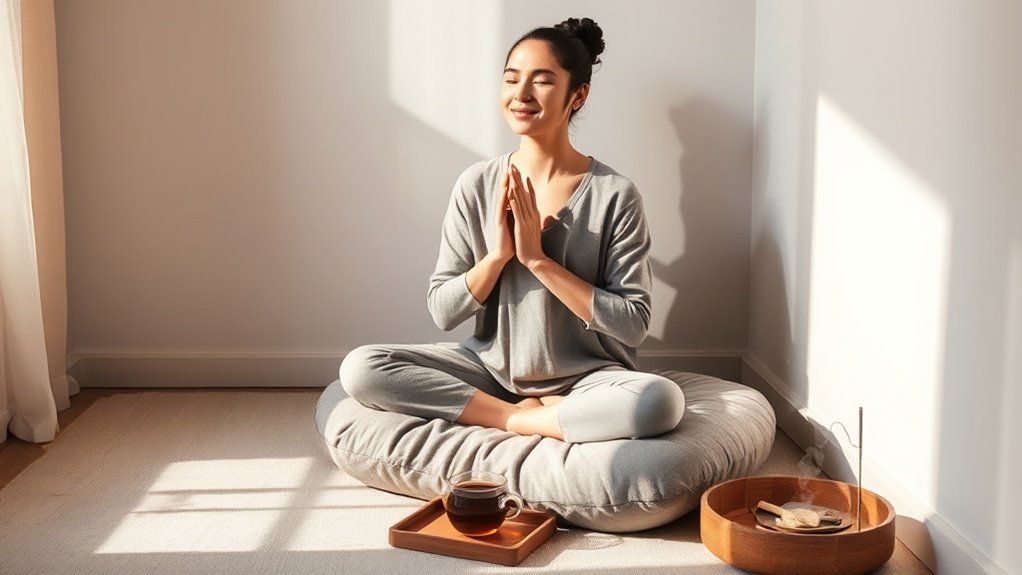
When you set clear boundaries and learn to say no, you give yourself permission to prioritize your well-being and avoid unnecessary stress. Boundaries help prevent overwhelm and preserve your mental energy for what truly matters. By confidently communicating your limits, you foster healthier relationships and reduce resentment. Remember, saying no isn’t selfish; it’s an act of self-care that creates peace within. To support this, consider:
- Defining your work and personal time to create routine and control
- Recognizing your limits and honoring them without guilt
- Practicing assertive, kind communication when declining requests
These small acts cultivate a sense of peace and empower you to manage your commitments wisely. Overcommitting drains your energy and clouds your peace—setting boundaries restores balance. With each intentional no, you protect your mental space and nurture your well-being. Remember, peace begins with honoring your own needs.
Reflect on Your Day With Positive Affirmations
After setting boundaries and saying no to overcommitments, taking a moment to reflect on your day can deepen your sense of peace. Positive affirmations are a simple yet powerful way to shift your mindset. Spend just a couple of minutes silently repeating phrases like “I am calm,” “I am enough,” or “Today I handled challenges with grace.” This reflection helps rewire your brain to focus on gratitude and your strengths, reducing negative thoughts and stress. Research shows that daily affirmation practices activate neural pathways linked to positive emotion, fostering resilience and emotional stability. Writing or silently reciting affirmations at night also consolidates feelings of achievement and peace, setting the stage for restful sleep. Incorporating this brief reflection on positive moments or lessons learned cultivates a sense of closure and inner calm, even after a hectic day. It’s a gentle reminder of your resilience and capacity to find peace amidst life’s chaos.
End With a Moment of Gratitude and Relaxation
Ending your day with a moment of gratitude and relaxation can help you gently shift from the busyness of life into a state of peace. Taking a minute to reflect on what you’re grateful for activates your brain’s positivity circuits, reducing stress and boosting emotional resilience. When you acknowledge three things you appreciate, you shift your focus from worries to gratitude, lowering cortisol levels. Incorporating a simple relaxation technique, like deep breathing or progressive muscle release, enhances this calming effect by activating your parasympathetic nervous system.
To deepen this peaceful shift, consider:
- Focusing on your breath during relaxation
- Visualizing positive thoughts or memories
- Taking a few slow, deliberate breaths to settle your mind
Practicing gratitude and relaxation together not only improves your sleep quality but also nurtures your mental well-being over time. This small ritual creates a gentle, supportive way to end your day.
Common Questions
How to Calm Your Mind Instantly?
To calm your mind instantly, try deep breathing exercises like 4-7-8 or box breathing to activate your relaxation response. Pair this with visualization techniques, such as imagining a peaceful place or gentle waves, to quickly soothe your nervous system. Focus on these simple steps, and you’ll feel more centered and at peace, even in stressful moments. Remember, a little breath and visualization can make a big difference.
What Is a Calming Ritual?
A calming ritual is a simple, intentional activity you do to soothe your mind and body when stress hits. You might practice mindful breathing to center yourself or take a quick nature walk to reconnect with calmness. These rituals are brief but powerful, helping you break free from tension and find peace. They’re easy to incorporate anytime, offering reassurance and a gentle reset whenever you need it most.
What Are the 4 Types of Rituals?
You might find that the four types of rituals—physical, mental, emotional, and environmental—offer different ways to bring peace. Physical rituals involve movement or grounding, like stretching. Mental rituals include mindfulness practices or affirmations to calm your mind. Emotional rituals focus on gratitude and reflection, fostering inner harmony. Environmental rituals, such as lighting candles or decluttering, create a peaceful space. These rituals, often part of spiritual ceremonies, can help you feel centered and reassured.
What Blocks the Path to Inner Peace?
You might find your path to inner peace blocked by emotional barriers like unresolved trauma or negative thought patterns that keep you stuck. Overstimulation from constant notifications and poor boundaries can also make calming difficult. Incorporating mindfulness practices helps you gently acknowledge these barriers, allowing you to release tension and foster emotional clarity. Remember, it’s okay to take small steps; peace is a journey, not a race.