
To create a calming bedtime ritual in just five minutes, try deep breathing exercises to soothe your mind and relax your muscles, or do gentle stretches like Child’s Pose to release tension. Practicing mindfulness or body scans can help settle racing thoughts, while diffusing calming scents like lavender can create a peaceful atmosphere. Journaling briefly to process emotions also clears your mind. Keep exploring these simple techniques, and you’ll discover more ways to unwind before sleep.
Key Points
- Practice deep breathing exercises to promote relaxation and reduce racing thoughts before sleep.
- Incorporate gentle stretching or yoga poses to release physical tension and calm the mind.
- Engage in mindful meditation or a body scan to anchor awareness and ease into restful sleep.
- Use aromatherapy with calming scents like lavender to create a soothing bedroom environment.
- Write briefly in a journal to process emotions, clear your mind, and establish a peaceful bedtime routine.
Deep Breathing Exercises
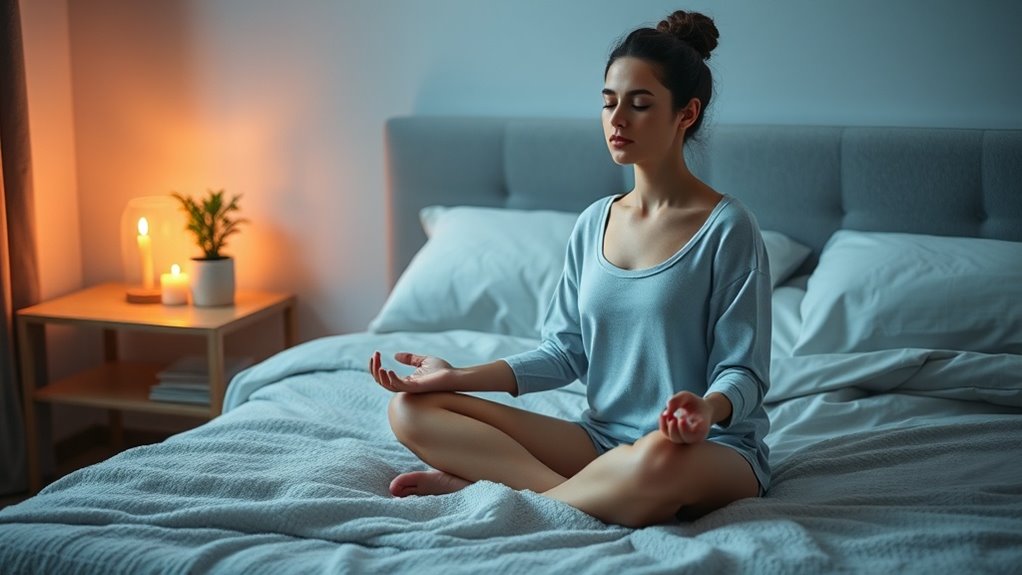
Deep breathing exercises can be a simple yet powerful way to relax your mind and body before bed. When practiced regularly, they promote stress reduction, helping to calm racing thoughts and ease muscle tension. This tranquility is essential for sleep enhancement, making it easier to drift off and stay asleep. To begin, find a comfortable seated or lying position and close your eyes if you like. Inhale slowly through your nose, filling your lungs completely, then exhale gently through your mouth or nose, releasing tension with each breath. Focus on the rhythm of your breath, letting distractions fade away. Repeat this process for a few minutes, maintaining a steady, relaxed pace. Over time, deep breathing can become a foundational part of your bedtime routine, helping you shift from the busyness of the day into a peaceful state conducive to restful sleep.
Gentle Stretching or Yoga Poses
Since your body needs to unwind after a busy day, gentle stretching or yoga poses can be an effective way to release tension and prepare for restful sleep. These poses promote stress relief and help improve flexibility, making it easier to relax fully. Focus on slow, deliberate movements, holding each pose for a few breaths. For example, try a seated forward bend, gentle spinal twist, or child’s pose to release tight muscles and calm your mind. Incorporating these simple poses into your nightly routine can ease physical discomfort and reduce anxiety, creating a peaceful progression to sleep. Here’s a quick guide:
| Pose | Benefits | Tips |
|---|---|---|
| Child’s Pose | Relieves tension in back | Breathe deeply and relax |
| Seated Forward Bend | Stretches hamstrings | Keep knees slightly bent |
| Gentle Spinal Twist | Improves flexibility | Move slowly and breathe |
| Cat-Cow Pose | Eases back stiffness | Synchronize breath with movement |
Mindful Meditation or Body Scan
After gently stretching your body, taking a moment to focus your mind can deepen your sense of calm. Mindful meditation or a body scan helps you connect with your body and quiet your thoughts. To practice a body scan, start at your toes, noticing any sensations without judgment. Slowly move your attention upward, observing your feet, legs, abdomen, chest, arms, neck, and face. Breathe deeply as you acknowledge tension or discomfort, then release it. Alternatively, with mindful meditation, focus on your breath—feeling each inhale and exhale. When your mind wanders, gently bring it back to your breath or body sensations. This practice helps anchor you in the present moment, easing racing thoughts and promoting relaxation. Just a few minutes of body scan or mindful meditation can create a peaceful passage into sleep, fostering a restful, untroubled night.
Aromatherapy With Relaxing Scents
Aromatherapy with relaxing scents can be a gentle yet powerful way to signal to your body that it’s time to unwind. When you breathe in lavender essential oil or the soft chamomile aroma, you activate calming pathways that ease tension and promote sleep. To enhance your bedtime ritual, consider these simple methods:
- Diffuse lavender essential oil in your room for a soothing atmosphere.
- Add a few drops of chamomile aroma to a tissue or pillowcase.
- Inhale deeply during your winding-down routine, focusing on the scent to clear your mind.
These aromas help create a peaceful environment, encouraging relaxation and reducing anxiety. Using natural scents is a gentle reminder for your body to shift into rest mode. Incorporate these calming aromas into your nightly routine to foster a sense of tranquility and prepare your mind and body for restful sleep.
Journaling or Reflective Writing

If you’re looking for a calming way to shift into sleep, journaling or reflective writing can be incredibly effective. By putting your thoughts on paper, you create a safe space for stress relief and emotional processing. This simple ritual helps clear your mind of racing thoughts, reducing anxiety that might interfere with sleep. Focus on jotting down what happened during your day, how you felt, or what you’re grateful for. Keep it brief—just a few minutes—to avoid overstimulation. As you write, breathe deeply and let go of lingering worries. This mindful practice not only calms your nervous system but also enhances self-awareness, making it easier to move smoothly into restful sleep. Over time, journaling can become a trusted part of your bedtime routine, providing emotional clarity and peace that carry you into a more restorative night’s sleep.
Common Questions
Can These Rituals Be Adapted for Children or Seniors?
Yes, these rituals can be adapted for children and seniors. For child-friendly adaptations, keep activities simple, like gentle breathing or storytelling. For seniors, focus on senior-specific practices such as relaxation exercises or calming music. You can tailor the duration and complexity to suit their needs, making sure the routines feel comforting and achievable. These gentle, personalized rituals help promote peaceful sleep and emotional well-being for both age groups.
How Long Should Each Ritual Session Typically Last?
Each calming ritual should typically last about 1 to 5 minutes, depending on your needs. Duration planning helps guarantee consistency, making the ritual more effective over time. Keep it simple and steady, so it becomes a familiar part of your nightly routine. By maintaining ritual consistency, you create a soothing shift to sleep, helping you unwind and relax without feeling rushed.
Are There Any Rituals Suitable for Extremely Anxious Individuals?
For extremely anxious individuals, gentle relaxation techniques like deep breathing or progressive muscle relaxation can be very effective. Incorporate calming scents such as lavender or chamomile to enhance relaxation. Keep the rituals simple and comforting, focusing on creating a sense of safety and calmness. These practices can help soothe your mind and body, making it easier to unwind and prepare for restful sleep.
Can These Rituals Replace Professional Sleep Therapy?
These rituals can’t replace professional sleep therapy, but they can complement your sleep hygiene and relaxation techniques. If you’re extremely anxious, it’s important to seek guidance from a healthcare professional who can tailor strategies to your needs. While calming rituals promote relaxation and improve sleep routines, professional therapy addresses underlying issues. Combining both can help you build healthier sleep habits and manage anxiety more effectively.
How Do I Create a Consistent Bedtime Ritual Routine?
To create a consistent bedtime ritual routine, start by setting a regular sleep schedule and calming your sleep environment. Use relaxing scents like lavender to signal your body it’s time to wind down, and keep your room cool and dark. Incorporate calming activities such as reading or gentle stretches. Over time, these consistent practices will help your mind associate your routine with sleep, making it easier to relax and fall asleep.