
To stay balanced while traveling, pack nutritious snacks and drink plenty of water to keep your energy up. Move regularly by stretching, walking during layovers, or using hotel gyms, and choose healthy meals when possible. Establish simple routines for sleep and self-care, like mindfulness or gentle exercises. Prioritize rest and hydration to feel your best. If you want practical tips to stay energized and centered, there’s more to explore below.
Key Points
- Incorporate regular movement, stretching, and outdoor activities to support flexibility, circulation, and energy levels.
- Prioritize balanced meals, nutritious snacks, and proper hydration to sustain energy and prevent fatigue.
- Maintain consistent routines, including sleep schedules and grounding rituals, to reduce travel stress and support well-being.
- Use natural light exposure and gradual sleep adjustments to ease time zone changes and improve sleep quality.
- Practice mindfulness, self-care, and stress management techniques to enhance emotional resilience and overall balance.
Pack Nutritious Snacks and Stay Hydrated
Traveling can be exhausting, but staying energized is easier when you pack nutritious snacks and stay hydrated. Carrying snacks like protein bars, nuts, and dried fruit helps maintain your energy levels and prevents hunger from distracting you during your trip. These healthy options offer a good balance of macronutrients—protein, fiber, and healthy fats—so you stay full longer and avoid impulsive, less nutritious choices. Using insulated water bottles encourages regular hydration, which is essential, especially in dry or air-conditioned environments. Staying hydrated not only boosts your energy but also helps you feel alert and comfortable throughout your journey. Planning ahead ensures you have easy access to nourishing snacks and water, reducing stops at convenience stores or airports where unhealthy options might tempt you. With these simple steps, you can keep your energy up, stay healthy, and travel more comfortably, making your trip more enjoyable and less stressful.
Incorporate Regular Movement and Stretching
Have you ever noticed how stiff and uncomfortable you feel after sitting in the same position for too long? During travel, it’s crucial to incorporate regular movement and stretching to maintain comfort and prevent stiffness. Set reminders to stretch your neck, back, legs, and arms every hour—simple moves like shoulder rolls, calf raises, or spinal twists can make a big difference. Use airport layovers or long flights as opportunities to walk around or do light exercises. Mobility drills such as hip circles help keep your joints healthy and reduce tension. Consider adding walking tours or outdoor hikes to combine exploration with movement, promoting overall travel balance. Incorporating these small, consistent actions supports circulation, maintains flexibility, and keeps you energized. Remember, maintaining your body’s comfort during travel isn’t just about stretching; it’s about actively engaging in movement to stay balanced and pain-free on your journey.
| Movement Tip | Example Exercise |
|---|---|
| Stretching | Neck, back, and arm stretches |
| Light Exercise | Calf raises, shoulder rolls |
| Mobility | Hip circles, spinal twists |
| Active Travel | Walking tours, outdoor hikes |
Select Healthy Eating Options During Your Meals
Choosing healthy eating options during your meals can substantially boost your energy and overall well-being while traveling. When selecting your food choices, focus on meals rich in vegetables, lean proteins, and whole grains to support a balanced diet. Opt for grilled, baked, or steamed dishes instead of fried or heavily sauced options to cut back on unnecessary calories and fats. Planning ahead by researching local restaurants that offer healthy menu choices or customizable options can help you stay aligned with your dietary goals. Incorporate nutritious snacks like nuts, fruit, or yogurt to keep your energy stable and avoid cravings for less healthy options. Also, be mindful of portion sizes, as restaurant servings tend to be larger than usual. Making conscious food choices while traveling not only maintains your balance but also ensures you enjoy your trip without sacrificing your health.
Establish a Consistent Daily Routine
Establishing a consistent daily routine can help you stay grounded and reduce travel stress. By setting a morning ritual, planning your priorities, and sticking to a regular sleep schedule, you create stability in your day. This simple structure supports your well-being and makes balancing travel and everyday life easier.
Set a Morning Ritual
Creating a morning routine that works for you can set a positive tone for your entire day of travel. A consistent morning routine helps reduce travel-related stress by providing a sense of stability. Whether it’s journaling, stretching, or simply drinking a glass of water, keep it simple and manageable. Waking up at the same time each day supports your internal clock, improving sleep quality and energy levels. Incorporating small activities like meditation or deep breathing can boost mental clarity and focus, preparing you for the day ahead. Remember, the key is consistency, even when schedules are unpredictable. A predictable morning ritual offers a sense of control and balance, helping you start each day with intention and calm, no matter where travel takes you.
Plan Daily Priorities
Building on your morning routine, setting clear daily priorities helps anchor your day and maintain a sense of normalcy despite the unfamiliar environment. When you define your priorities early, you create a roadmap that guides your actions and reduces decision fatigue. Focus on important tasks or self-care activities when your energy is highest, often in the morning. Incorporate grounding rituals like journaling or meditation to reinforce a sense of stability. Using a fixed schedule for wake-up times, meals, and sleep helps keep your body aligned with your routine, fostering overall well-being. Clear priorities keep you centered, balancing productivity with relaxation, and help you adapt smoothly to new surroundings while maintaining your mental and physical health.
Maintain Consistent Sleep Schedule
Maintaining a consistent sleep schedule while traveling can considerably improve your overall well-being and help you feel more grounded despite changing time zones. To stay on track, consider these tips:
- Always pack a sleep kit with items like a eye mask, earplugs, and a travel pillow to create a quiet time environment, no matter where you are.
- Stick to your usual sleep and wake times as much as possible, even if it means taking a break from social media or taking time to relax before bed.
- Get natural light during the day to reset your internal clock, and avoid caffeine and screens at least an hour before bedtime. This way, your travel routine stays on track, reducing jet lag and improving sleep quality.
Use Hotel Facilities and Local Resources for Exercise
Taking advantage of hotel facilities and local resources can make it easier to stay active while traveling, even on busy schedules. Allocating a bit of your time to these options guarantees you don’t miss out on exercise and helps maintain your balance. Many hotels have fitness centers equipped with treadmills, ellipticals, and free weights, so you can squeeze in a quick workout without leaving your accommodation. Nearby parks, trails, and outdoor spaces are perfect for a brisk walk, run, or outdoor yoga session, often just a short stroll away. Some hotels also partner with local gyms or wellness studios, offering day passes or classes that add variety to your routine. Community centers and sports clubs frequently open their pools, tennis courts, and fitness classes to visitors. Using local resources like bike rentals or walking tours integrates activity into your travel schedule, making it easier to stay energized and balanced, no matter how tight your time.
Manage Your Screen Time and Work Commitments
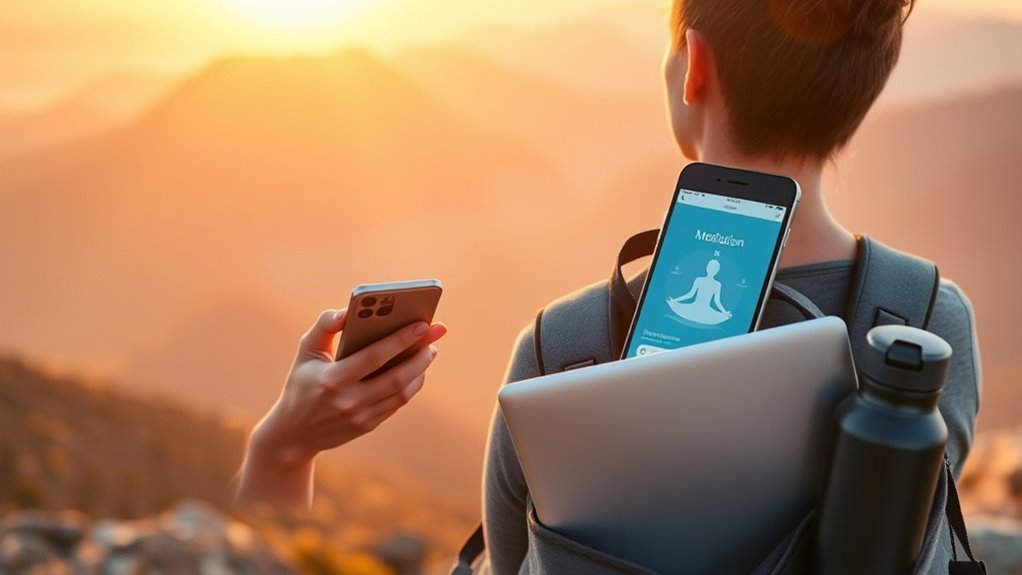
Since travel often blurs the lines between work and leisure, setting clear boundaries can help you stay balanced. Establishing digital boundaries is key to preventing work from overtaking your trip. Here are three practical tips:
- Set designated work hours: Decide specific times for checking emails and completing tasks, and stick to them. This helps create separation between work and relaxation.
- Turn off non-essential notifications: Outside your work window, silence emails and app alerts to minimize distractions and mental clutter.
- Limit screen time with offline activities: Incorporate reading, journaling, or walks into your routine to give your eyes and mind a break from screens.
Prioritize Rest and Quality Sleep
Creating a restful sleep environment is key to feeling your best while traveling. Try using sleep masks, earplugs, or white noise to block out unfamiliar sounds and light. Additionally, adjusting quickly to local time zones by exposing yourself to natural light can help maintain your sleep rhythm.
Sleep Environment Optimization
Achieving restful sleep while traveling can be challenging, but optimizing your sleep environment makes a significant difference. Good lighting control is key—use a sleep mask to block out light and create a dark, soothing atmosphere. Here are three practical tips:
- Limit screen time at least 30 minutes before bed to reduce blue light, which can interfere with melatonin production.
- Set a consistent sleep schedule by going to bed and waking up at the same times, even across time zones.
- Adjust the room temperature to a cool, comfortable level (around 65-68°F or 18-20°C) to promote better sleep quality.
Focusing on these aspects helps you rest deeper, no matter where you are.
Adjust to Local Time Zones
Adjusting to a new time zone can be tough, but prioritizing your sleep and rest during the process makes a big difference. Focus on a proper time adjustment by exposing yourself to natural light during the day to reset your internal clock. Gradually shift your sleep schedule by 15-30 minutes daily before departure to ease the transition. Once you arrive, aim for 7-9 hours of sleep to support recovery and alertness. Avoid caffeine and alcohol close to bedtime, as they disrupt sleep quality. If needed, take short naps (20-30 minutes), but avoid long daytime sleep that can interfere with your night’s rest. Here’s a quick guide:
| Strategy | Tips | Benefits |
|---|---|---|
| Light Exposure | Natural light during day | Reset internal clock |
| Sleep Shift | Adjust sleep gradually | Ease Time Adjustment |
| Sleep Duration | Prioritize 7-9 hours | Improve recovery |
| Napping | Short naps only | Maintain nighttime rest |
| Avoid Stimulants | Skip caffeine/alcohol at night | Better sleep quality |
Practice Mindfulness and Self-Care Strategies

Travel can be stressful, but practicing mindfulness and self-care strategies can help you stay grounded and centered. Incorporate daily practices like mindfulness meditation or deep breathing exercises for 5-10 minutes to reduce travel-related tension. These quick routines can clear your mind and foster calmness amid chaos. Additionally, use self-care routines such as stretching, journaling, or listening to calming music to nurture your mental and emotional well-being during trips. Make it a point to schedule regular breaks to pause, reflect, and check in with how you’re feeling physically and emotionally—this keeps you centered. To boost your resilience, practice gratitude by noting three positive experiences each day, shifting focus from stressors to appreciation. Finally, prioritize adequate sleep and hydration, as both are essential for maintaining emotional balance and resilience, helping you enjoy your journey while staying balanced.
Common Questions
What Is the 5 4 3 2 1 Travel Wardrobe?
The 5 4 3 2 1 travel wardrobe is a smart packing system that helps you focus on packing packing essentials. You bring five tops, four bottoms, three pairs of shoes, two accessories, and one jacket or coat. This approach keeps things simple, versatile, and easy to mix and match, so you’re prepared for any occasion without overpacking. It’s a practical way to stay organized and stress-free during your trip.
How to Keep Bowel Movements Regular When Traveling?
Ever wondered how to keep your digestive health on track while traveling? To stay regular, drink plenty of water, eat high-fiber foods like fruits and whole grains, and stick to a consistent eating schedule. Light activity, like walking after meals, helps stimulate digestion. If needed, natural remedies like prune juice or probiotics can support your bowel health, making travel more comfortable and stress-free.
Is $5000 Enough for a Vacation?
Yes, $5,000 can be enough for a vacation if you plan your travel budgeting carefully. It covers flights, accommodation, food, and activities, especially if you’re flexible with destinations or travel during the off-season. To make the most of your budget, prioritize experiences, look for deals, and consider less expensive options. With smart planning, you can enjoy a memorable trip without overspending, even on a moderate budget.
How to Keep Energy up While Traveling?
To keep your energy up while traveling, make sure to stay hydrated by drinking plenty of water and eat regular, balanced meals with complex carbs and protein. Pack travel snacks like nuts, fruit, or granola bars to keep your blood sugar steady. Remember to take short breaks to stretch or walk every couple of hours, and limit caffeine after mid-afternoon to avoid disrupting your sleep. Prioritize rest for sustained energy throughout your trip.