
To calm your mind through gentle movement, focus on mindful walking, slow stretching, or simple yoga poses like Child’s Pose. Breathe deeply and gently as you move, tuning into how your body feels and your surroundings. Incorporate calming aromas or gentle routines into your daily life, and practice regularly. By tending to your body with kindness and awareness, peace can blossom naturally—discover more ways to nurture your inner calm as you continue on this gentle journey.
Key Points
- Incorporate mindful walking and gentle stretches to focus attention on bodily sensations and the present moment.
- Use slow, deliberate movements like yoga poses or light dancing to promote relaxation and emotional balance.
- Create a calming environment with aromatherapy and soft lighting to enhance the soothing effects of gentle movements.
- Combine breathing exercises with gentle motion to activate the nervous system’s relaxation response.
- Establish a consistent routine with small, intentional movements to build lasting inner calm and mindfulness.
The Power of Mindful Walking
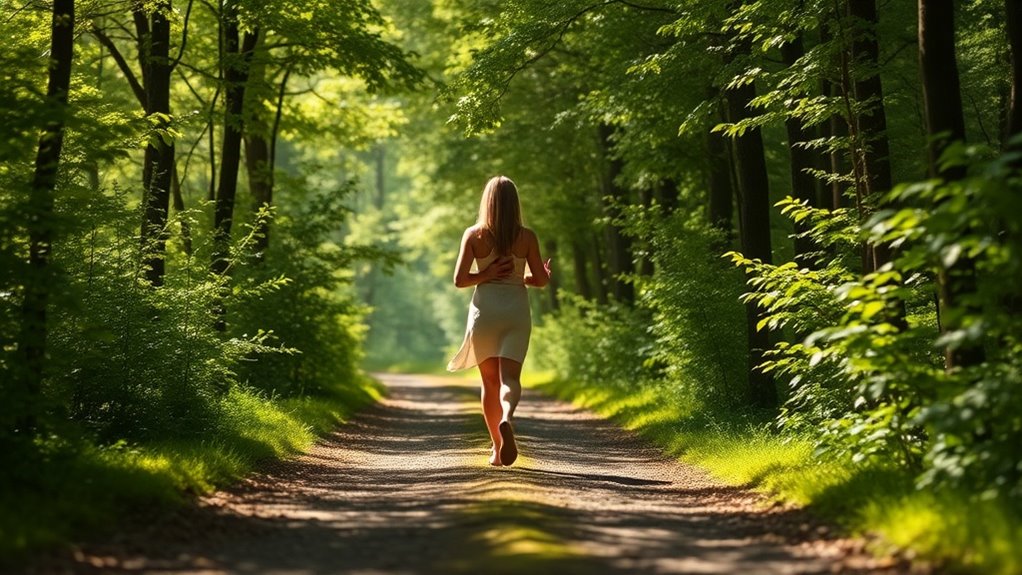
While it may seem simple, mindful walking is a powerful practice that gently anchors you in the present moment. When you engage in walking meditation, you focus fully on each step, noticing how your feet lift, move, and connect with the ground. This simple act becomes a calming ritual, drawing your attention away from worries and into the here and now. As you walk slowly and deliberately, breathe naturally, feeling the rhythm of your movement and the sensation of your surroundings. Mindful walking encourages a gentle awareness of your body and environment, helping to quiet a busy mind. It’s not about speed or perfection, but about cultivating a sense of calm through attentive presence. Over time, this practice can become a soothing anchor, allowing you to find peace amid daily chaos. With each step, you step closer to inner tranquility and clarity.
Gentle Stretching for Stress Relief
Gentle stretching can be a calming practice you incorporate into your day, helping you become more mindful of your body and breath. As you move slowly, focus on each stretch and the sensation it brings, allowing your mind to settle. The benefits of this simple act can promote deep relaxation and ease your stress.
Mindful Stretching Practices
In times of stress, mindful stretching offers a simple yet powerful way to soothe your mind and body. By focusing your attention on gentle movement, you create a calming rhythm that helps release tension. As you slow down and breathe deeply, each stretch becomes an act of awareness, grounding you in the present moment. You might start with gentle neck rolls or shoulder stretches, paying close attention to how your muscles feel. With mindful stretching, it’s about more than just the physical; it’s an invitation to cultivate a sense of calm and clarity. This practice encourages you to listen inward, noticing sensations without judgment. Over time, these gentle movements can become a comforting ritual for easing stress and restoring inner peace.
Benefits for Relaxation
Practicing gentle stretching can markedly enhance your sense of relaxation, especially during stressful moments. When combined with calming techniques like mindful journaling and relaxing music, it creates a soothing environment for your mind and body. Gentle movements release tension, slow your breathing, and quiet your thoughts. To deepen this calming effect, consider pairing your stretches with soft melodies or reflecting in your journal afterward. Here’s how these practices work together:
| Technique | Benefit | How to Incorporate |
|---|---|---|
| Gentle Stretching | Eases muscle tension | Move slowly, breathe deeply |
| Mindful Journaling | Clears mental clutter | Write thoughts after stretching |
| Relaxing Music | Enhances tranquility | Play softly during practice |
| Combined Effect | Deepens overall relaxation | Use all for peace of mind |
This gentle approach nurtures your inner calm, fostering lasting relaxation.
Breathing Exercises to Soothe the Nervous System
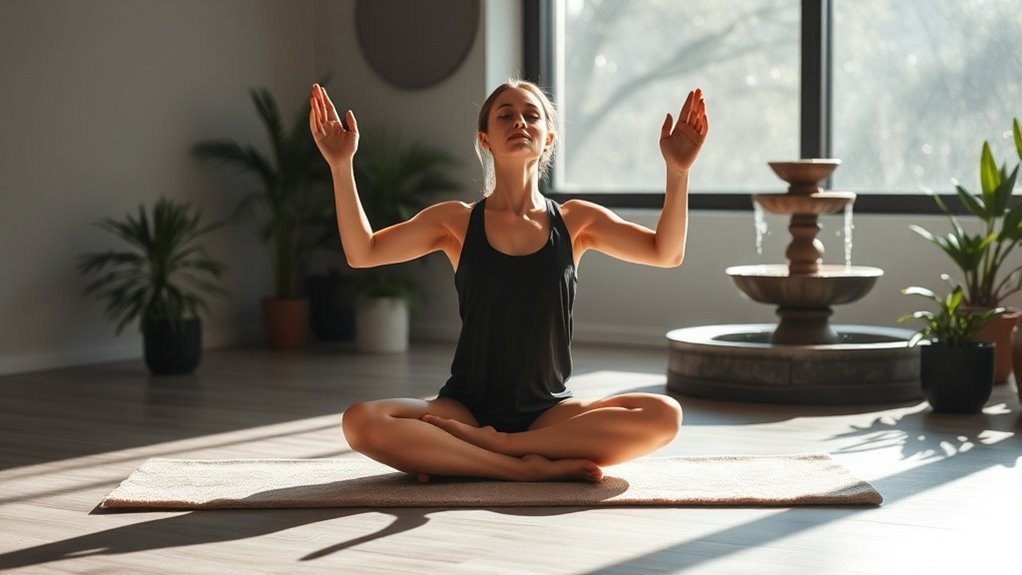
When your nervous system feels overwhelmed, taking a few deep, intentional breaths can create an immediate sense of calm. Focus on slow, steady inhales and exhales, allowing your body to settle. Visualization techniques can enhance this process—picture a peaceful place or imagine your breath soothing tension away. Combining your breathing with the aromatherapy benefits of calming essential oils, like lavender or chamomile, deepens relaxation. As you inhale, imagine the scent enveloping you in safety and serenity. With each exhale, release stress and tightness. This mindful breathing not only quiets a racing mind but also restores balance to your nervous system. Consistent practice can make this a powerful tool to manage daily stress. Keep your attention gentle and present, trusting that these simple acts of breath and visualization nurture your overall well-being and inner calm.
Incorporating Movement Into Daily Routines
Adding gentle movement to your daily routine can subtly shift your energy and promote a sense of well-being. You might find joy in simple activities like mindful gardening, where tending to plants encourages presence and calm. Incorporate playful movement—stretching, walking, or light dance—into everyday tasks to awaken your body gently. These small shifts can help you stay grounded and centered throughout the day.
Consider this approach:
| Activity | Time for Practice | Benefits |
|---|---|---|
| Watering plants | Morning or evening | Connects you with nature |
| Short walks | During breaks | Refreshes your mind |
| Stretching | After sitting for long | Eases tension |
| Dancing lightly | While cooking or chores | Boosts mood and energy |
| Mindful gardening | Weekends or free moments | Cultivates patience and calm |
Yoga Poses for Inner Calm
Incorporating yoga poses into your daily routine can create a gentle pathway to inner calm, helping you release tension and find balance amidst life’s stresses. Gentle stretches like Child’s Pose and Legs-Up-The-Wall encourage deep breathing and stillness, fostering a sense of peace. As you settle into these poses, consider mindful journaling afterward to reflect on your feelings, anchoring your calmness. Aromatherapy relaxation can enhance this experience—lavender or chamomile essential oils in your space help soothe your mind further. Focus on slow, deliberate movements, paying close attention to your breath and body sensations. These mindful practices support a tranquil mind and deepen your sense of inner harmony. Regularly integrating these poses with calming rituals like journaling and aromatherapy creates a sanctuary within, making serenity accessible even during busy days. This gentle approach nurtures your well-being, guiding you toward lasting inner calm.
The Benefits of Slow, Conscious Movements
Slow, conscious movements have a calming effect on your mind and body, inviting you to be fully present in each moment. When you move slowly and intentionally, you create space for mindfulness, helping to quiet the racing thoughts that often overwhelm you. Practicing mindful eating becomes more meaningful when done with slow, deliberate movements—savoring each bite, noticing textures and flavors, and appreciating the experience. Similarly, slow dancing allows you to connect with your body and partner, fostering a sense of serenity and groundedness. These gentle movements encourage you to listen inward, promoting relaxation and reducing stress. By focusing on the sensation of each step or gesture, you cultivate a calm awareness that extends beyond movement, grounding you in the present. Embracing slow, conscious movement is a simple yet powerful way to nurture inner peace and foster a deeper sense of mindfulness throughout your day.
Creating a Peaceful Movement Space
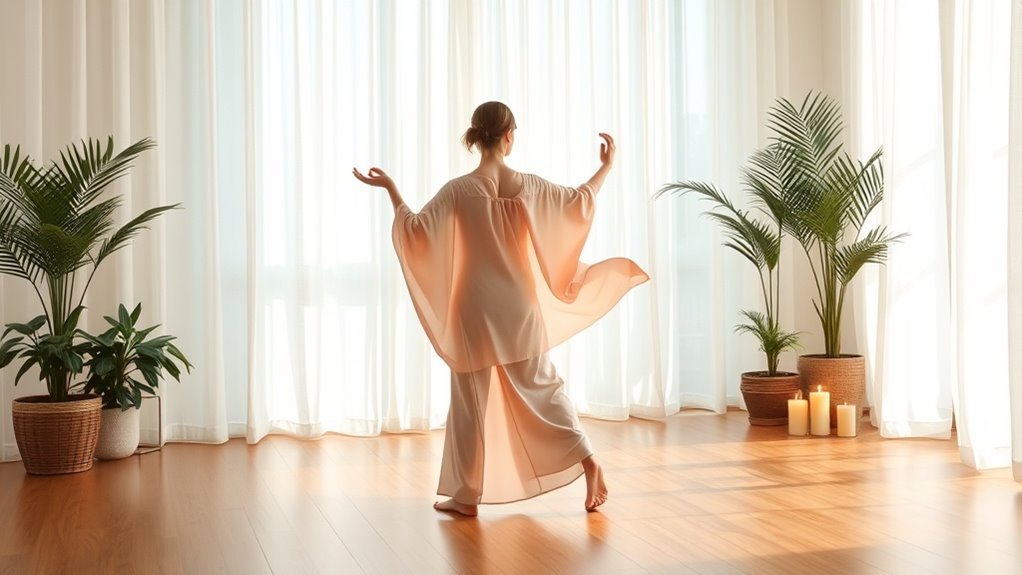
Creating a peaceful movement space begins with setting an environment that invites calm and focus. Choose a quiet, clutter-free area where you can move without distractions. Soft lighting or natural sunlight can enhance the sense of tranquility. Incorporate calming aromatherapy, like lavender or chamomile, to gently soothe your senses and deepen your relaxation. As you settle into your space, focus on mindful breathing—inhale slowly through your nose, feeling the air fill your lungs, then exhale with intention. This practice helps anchor your attention and cultivates a serene atmosphere. Keep your movements gentle and deliberate, allowing your body to respond naturally. Avoid hurried or tense motions; instead, prioritize ease and awareness. By creating an inviting environment that blends mindful breathing and calming aromas, you set the foundation for gentle movement that calms the mind and nurtures inner peace.
Combining Movement With Meditation
When you combine movement with meditation, you deepen your sense of presence and cultivate a gentle awareness that flows seamlessly through each moment. This integration encourages you to be fully present, whether you’re practicing mindful eating or simply moving mindfully through your day. As you focus on your breath and body, you become more attuned to your emotional awareness, noticing feelings without judgment. Gentle movements, like slow stretches or walking, help anchor your mind, making it easier to stay grounded in the present. By harmonizing movement with meditation, you create a calming rhythm that quiets mental chatter and promotes inner peace. This practice nurtures a compassionate relationship with yourself, allowing emotions to surface and pass with ease. With consistent effort, you’ll find that this mindful approach transforms everyday actions into opportunities for calm and clarity, fostering a deeper connection to your inner experience.
Tips for Staying Consistent With Gentle Movement Practices
To stay consistent with your gentle movement practices, it’s helpful to set realistic intentions that fit seamlessly into your daily routine. Start each day with calming visualization, imagining yourself engaging in your chosen movement with ease and serenity. This simple mental exercise can reinforce your commitment and create a peaceful mindset. Incorporate mindful journaling into your routine by reflecting on your progress and noting how each practice influences your calmness. Remember, consistency isn’t about perfection but gentle persistence. Even on busy days, a few mindful breaths or gentle stretches can maintain your connection to calm. Create a gentle schedule that feels supportive, not burdensome, and honor your body’s signals. Over time, these small, intentional steps will cultivate a sense of stability, helping your gentle movement become a natural, soothing part of your life.
Common Questions
Can Gentle Movement Help With Chronic Anxiety?
Yes, gentle movement can help with chronic anxiety. It encourages mindfulness meditation, helping you stay present and reduce stress. Incorporating breathing techniques during slow stretches or gentle exercises can deepen relaxation and calm your mind. You’ll find that these mindful movements create a soothing rhythm, easing anxious thoughts and fostering a sense of peace. Consistent practice can make a meaningful difference in managing your anxiety and promoting overall well-being.
How Long Should Each Movement Session Last?
Each movement session should last about 10 to 20 minutes, giving your mind and body enough time to relax without feeling overwhelmed. Focus on gentle, mindful stretching combined with breathing techniques—these are your tools for calmness. You don’t need hours; even a short, consistent practice can feel like a soothing wave washing over you, helping you find peace and clarity in just a few moments.
Is It Necessary to Have Prior Yoga Experience?
No, you don’t need prior yoga experience to benefit from gentle movement. These practices often incorporate mindfulness meditation and breathing techniques, making them accessible to everyone. Just focus on being attentive to your body and breath, regardless of your skill level. The goal is to foster calmness and awareness, so start gently, listen to your body, and enjoy the soothing process without any worry about experience.
Can Children Benefit From Calming Movement Practices?
Did you know that studies show children who engage in calming movement practices often experience improved focus and emotional regulation? Yes, children can greatly benefit from movement therapy, which supports their overall development. Gentle, calming exercises help children manage stress and enhance their well-being. As a parent or caregiver, incorporating these practices into their routine can create a soothing environment, fostering healthier growth and a more balanced mind.
What Equipment Is Needed for Gentle Movement Exercises?
For gentle movement exercises, all you really need are an exercise mat and comfortable clothing. The mat provides a soft, supportive surface, helping you relax and focus on your movements. Wearing loose, comfortable clothes allows your body to move freely, enhancing the calming experience. Keep your space quiet and inviting, so you can fully connect with your breath and body, creating a peaceful environment for your gentle practice.