
To create a calm home environment, focus on decluttering and organizing your space, which reduces stress and boosts mental clarity. Use soothing colors, cozy textiles, and personal items to foster comfort. Improve air quality with good ventilation and natural scents, and optimize lighting to promote relaxation. Designate quiet, clutter-free zones for rest and mindfulness, and incorporate calming sounds or plants. These holistic strategies can transform your space into a sanctuary—exploring more can help you tailor your environment even better.
Key Points
- Keep spaces tidy and organized to reduce stress and eliminate distractions.
- Use calming colors, cozy textiles, and personal items to create a comforting environment.
- Optimize air quality and lighting with natural light, dimmable fixtures, and air purifiers for relaxation.
- Incorporate soothing aromas, gentle sounds, and natural elements to enhance sensory tranquility.
- Design bedrooms and common areas to promote restful sleep and mental clarity through temperature, darkness, and noise control.
Practice Tidiness
Practicing tidiness in your living space can considerably reduce stress and promote a sense of calm. When your environment is free of clutter, you’ll experience fewer distractions, which helps lower anxiety levels. Staying organized means you’re less likely to feel overwhelmed by misplaced items or chaos, giving you a greater sense of control. Small daily habits, like putting things away after use, prevent clutter from piling up and creating mental overload. Focused, mindful cleaning—paying attention to scents and textures—can further ease nervousness by up to 27%. Regularly removing unneeded belongings supports a minimalist approach, making your space easier to maintain and navigate. Ultimately, an organized environment fosters a peaceful mindset, allowing you to breathe easier and focus on what truly matters. Tidy spaces aren’t just visually appealing—they’re essential for mental clarity and emotional well-being.
Create Comfort
Creating a comfortable home environment builds on the benefits of a tidy space by fostering emotional warmth and physical ease. Your home decor choices, such as calming colors like green and blue, can profoundly reduce anxiety and promote relaxation. Personal items like favorite blankets or meaningful gifts add a layer of emotional safety, making your space feel more familiar and supportive. Incorporating cozy textiles, such as plush throws or soft rugs, enhances physical comfort and invites relaxation. Thoughtfully arranging furniture to maximize natural light and create open, inviting spaces encourages mental peace. Reworking your layout to include these elements cultivates a sense of stability, comfort, and belonging. Ultimately, designing your environment with familiar objects, soothing colors, and cozy textiles helps you feel more secure and at ease, supporting your overall sense of calm and well-being at home.
Check Air Quality
Have you ever considered how the air inside your home impacts your mental well-being? Good air quality is essential for maintaining a calm environment, as it increases oxygen levels, boosting mood, focus, and sleep quality. Conversely, polluted air can elevate stress and worsen mental health symptoms, with studies confirming this connection. To monitor your indoor air quality, regularly check local air conditions via resources like airnow.gov. This helps you decide when to ventilate or use air purifiers—devices proven to reduce airborne pollutants effectively. Proper ventilation ensures fresh air circulation, lowering the buildup of indoor toxins. Incorporating air purifiers and practicing mindful breathing techniques, such as diaphragmatic breathing, can further reduce stress and improve mental clarity. By actively managing air quality, you create a home environment that supports mental calmness, resilience, and overall well-being, making your space truly conducive to relaxation and mental health.
Make Your Bedroom Sleep-Friendly
Creating a sleep-friendly bedroom starts with setting the right temperature, ideally between 60-67°F, to support restful sleep and mental clarity. Controlling light with blackout curtains and reducing noise with white noise machines or earplugs help regulate your circadian rhythm and deepen your rest. Keeping work and electronics out of the space further minimizes stress, fostering a calming environment essential for quality sleep.
Optimal Temperature Settings
Since your bedroom temperature considerably influences sleep quality, maintaining it within the ideal range of 60-67°F (15-19°C) is essential for promoting restful sleep and supporting mental health. When the temperature stays within this range, it helps regulate your circadian rhythms, which are crucial for your natural sleep-wake cycle. A cooler environment prevents overheating, reducing discomfort that can disrupt sleep and elevate stress levels. Using fans or blankets allows you to fine-tune room temperature, ensuring it remains within the best zone. Temperatures above 67°F can cause discomfort and interfere with your sleep quality, making it harder to fall asleep and stay asleep. Proper ventilation and avoiding overheating are key to creating a sleep-friendly bedroom environment that fosters calm and restorative rest.
Light and Noise Control
To foster a truly restful sleep environment, managing light and noise levels is essential, as both can considerably disrupt your sleep quality. Using blackout curtains helps block external light, creating a dark setting that supports your circadian rhythm. Dimmer switches allow you to adjust light levels in the evening, preparing your body for rest. Limiting blue light exposure from screens at least an hour before bed can further improve sleep quality. To minimize noise disturbances, white noise machines or earplugs can be highly effective, providing a consistent sound environment that masks disruptive noises. Keeping the bedroom free of work-related items and ensuring proper ventilation also contributes to a peaceful, sleep-friendly space. These strategies help create a calm environment conducive to restorative sleep.
Set Yourself Up for Success
Setting yourself up for success begins with intentional planning and organization that supports your daily well-being. By establishing clear routines and maintaining an organized environment, you create a foundation for calm and focus. Preparing essentials in advance, such as laying out clothes and packing lunches, reduces morning stress and promotes a smooth start. Keeping your environment cool, dark, and quiet helps improve sleep quality, which is crucial for mental health. Additionally, organizing and decluttering your space fosters a sense of control and minimizes distractions, making it easier to stay focused. To visualize this, consider the following:
| Action | Benefit |
|---|---|
| Maintain visible supplies | Encourages healthy routines |
| Declutter regularly | Reduces distractions, promotes calm |
| Prepare in advance | Eases transitions, lowers stress |
Design a Relaxing Space
Creating a relaxing space in your home involves intentional choices that foster tranquility and mental clarity. Start by selecting calming colors like green and blue, which are scientifically shown to promote a sense of calm. Incorporate elements from your favorite relaxation spots, such as photos, plants, or textures, to craft a personalized environment that feels comforting. Designate areas solely for relaxation—whether for meditation, reading, or hobbies—free from distractions like technology or work-related items. Limiting noise and avoiding stressful stimuli help reinforce the space’s calming effect. Keep this area distraction-free by establishing boundaries, such as no phones during designated times or in specific zones. By thoughtfully curating your relaxing space, you create a sanctuary that encourages mindfulness, reduces stress, and supports your overall well-being. These intentional choices ensure your environment nurtures calm, making it easier to unwind and recharge.
Enhance Atmosphere With Sensory Elements
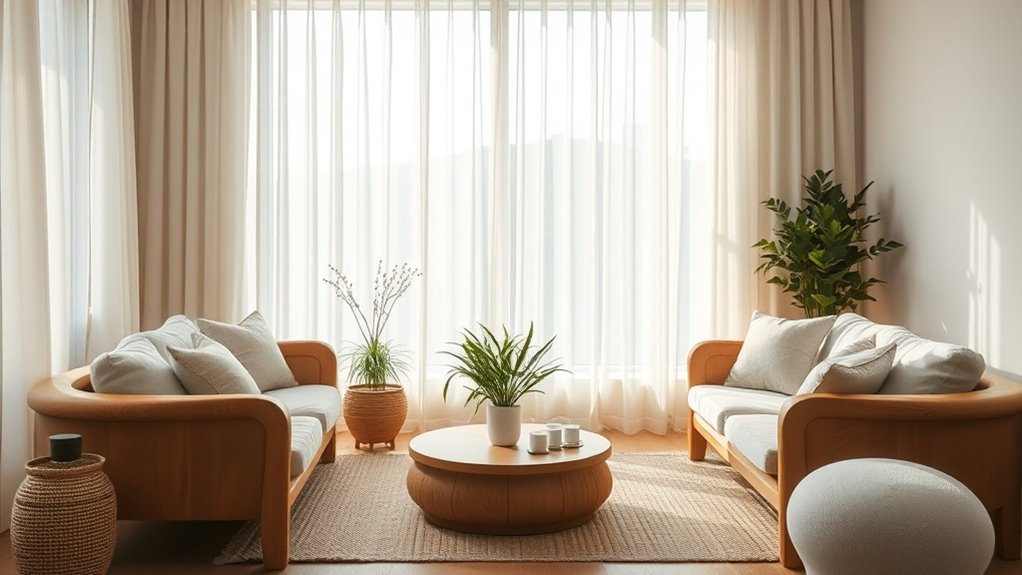
Enhancing your environment with sensory elements can notably boost feelings of calm and well-being. Incorporating calming scents, soothing sounds, and natural greenery creates a multisensory space that invites relaxation. By thoughtfully selecting these elements, you support a peaceful atmosphere tailored to your personal preferences.
Calming Aromas and Scents
Have you ever noticed how a calming scent can instantly change the mood of a space? Using natural scents through aromatherapy can create a peaceful environment that reduces stress and promotes relaxation. To effectively incorporate calming aromas, consider these steps:
- Select essential oils like lavender or chamomile, proven to lower cortisol levels and enhance sleep.
- Use non-toxic scented candles, incense, or diffusers to maintain indoor air quality.
- Be mindful of scent sensitivities, ensuring fragrances don’t trigger headaches or allergies.
Soothing Sounds and Music
Incorporating soothing sounds and music into your home environment can considerably enhance relaxation and overall well-being. Calming music and ambient sounds like waterfalls or ocean waves have been shown to reduce stress by lowering cortisol and heart rate, fostering a sense of calm. These natural soundscapes not only improve sleep quality but also elevate mood, making your space more nurturing. Integrating gentle background sounds creates an atmosphere conducive to relaxation, focus, and mental clarity. Research indicates that soothing sounds can decrease nervousness by 27%, helping you feel more centered and peaceful. By thoughtfully adding calming music and ambient sounds, you promote a sensory environment that supports daily calmness and emotional balance, making your home a sanctuary for relaxation.
Natural Elements and Greenery
Building a calming home environment often involves more than just sounds; it also benefits from integrating natural elements and greenery that engage your senses. Incorporate indoor plants like snake plants and succulents to improve air quality and reduce stress. Consider the following:
- Use natural elements such as wood, stone, and water features to create soothing sensory experiences.
- Add greenery to increase natural light reflection, enhancing visual tranquility.
- Maintain healthy, pet-safe plants to support mental well-being and promote a peaceful atmosphere.
These elements help lower cortisol levels and foster relaxation, making your natural environment more calming. By thoughtfully including natural elements and greenery, you create a holistic space that nurtures both your mental health and overall serenity in your calming home.
Organize and Reconfigure Spaces
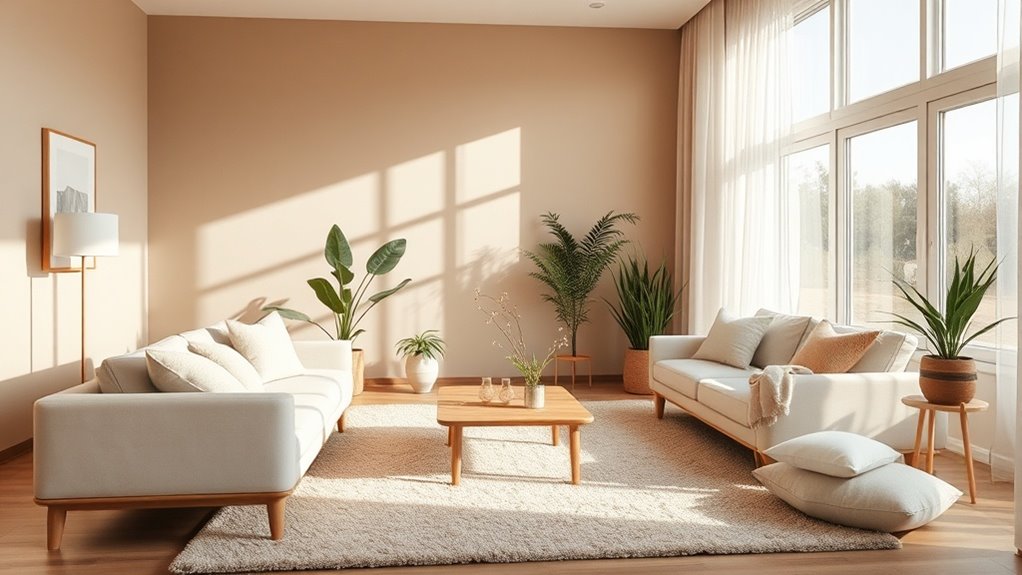
Organizing and reconfiguring your spaces can substantially reduce stress by creating a sense of order and improving functionality. When your environment is clutter-free, visual chaos diminishes, fostering calm and mental clarity. Rearranging furniture to enhance flow and accessibility boosts your sense of control, making everyday tasks smoother. Establishing designated zones for work, relaxation, and storage helps your mind differentiate activities, promoting mental clarity. Regularly sorting mail, paperwork, and belongings prevents clutter buildup, maintaining organization and peace. Practical storage solutions like baskets and shelves support a tidy environment, reinforcing calm in daily routines.
| Zone | Purpose | Organization Tips |
|---|---|---|
| Work Area | Productivity | Clear surfaces, dedicated supplies |
| Relaxation | Calm | Minimal decor, soft textures |
| Storage | Clutter control | Baskets, labeled shelves |
| Entryway | First impression | Keys, shoes organized |
Optimize Lighting and Privacy
Optimizing lighting and privacy in your home can considerably enhance a calming environment by reducing visual stress and creating a sense of security. Proper lighting choices influence mood and comfort, while privacy measures shield you from external disturbances. To achieve this, consider these strategies:
Enhance tranquility with thoughtful lighting and privacy solutions for a more secure, calming home environment.
- Use white or neutral-colored lighting to promote a serene atmosphere and reflect skin tones naturally.
- Incorporate dimmable lights to adjust mood and minimize harsh brightness, fostering calm.
- Properly position fixtures at eye level or above to reduce glare and enhance visual comfort.
Additionally, enhancing privacy with effective door locks and moisture-resistant window treatments, like frost-effect films or shutters, helps block external stressors. Pairing natural scents, such as lavender diffusers, with appropriate lighting further deepens relaxation. These holistic adjustments create a balanced space where lighting and privacy work together to promote a tranquil, secure environment tailored to your well-being.
Common Questions
How to Create a Calm Environment at Home?
They say “a cluttered space is a cluttered mind,” so start by clutter control to clear your environment. Use mindful lighting—soft, warm, and natural—plus soothing scents like lavender to promote relaxation. Incorporate calming colors and natural elements, and personalize your space with meaningful items. These strategies create a holistic, user-centered atmosphere that fosters tranquility and mental clarity, turning your home into a sanctuary of peace.
How Do I Transform My Environment to Become More Calm?
To make your environment calmer, focus on sensory reduction by decluttering regularly and controlling noise levels. Maximize natural lighting, as it boosts your mood and creates a soothing space. Use soft, warm lighting in the evening to enhance relaxation. Incorporate calming colors like blue and green, and add plants for natural air purification. Creating designated quiet zones helps you unwind, making your environment more peaceful and supportive of your mental well-being.
How to Provide a Calm Environment?
Like a Zen meditation, creating a calm space involves intentional choices. Use natural lighting to enhance sensory relaxation, making your environment feel open and peaceful. Keep clutter minimal to reduce stress and incorporate calming colors like blue and green. Soundproof or add white noise for tranquility, and personalize with meaningful items. These steps foster a holistic, user-centered atmosphere that promotes mental clarity, emotional safety, and everyday serenity.
How to Make Your House Less Chaotic?
To make your house less chaotic, start with clutter management by regularly decluttering and organizing your belongings. Incorporate feng shui tips like creating designated zones for work and relaxation to improve flow. Use noise reduction strategies, such as rugs or soft furnishings, to minimize sound distractions. Keep a consistent routine of tidying up daily, which helps maintain order and promotes a peaceful, user-centered environment.