
When you need to ground yourself quickly, deep breathing techniques can help immensely. Try slow, diaphragmatic breaths—inhale through your nose for 4–6 seconds, focusing on your belly expanding, then exhale gently for the same count. Techniques like box breathing (inhale, hold, exhale, hold each for 4 seconds) or the 4-7-8 method can calm your nervous system instantly. If you’re curious about more ways to find calm in moments of stress, there’s plenty to explore.
Key Points
- Practice diaphragmatic (belly) breathing to activate the parasympathetic nervous system and promote immediate calm.
- Use box breathing (inhale, hold, exhale, pause for 4 seconds each) to stabilize emotions quickly.
- Apply the 4-7-8 method to slow heart rate and reduce anxiety through controlled exhalation.
- Incorporate visualization of calming environments or colors during breathwork to deepen grounding.
- Dedicate a few minutes daily to a consistent routine combining these techniques for sustained instant grounding.
Why Deep Breathing Is a Powerful Tool for Calm
Have you ever noticed how taking a slow, deep breath can instantly help you feel more at ease? That’s because deep breathing activates your parasympathetic nervous system, which is responsible for relaxation. When you breathe deeply and intentionally, it slows your heart rate and lowers blood pressure, calming your entire body. This technique also increases oxygen flow to your brain and organs, boosting mental clarity and physical function. Regular practice of deep breathing can even decrease cortisol levels, the hormone linked to stress, making you feel more balanced over time. Additionally, deep breathing stimulates the vagus nerve, a key player in calming your nervous system and reducing the fight-or-flight response. By harnessing the power of your breath, you can create a simple, effective way to manage stress and bring a sense of calm whenever you need it. It’s a natural, accessible tool to help you feel more centered.
The Science Behind Breathing and Anxiety Relief
Understanding the science behind breathing and anxiety relief reveals why simple techniques can be so effective. When you breathe slowly and deeply, you activate the vagus nerve, which signals your body to switch into a state of calm by engaging the parasympathetic nervous system. This response helps lower cortisol levels, the hormone linked to stress, making you feel more relaxed. Scientific research shows that diaphragmatic and box breathing can also improve heart rate variability, a key indicator of reduced physiological stress. Furthermore, controlled breathing influences brain activity in areas responsible for emotion regulation, like the amygdala and prefrontal cortex. Neuroimaging studies confirm that focused breathing can quickly decrease anxiety symptoms and promote a sense of calm. By understanding this science, you can harness breathing techniques as a powerful, non-pharmacological way to manage anxiety and regain control when stress feels overwhelming.
How to Practice Abdominal (Belly) Breathing Effectively
To practice abdominal (belly) breathing effectively, find a comfortable position—either sitting or lying down—and place one hand on your chest and the other on your abdomen. Focus on slow, deliberate deep breathing exercises to enhance relaxation and grounding. Here’s how:
- Inhale slowly through your nose for about 4 to 6 seconds, feeling your diaphragm expand and your abdomen rise.
- Keep your chest relatively still, emphasizing the movement in your belly.
- Exhale gently through your mouth or nose, engaging your abdominal muscles to fully empty your lungs over 4 to 6 seconds.
- Repeat this process for 5-10 minutes daily to strengthen diaphragmatic control and deepen your relaxation.
Practicing abdominal breathing regularly can help you stay grounded, reduce stress, and improve your overall sense of calm. Remember, consistency is key in making this a beneficial part of your grounding exercises.
Using the Box Breathing Technique to Stabilize Emotions
When emotions run high, using the box breathing technique can be a powerful way to regain control and find calm. This method involves inhaling for four seconds, holding your breath for four seconds, exhaling for four seconds, and pausing for another four seconds before repeating. It’s a simple yet effective tool for grounding yourself during intense moments. By focusing on your breath in this structured way, you activate your parasympathetic nervous system, which helps reduce stress and promote emotional stability. Research shows that practicing box breathing can lower cortisol levels and improve focus, making it easier to handle emotional triggers. As you become more consistent with this technique, you’ll notice increased resilience to emotional upheaval and better mood regulation. Whether you’re facing a stressful situation or just need to steady your mind, box breathing provides a quick, accessible way to foster emotional stability and feel more centered.
The 4-7-8 Method: A Simple Breath Pattern for Instant Calm
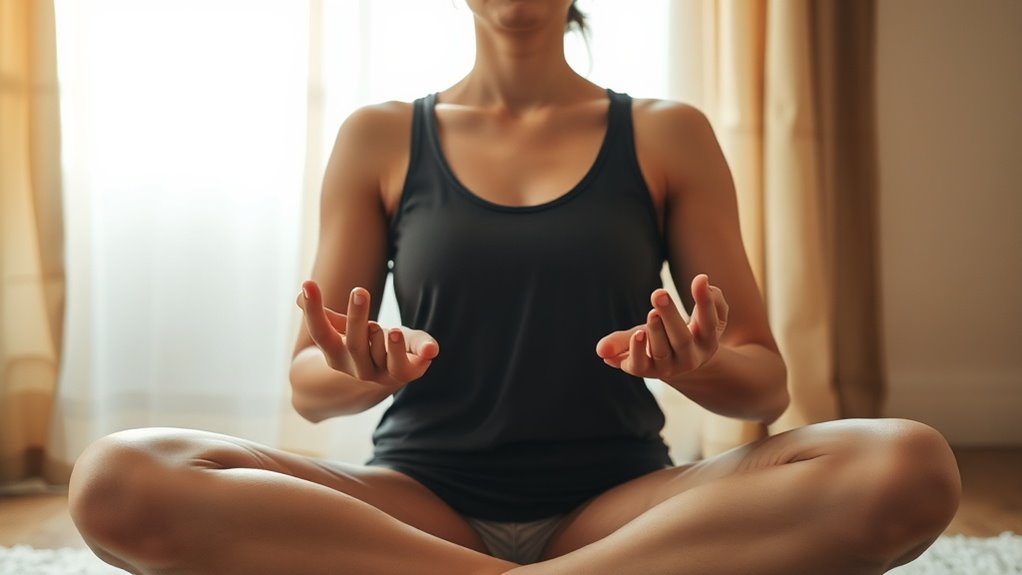
If you’re looking for a quick way to find calm in moments of stress, the 4-7-8 breathing method offers a simple yet powerful solution. This pattern helps activate your body’s relaxation response, easing anxiety and calming racing thoughts. Here’s how it works:
Discover instant calm with the 4-7-8 breathing technique to ease anxiety and promote relaxation.
- Inhale gently through your nose for four seconds.
- Hold your breath for seven seconds.
- Exhale slowly through your mouth for eight seconds.
- Repeat the cycle as needed to experience immediate relief.
This extended exhale lowers your heart rate and reduces cortisol, promoting overall emotional regulation. Regular practice can improve sleep quality and help you stay centered during stressful moments. The 4-7-8 method is especially effective because it engages your parasympathetic nervous system, encouraging relaxation. When you feel anxiety creeping in, this simple breathing pattern can be your go-to tool for instant calm and emotional balance.
Grounding With the 5-4-3-2-1 Sensory Exercise
Grounding with the 5-4-3-2-1 sensory exercise is a simple yet effective way to bring your attention back to the present moment when anxiety or overwhelming feelings arise. This grounding technique engages all five senses—seeing five things, touching four, hearing three, smelling two, and tasting one—helping you shift focus away from racing thoughts. Before starting, breathe slowly and deeply to calm your nervous system. As you move through each step, notice the details around you without judgment, anchoring yourself in the current moment. This sensory exercise can be done anywhere—at home, work, or outdoors—and only takes a few minutes. Regular practice strengthens your ability to manage feelings of anxiety, fostering a sense of safety and control. When anxiety strikes, this grounding method provides a quick, accessible way to regain clarity and calmness.
Incorporating Movement and Breath for Immediate Relief
Incorporating movement and breath can provide immediate relief during moments of stress by quickly activating the body’s relaxation response. When you combine breathing exercises with gentle movement, you enhance grounding and calm your mind. Here are some effective ways to do this:
- Perform toe or heel breathing, syncing each step with slow, deep breaths to increase circulation.
- Tap or press palms together to discharge tension, coordinating your movements with controlled breaths.
- Do simple stretches or brisk walking to interrupt panic cycles and restore mental clarity.
- Pull resistance or press palms to engage muscles, then breathe deeply to amplify relaxation.
These techniques work by boosting oxygen flow and grounding your body in the present moment. By intentionally synchronizing movement with controlled breathing, you can shift quickly from stress to calm, making these practices powerful tools for immediate relief in any stressful situation.
Guided Visualization Exercises to Enhance Relaxation
Guided visualization helps you relax by imagining peaceful scenes, like a quiet beach or forest, which calms your mind and body. Using sensory details—such as the warmth of the sun or the sound of waves—makes these images more vivid and grounding. Regular practice can strengthen your resilience to stress, making it easier to find calm whenever you need it.
Visualize Calm Scenes
Have you ever noticed how vivid mental images can bring instant calm? When you visualize calming environments, you activate your brain’s visual cortex and limbic system, creating a powerful sense of calm. To enhance this practice, try:
- Picture yourself on a peaceful beach, feeling the warm sand beneath your feet.
- Imagine the lush greenery of a forest, hearing birdsong and rustling leaves.
- Envision a tranquil lake, watching gentle waves ripple across the surface.
- Focus on the textures, colors, and sounds within these scenes to deepen your mental imagery.
This technique helps reduce cortisol and your heart rate, grounding you quickly. Regularly practicing visualizing calming environments strengthens neural pathways, making it easier to access relaxation whenever stress strikes.
Use Sensory Imagery
Building on the calming power of visualizing peaceful scenes, engaging your senses through guided imagery can deepen your relaxation. Sensory imagery involves vividly imagining sights, sounds, smells, touches, and tastes to create a grounding experience. By picturing a gentle breeze, the scent of pine, or the warmth of sunlight, you activate your brain’s sensory pathways, making the scene more real and soothing. These grounding techniques help distract your mind from stress, lowering cortisol levels and easing anxiety. Regular practice strengthens your ability to access a calm state quickly during stressful moments. Using sensory imagery isn’t just about visualization; it’s about immersing yourself fully in calming sensations to promote relaxation and stability whenever you need it most.
Focus on Breath and Color
By focusing on your breath combined with the gentle visualization of calming colors, you can deepen your relaxation and bring your attention into the present moment. Using this breathing technique, imagine a soothing hue—like blue or green—filling your body with each inhale, and releasing tension as you exhale. To enhance this mindfulness practice, try:
- Visualizing a slow, deep breath as a wave of color flowing through you
- Associating specific hues with feelings of calm and stress relief
- Redirecting racing thoughts by focusing on the shifting colors with each breath
- Using color visualization to activate your parasympathetic nervous system, promoting grounding and tranquility
This combined approach makes your breathing technique more powerful, fostering instant relaxation and presence.
Creating Your Personal Breathing Routine for Stress Management
Wondering how to create a breathing routine that truly helps you manage stress? Start by dedicating just 3-5 minutes each day, either morning or evening, to your chosen deep breaths. Consistency is key—making it part of your daily routine helps your body recognize the grounding effect of breathwork. Mix different techniques like diaphragmatic breathing, box breathing, or visualization to address various stressors and keep your practice engaging. Keep a journal to track how you feel before and after each session; this helps you identify which methods work best for you. Using guided apps or recordings can guarantee you’re practicing correctly and build your confidence. Over time, adjust your routine by adding new techniques or changing durations, ensuring it stays effective and meaningful. Creating a personalized routine allows you to harness the power of breath to stay grounded amid life’s challenges.
Additional Tips for Making Breathwork a Daily Habit
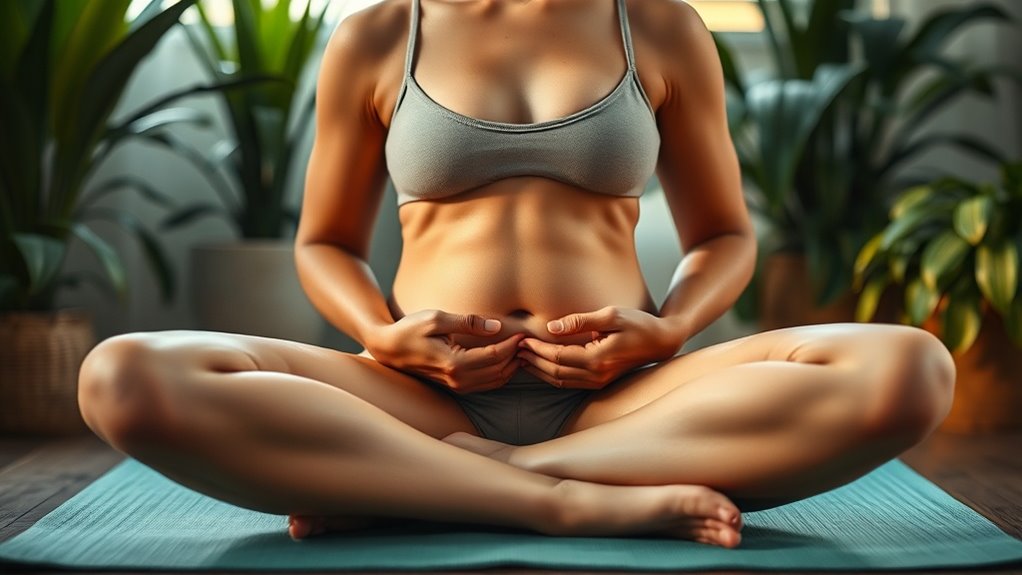
Establishing a consistent daily habit of breathwork becomes easier when you set aside a specific 3-5 minute window in a quiet, comfortable space each day. This dedicated time helps reinforce your routines and makes self-care a priority. To strengthen your daily practice, consider these tips:
Create a daily 3-5 minute breathwork routine in a quiet space to build consistency and prioritize self-care.
- Use a visual or auditory cue, like a reminder alarm or a special object, to prompt your sessions and create a reliable routine.
- Incorporate different techniques such as abdominal or box breathing to keep your practice engaging and discover what works best for you.
- Track your progress with a journal or app to see your improvements and stay motivated.
- Pair breathwork with calming habits like stretching or listening to soothing music, making it an integral part of your self-care routine.
With consistency and mindful adjustments, breathwork can become a natural, beneficial part of your daily self-care.
Common Questions
How to Immediately Ground Yourself?
To immediately ground yourself, focus on your sensory awareness—notice five things you see, touch, hear, smell, and taste. Combine this with mindfulness meditation by taking slow, deep breaths to calm your mind. Engaging in this practice helps with emotional regulation, making you feel more centered and present. These simple steps can quickly reduce anxiety and reconnect you with the here and now, providing instant relief.
How to Ground Yourself in 30 Seconds?
In just 30 seconds, you can reset your mind like flipping a switch with mindful meditation and sensory awareness. Focus on five objects around you, describe four textures, listen for three sounds, smell two scents, and notice one taste. This quick exercise helps you regain emotional regulation, grounding you in the present moment. It’s a powerful way to stay centered amid chaos, giving you clarity and calmness when you need it most.
How to Ground Yourself With Breathing?
To ground yourself with breathing, start with mindful breathing—inhale slowly through your nose for five seconds, feeling the air fill your lungs. Pause for three seconds, then exhale fully through your mouth for five seconds, releasing tension. Combine this calming exercise with the 5-4-3-2-1 technique to stay present. These stress relief techniques help calm your mind, reduce anxiety, and restore a sense of stability quickly.
What Is the 3 3 3 Rule for Grounding?
The 3-3-3 rule is a powerful sensory awareness and mindfulness exercise that helps you regain emotional regulation in seconds. You look at three objects, touch three different textures, and listen to three sounds around you. This quick, simple technique shifts your focus from overwhelming thoughts to the present moment, grounding you instantly. It’s a practical tool for managing stress and anxiety, making you feel more centered and in control.