
To release tension stored in your body, start by tuning into physical signs like tight shoulders, neck, or lower back. Practice mindfulness with body scans, paying gentle attention to areas where stress accumulates. Incorporate deep, slow breathing or gentle stretches and yoga to activate your calming nervous system. Techniques like progressive muscle relaxation help you identify and loosen tight muscles. Consistently building a routine can deepen relief; exploring these methods can support long-term ease and resilience.
Key Points
- Practice progressive muscle relaxation by tensing and relaxing specific muscle groups to reduce physical tension.
- Incorporate deep, diaphragmatic breathing to activate the parasympathetic nervous system and promote relaxation.
- Engage in gentle yoga or stretching movements targeting common tension areas like shoulders, hips, and back.
- Use mindfulness techniques such as body scans to identify and become aware of stored tension in the body.
- Establish a regular stress release routine with daily exercises, gradually increasing duration for sustained tension relief.
Understanding How Stress Affects Your Body
Stress doesn’t just affect your mind; it has tangible effects on your body as well. When you experience stress, your body activates the sympathetic nervous system, increasing your heart rate, tightening muscles, and raising blood pressure. If this state persists, the tension doesn’t just fade—it gets stored in your tissues, especially around your shoulders, hips, and chest. Over time, this stored physical tension can lead to chronic aches, restricted movement, and discomfort. The emotional component of stress intensifies the problem, as unresolved feelings contribute to ongoing muscle tightness. The body responds by releasing hormones like cortisol, which, when elevated for long periods, can negatively impact your muscles and organs. Recognizing how stress influences your body helps you understand the importance of calming the nervous system. Activating your parasympathetic nervous system is essential in releasing this stored tension, restoring physical and emotional balance.
Recognizing Common Signs of Built-Up Tension
Noticing the signs your body gives you is key to understanding built-up tension, whether it’s persistent muscle tightness or frequent headaches. Emotional reactions like irritability or feeling overwhelmed often accompany physical symptoms, revealing deeper stress. By paying close attention to these cues, you can better identify when tension is accumulating and take steps to release it.
Physical Clues and Symptoms
When tension builds up in your body, it often reveals itself through subtle yet noticeable physical signs. You might notice muscle tension in your neck, shoulders, or lower back, accompanied by bodily reactions like rapid heartbeat or shallow breathing. Physical sensations such as headaches, fatigue, or muscle spasms can serve as clear physical clues of stored tension. Postural changes—like slumped shoulders or a hunched back—often reflect underlying bodily tension. These physical clues signal that your body is responding to stress, even if you’re not fully aware of it. Recognizing these signs allows you to address the tension early, helping you to release it before it becomes more overwhelming or chronic. Paying attention to these symptoms is key to understanding and alleviating stored tension.
Emotional Cues and Reactions
Your body often reveals emotional tension through subtle cues that can be easy to overlook. These emotional cues manifest as physical signals—muscle tightness in your neck, shoulders, or hips—that indicate stored stress. Unexplained aches, headaches, or digestive issues serve as somatic signs that emotional tension is taking a physical form. Sudden emotional reactions like irritability, anxiety, or numbness often reflect underlying stress and unresolved feelings. Changes in posture, such as slouched shoulders or a guarded stance, are body language signs of emotional tension. Physical reactions like rapid heartbeat, shallow breathing, or trembling further highlight the mind-body connection, revealing how emotional responses can translate into body tension. Recognizing these cues is essential for addressing and releasing stored stress effectively.
Exploring Where Stress Manifests Physically
Stress often reveals itself through physical tension in specific areas of the body, serving as a tangible reflection of internal emotional states. You might notice tightness in your neck and shoulders, often linked to carrying emotional burdens or stored trauma. Chronic stress can lead to persistent muscle tightness, causing discomfort and affecting posture. The hips and lower back may also hold tension, reflecting feelings of being overwhelmed or unresolved past trauma. These physical symptoms—such as headaches, fatigue, or stiffness—are signs that stress has accumulated in particular areas of the body. Recognizing where tension resides helps you understand the connection between emotional strain and physical health. By paying close attention to these areas, you can begin to identify patterns of stored trauma and chronic stress. This awareness is vital for targeted tension release, enabling you to address both emotional and physical aspects of stress effectively.
Practicing Mindfulness and Body Awareness
Practicing mindfulness and body awareness can be powerful tools for recognizing and releasing tension that often goes unnoticed. By cultivating mindfulness, you learn to pay close, non-judgmental attention to bodily sensations, breath, and thoughts, deepening your body awareness. Regularly performing body scans helps identify specific areas where tension accumulates, allowing you to consciously relax muscles and promote relaxation. Deep, slow breathing activates your parasympathetic nervous system, reducing stress stored in your body and fostering calmness. Mindfulness meditation encourages observing physical sensations without attachment or judgment, which can facilitate the release of stored tension. Evidence suggests that mindful awareness of body cues not only decreases muscle tightness but also enhances emotional regulation, enabling you to respond more adaptively to stress. Integrating these practices into your routine creates a foundation for greater self-awareness, easing tension, and supporting overall emotional well-being.
Incorporating Gentle Yoga and Stretching Routines
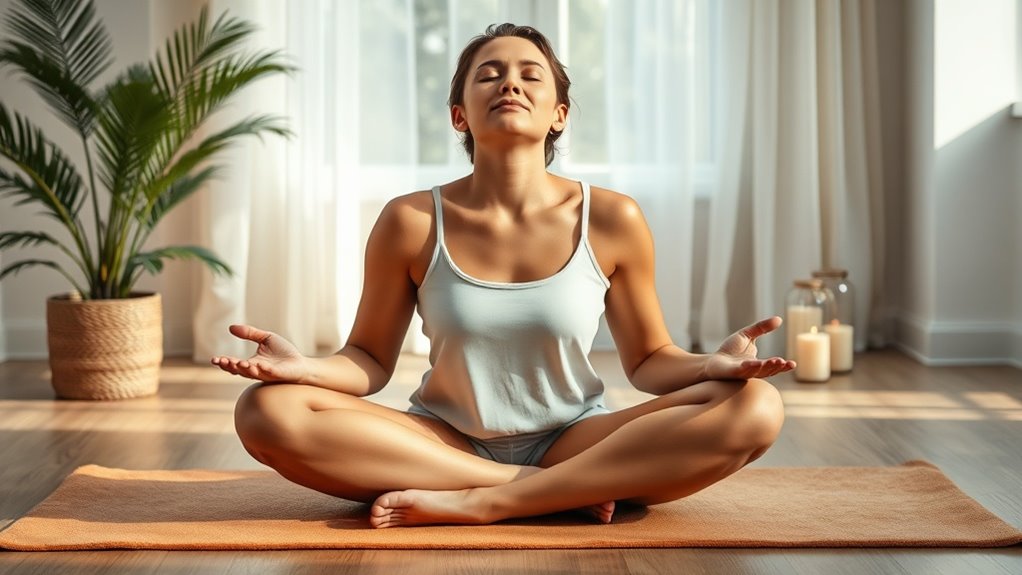
Incorporating gentle yoga and stretching routines offers a mindful approach to releasing tension and fostering relaxation. These practices activate your parasympathetic nervous system, helping to lower stress hormones and promote calm. Specific poses like child’s pose, cat-cow, and forward bends target areas where muscle tension often accumulates, such as the hips, shoulders, and lower back. Regular practice enhances your body awareness, enabling you to identify and release stored tension more effectively. Stretching routines help lengthen shortened muscles caused by stress-induced tightness, improving circulation and reducing discomfort. Moving slowly and mindfully during yoga not only relaxes your muscles but also deepens your breathing, further calming your nervous system. This integrated approach supports both emotional and physical relaxation, making it easier to let go of tension and restore balance in your body. Consistent practice invites a greater sense of calm and resilience in everyday life.
Using Progressive Muscle Relaxation Techniques
By intentionally tensing and then relaxing each muscle group, you enhance your awareness of tension and promote deeper relaxation. Focused breathing practices alongside this process help activate your body’s relaxation response, easing stress more effectively. Consistent practice allows you to identify chronic tightness and cultivate a sense of calm that extends beyond your sessions.
Tense Muscle Groups
Tense muscle groups are a key focus in Progressive Muscle Relaxation (PMR), a technique designed to help you become more aware of where stress manifests in your body. By intentionally tensing specific muscle groups—such as your shoulders, jaw, stomach, legs, and back—for 5-10 seconds, you create a clear contrast with their relaxed state. This process enhances your awareness of tension and promotes a deeper understanding of how stress affects your body. The subsequent release allows your muscles to relax fully, easing physical discomfort. With consistent practice, PMR helps retrain your response to stress, encouraging relaxation rather than tension. Recognizing which muscle groups hold tension is essential for achieving effective relaxation and reducing overall stress levels.
Focused Breathing Practice
Building on your awareness of muscle tension, focused breathing combined with progressive muscle relaxation offers a powerful way to deepen your relaxation practice. By intentionally tensing then relaxing specific muscle groups, you enhance body awareness and promote tension release. This process stimulates your parasympathetic nervous system, slowing your heart rate and lowering stress hormones. As you inhale deeply while contracting muscles, hold briefly, then exhale slowly as you release tension, you activate a calming response. Incorporating this technique regularly improves emotional regulation and reduces physical stress symptoms. The table below highlights key aspects:
| Focused Breathing | Muscle Relaxation |
|---|---|
| Deep inhalations | Tensing muscles during inhale |
| Slow exhalations | Fully relaxing during exhale |
| Enhances calm | Activates parasympathetic response |
Relaxation Response Activation
Since stress can quickly take over the body, activating the relaxation response through Progressive Muscle Relaxation (PMR) offers a practical, evidence-based approach to restore calm. By systematically tensing and then releasing each muscle group, you enhance body awareness and facilitate the release of stored tension. This process stimulates the parasympathetic nervous system, which promotes relaxation, decreases muscle tension, and reduces heart rate and blood pressure. Regular practice of PMR not only helps reduce immediate stress but also diminishes long-term stress-related symptoms like headaches, fatigue, and anxiety. This simple technique can be performed anywhere, empowering you to consciously switch your body from stress mode to a calm, relaxed state, supporting overall well-being and resilience.
Engaging in Deep Breathing and Calmness Exercises
Engaging in deep breathing and calmness exercises can be a powerful way to release physical tension and promote relaxation. When you focus on deep breathing, you activate your parasympathetic nervous system, which helps slow your heart rate and relax tense muscles. Techniques like diaphragmatic breathing involve expanding your belly on inhale and contracting it on exhale, effectively releasing stored tension. Slow, controlled exhalations reduce stress hormones such as cortisol, fostering a sense of calmness. Regular practice of these relaxation techniques can decrease physical symptoms of anxiety, like rapid heartbeat and shortness of breath, by shifting your body’s response from fight-or-flight to rest-and-digest. Incorporating calmness exercises into your routine encourages tension release, making your body more resilient to daily stressors. Ultimately, consistent deep breathing can enhance your overall sense of well-being and help maintain a balanced, relaxed state.
Moving Your Body Through Dynamic Activities

Moving your body through dynamic activities offers a powerful way to release physical tension that may linger after calming exercises. Movement, such as dance, martial arts, or shaking, activates your body’s natural patterns, helping to break up stored stress. These practices increase circulation, encouraging the flow of energy through tense areas, which facilitates the release of muscle tightness and emotional blockages. Regular movement also enhances body awareness, allowing you to better recognize areas of tension and respond with targeted activity. Engaging in intentional movement shifts your nervous system from a fight-or-flight state to one of relaxation, supporting emotional release and reducing overall stress. By incorporating dynamic activities into your routine, you promote a more fluid, relaxed body, making it easier to process and let go of stored tension. This approach fosters a deeper connection with your physical self, empowering you to manage stress more effectively.
Building a Consistent Stress Release Practice
Creating a consistent stress release practice is essential for long-term well-being, but it can be challenging to maintain without intentional planning. To foster effective tension release, establish a daily routine that integrates body scans, yoga, or breathing exercises. These practices help you become aware of physical sensations and emotional shifts, making stress relief more targeted. Use reminders or calendar alerts to dedicate specific times each day, starting with short sessions of 5-10 minutes, then gradually increasing as your body adapts. Tracking your progress—note changes in physical tension and emotional state—reinforces the benefits of regular practice. Incorporate variety, such as movement, mindfulness, or progressive muscle relaxation, to keep your routine engaging and sustainable. Consistency is key; over time, this mindful approach will deepen your tension release, reduce accumulated stress, and enhance your overall sense of calm and resilience.
Common Questions
How to Release Stored Tension in the Body?
To release stored tension, start with breathing exercises and body scans to increase awareness. Incorporate gentle stretching and muscle relaxation techniques to loosen tight areas. Meditation techniques can help calm your mind, while aromatherapy may enhance relaxation. Consistent practice allows you to recognize and release stress gradually, promoting emotional and physical balance. By integrating these methods, you create a mindful approach to easing tension and fostering overall well-being.
What Is the 3 3 3 Rule for Calming?
The 3-3-3 rule for calming is a grounding technique that helps manage stress and promote emotional release. You identify three things you see, hear, and feel, which shifts your focus away from tension. Incorporate mindful breathing and muscle relaxation during this process, and maintain good posture to enhance its effectiveness. Consistently practicing this method supports stress management, grounding you in the present and encouraging relaxation of tense muscles.
How to Release Trauma Stored in the Body?
Think of your body as a garden needing gentle tending. To release stored trauma, start with mindful breathing to calm your nervous system. Use grounding techniques to stay present, then do a body scan to identify tension areas. Incorporate muscle relaxation and gentle stretching to ease tightness, while emotional awareness helps process feelings. Regular practice of these techniques helps your body naturally let go of emotional weight, fostering healing and resilience.
Why Do I Hold so Much Tension in My Body?
You hold so much tension in your body because unresolved stress, trauma, and emotions like anger or fear can create persistent muscle tightness. Poor posture, repetitive movements, and subconscious holding patterns reinforce this. Incorporating breath control, relaxation techniques, mindfulness practices, and posture awareness helps release stored tension. Effective stress management allows your muscles to relax, reducing tightness and promoting emotional and physical healing over time.