
Herbal blends that bring calm to your day often include soothing herbs like chamomile, lavender, and passionflower, which help reduce stress and promote relaxation naturally. Incorporating adaptogens such as holy basil or ashwagandha can also support emotional resilience throughout the day. Many commercial options are caffeine-free, making them perfect for winding down, while crafting your own allows for personalized comfort. If you explore further, you’ll discover ways to tailor these calming options to suit your routine.
Key Points
- Herbal blends with chamomile, lavender, and passionflower promote relaxation and reduce anxiety naturally.
- Including adaptogens like holy basil and ashwagandha helps manage daily stress and stabilize mood.
- Caffeine-free herbal teas support better sleep and calm the nervous system throughout the day.
- Personalize blends with herbs like lemon balm and peppermint to enhance tranquility and mood.
- Regularly consuming calming herbal teas can build long-term resilience against stress and promote overall well-being.
The Benefits of Herbal Blends for Stress Relief
Herbal blends have long been valued for their ability to promote calm and reduce stress naturally. When you sip herbal tea infused with calming herbs like chamomile, lavender, or passionflower, you’re giving your nervous system gentle support. These herbs are known for their relaxing properties, helping to ease tension and promote a sense of tranquility. Many herbal teas also include adaptogens, such as holy basil and ashwagandha, which help your body better manage daily stressors and stabilize mood. Regularly enjoying these blends can improve your sleep quality, reduce feelings of restlessness, and diminish nervousness. Scientific research supports that herbal teas are a safe, natural way to complement your stress relief efforts. By incorporating calming herbal blends into your daily routine, you create a holistic approach to well-being that nurtures your mind and body, helping you face life’s challenges with a greater sense of calm and resilience.
Key Ingredients in Calming Herbal Teas
You’ll find that chamomile’s apigenin gently binds to brain receptors, helping you feel more relaxed and less anxious. Lavender’s aromatic compounds like linalool create a calming atmosphere, soothing your nervous system. Valerian root, known for its sleep-supporting properties, can further enhance your sense of tranquility.
Chamomile’s Soothing Effects
Chamomile’s calming effects are primarily attributed to its active compounds, such as apigenin, flavonoids, and volatile oils, which work together to promote relaxation and ease anxiety. When you sip chamomile tea, these substances interact with your brain’s receptors, encouraging a sense of calm. Scientific studies show that regular consumption can improve sleep quality and reduce symptoms of generalized anxiety disorder (GAD). Additionally, chamomile’s anti-inflammatory properties help soothe your nervous system. To maximize these benefits, consider:
- Drinking chamomile regularly for stress relief
- Using it to lower cortisol levels, the stress hormone
- Incorporating it into your bedtime routine for restful sleep
- Recognizing its role in reducing nervous tension
- Embracing its holistic, natural approach to calming your mind and body
Lavender’s Aromatic Calm
Lavender’s fragrant essence has been valued for centuries for its ability to promote relaxation and ease stress. Its aromatic qualities make it a popular choice in herbal teas designed to support calmness and emotional balance. When you sip a tea infused with lavender, you’re harnessing its natural compounds—like linalool and linalyl acetate—that soothe your nervous system. The aromatic presence of lavender helps decrease anxiety and encourages restful sleep, making it a favorite for those seeking a gentle, holistic way to unwind. Whether used in dried flowers or essential oils, lavender’s calming influence is undeniable. Incorporating this aromatic herb into your daily routine can create a peaceful moment, grounding your mind and fostering relaxation naturally.
Valerian Root Benefits
Valerian root has long been valued for its calming properties and its ability to support restful sleep. Its compounds, like valerenic acid and valepotriates, help enhance GABA activity in your brain, encouraging relaxation. Scientific studies show that valerian root can reduce the time it takes to fall asleep and improve sleep quality without causing morning grogginess. When included in herbal teas or supplements, it offers a gentle way to ease nervous tension and promote deeper, more restorative sleep. Keep in mind, valerian root is generally safe, but some may experience headaches or dizziness. Use it mindfully, especially if you’re combining it with other sedatives. Its natural calming effects make valerian root a popular choice for fostering relaxation and better sleep quality.
Popular Commercial Herbal Tea Options
Have you ever wondered which commercial herbal teas are best for promoting relaxation? Many popular options, like Traditional Medicinals’ Cup of Calm and The Republic of Tea’s Get Relaxed blend, feature calming herbs such as chamomile, lavender, passionflower, and rose petals. These herbal teas are designed to offer stress relief and create a sense of calm, making them perfect for winding down after a busy day. Since most of these teas are caffeine-free, they won’t interfere with your sleep or cause jitters, allowing you to enjoy their soothing effects fully. Many brands, including Yogi, Lipton, Numi Organic, and Celestial Seasonings, offer varieties specifically formulated to reduce anxiety and enhance relaxation. Their convenience and wide availability in grocery stores, online shops, and cafes make it easy to incorporate calming herbal tea into your daily routine. These blends provide a gentle, natural way to nurture your mental well-being.
Crafting Your Own Relaxing Herbal Infusions
Creating your own relaxing herbal infusions offers a personalized way to cultivate calm and support your mental well-being. When you craft herbal infusions, you can tailor blends with relaxing herbs like chamomile, lavender, lemon balm, and passionflower to suit your mood. Using fresh or dried herbs maximizes potency, so a teaspoon of dried chamomile can create a soothing sip. To enhance flavor and health benefits, add natural sweeteners like honey or stevia—local honey can even aid allergies. Incorporating tonic herbs such as Holy Basil or Milky Oats regularly can bolster long-term stress relief and resilience. Experimenting with different ratios and combinations allows you to develop a calming tea specifically suited to your needs. Remember, herbal infusions are versatile and can be adjusted based on your preferences. Creating your own blends empowers you to cultivate calm naturally, making stress relief a personalized ritual that nurtures your well-being.
How Herbal Teas Support Better Sleep
Ever wondered how herbal teas can help you sleep better? These calming beverages work by promoting relaxation and easing nighttime anxiety. Ingredients like chamomile, lavender, and passionflower have been shown to improve sleep quality, helping you unwind and shift smoothly into rest. Choosing caffeine-free herbal teas in the evening can also help regulate your circadian rhythms, allowing for deeper, more restorative sleep. Herbs such as valerian root and lemon balm are traditionally used to decrease insomnia symptoms and help you fall asleep faster. Regularly enjoying these calming herbal teas can lower cortisol levels, which are often elevated in those with sleep disturbances, further supporting restful nights. Incorporating herbal teas into your bedtime routine not only signals relaxation but also creates a holistic environment conducive to better sleep. With consistent use, these herbal blends can become a gentle, effective part of your nightly self-care.
Combining Herbs for Enhanced Relaxation
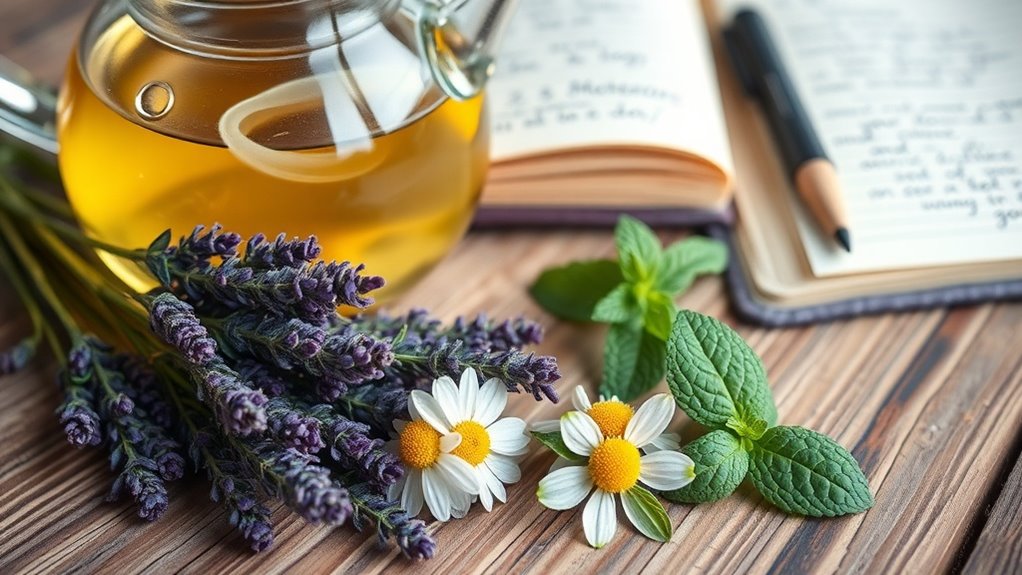
Building on the calming effects of herbal teas, combining different herbs can amplify their relaxation benefits and address various aspects of stress and anxiety. When you craft herbal blends, you create a synergy that supports both mental and physical relaxation. For example, pairing chamomile, lavender, and passionflower can produce a calming effect that’s greater than the sum of its parts. Blending herbs like lemon balm with valerian root can improve sleep quality and quiet racing thoughts. Incorporating adaptogenic herbs like holy basil alongside calming herbs may boost resilience to daily stressors and foster emotional stability. To maximize stress reduction, consider adding herbs such as skullcap and milky oats, which support the nervous system long-term. Remember, a well-balanced herbal blend can target multiple stress factors at once, providing a holistic approach to relaxation that promotes overall well-being.
- Synergistic effects for deeper calm
- Addressing mental and physical tension
- Supporting sleep and emotional balance
- Long-term nervous system support
- Enhancing resilience to stress
Tips for Incorporating Herbal Teas Into Your Routine
Creating a calming tea routine starts with setting specific times, like morning or evening, to make it a habit. Try experimenting with different herbal blends such as chamomile or lavender to discover what helps you relax best. Making your tea experience mindful—using a favorite mug and natural sweeteners—can turn it into a soothing, self-care ritual.
Set a Relaxing Schedule
Incorporating herbal teas into your daily routine can be a simple yet powerful way to foster relaxation and mindfulness. Setting a calming schedule helps integrate herbal tea into your day, making it a consistent source of tranquility. Choose specific times, like after meals or before bed, to promote a calming routine. Preparing your tea in advance guarantees you can enjoy a soothing moment even during busy or stressful times. Using a dedicated mug or teapot creates a visual cue for relaxation. Pair your herbal tea with calming activities such as deep breathing, gentle stretching, or journaling to deepen its calming effects. Remember, consistency reinforces the habit, turning a simple cup into a mindful ritual that nurtures your wellbeing.
Experiment With Flavors
Experimenting with different herbal tea flavors is a great way to personalize your calming routine and keep it enjoyable. By mixing various herbal teas, you can discover calming blends that resonate with your senses and mood. Flavor experimentation allows you to tailor your tea experience—adding herbs like peppermint or lavender can enhance tranquility and elevate your sensory journey. Replacing caffeine-heavy drinks with herbal teas such as chamomile or lemon balm supports stress reduction throughout the day. Using natural sweeteners like local honey not only improves flavor but adds soothing and health benefits. Trying both hot and iced versions makes your calming ritual adaptable to any season or moment. Embrace the variety to deepen your connection with herbal teas and cultivate lasting relaxation.
Precautions and Considerations When Using Herbal Remedies
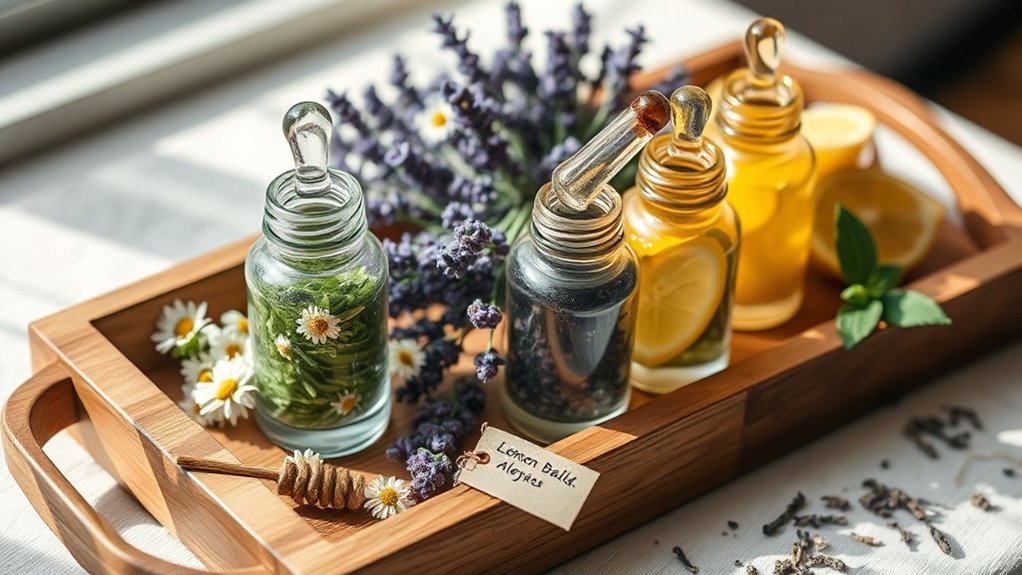
While herbal remedies can be a gentle way to promote calm, it’s important to approach their use with care. Always consult with a healthcare professional before starting any herbal remedies, especially if you’re pregnant, breastfeeding, or on medications, to avoid potential interactions. Some herbs, like kava kava and St. John’s Wort, can cause side effects or interfere with prescriptions, so proper guidance is essential. Use herbal teas and remedies in moderation—excessive intake might lead to adverse effects or toxicity. Be vigilant about possible allergic reactions, especially if you have sensitivities to related plants such as chamomile or ragweed. If you experience symptoms like dizziness, stomach upset, or allergic responses, discontinue use immediately and seek medical advice. Remember, herbal remedies are beneficial when used thoughtfully and responsibly, respecting your body’s unique responses and ensuring safe, calming support.
Accessibility and Choosing the Right Herbal Tea for You
With the wide availability of herbal teas both in stores and online, finding a calming blend that suits your needs has never been easier. Accessibility plays a key role in selecting the right herbal tea for your wellness routine. Look for caffeine-free options like chamomile, lavender, or lemon balm to enhance relaxation. Many calming blends also contain valerian root, passionflower, or skullcap, which support stress relief naturally. Visiting local health food stores or herbal shops often allows you to sample different blends before settling on your favorite. Reading ingredient labels and customer reviews can guide you toward the most suitable herbal tea for your specific relaxation needs. To help you decide, consider this quick reference:
| Ingredient | Benefit |
|---|---|
| Chamomile | Calmness, sleep aid |
| Lavender | Anxiety reduction |
| Lemon Balm | Stress relief |
| Valerian Root | Sleep support |
| Passionflower | Anxiety and tension relief |
Common Questions
What Herbs Promote Calmness?
You can find herbs like chamomile, lavender, lemon balm, passionflower, and skullcap that promote calmness naturally. These herbs support stress relief, reduce anxiety, and enhance mood by soothing your nervous system. Incorporating them into your day, whether as teas or tinctures, helps create a holistic sense of relaxation. They’re gentle yet effective, helping you manage daily tension and find peaceful moments amidst a busy life.
What Herb Calms the Brain?
Lavender aromatherapy is one of the best herbs to calm your brain, thanks to its relaxing linalool compounds. You’ll also find chamomile tea benefits helpful, as it gently reduces anxiety and promotes sleep. Valerian root uses include calming the nervous system and easing restlessness. Together, these herbs support a holistic approach, helping you unwind naturally and restore mental balance throughout your day.
What Is the Most Soothing Herb?
The most soothing herb is chamomile, known for its calming effects on the nervous system and promoting restful sleep. You can incorporate it into herbal tea recipes or use it in aromatherapy techniques like diffusing or baths. Historically, chamomile has been used for centuries to ease anxiety and promote relaxation. Its gentle, holistic properties make it ideal for calming your mind naturally and peacefully throughout the day.
What Is the Most Powerful Herbal Sedative?
If you’re seeking the most powerful herbal sedative, valerian root stands out. While some worry about potency, herbal combination studies and traditional herbal uses show valerian’s pharmacological effects—like increasing GABA levels—make it highly effective for sleep and anxiety. You can trust its gentle, holistic approach, but remember, its strength means you should use it cautiously and consult a healthcare provider if combining with other sedatives.