
To create more balanced days, swap sugary cereals for wholegrain options like shredded wheat or oatmeal topped with fresh fruit. Replace processed meats with lean proteins such as turkey or plant-based choices. Incorporate more vegetables through roasting, salads, or sneaking them into recipes. Drink water infused with fruit instead of sugary drinks, and cook with healthy oils like olive oil. Switching refined carbs to whole grains and crunchy veggies with spreads can make your diet more nutritious—discover more simple, effective tips ahead.
Key Points
- Replace refined carbs like white bread and white rice with whole grains such as brown rice, quinoa, or wholemeal bread.
- Swap sugary cereals for high-fiber, no-added-sugar options like shredded wheat or plain muesli.
- Use lean proteins like turkey, chicken, or plant-based options instead of processed meats.
- Infuse water with fresh fruits or herbs to encourage hydration without added sugars.
- Cook with olive oil instead of butter or shortening to incorporate heart-healthy fats into your meals.
Swap Sugary Cereals for Wholegrain Options and Plain Yoghurt With Fruit
Switching from sugary cereals to wholegrain options and plain yoghurt with fruit is a simple way to boost your breakfast’s healthiness. Whole grains like shredded wheat or no-added-sugar muesli are rich in dietary fiber, which supports digestion and keeps you feeling full longer, reducing mid-morning snacking. Replacing sugary cereals, such as chocolate or frosted flakes, can cut your sugar intake by up to 20 grams per serving, lowering the risk of insulin resistance and obesity. Pairing plain natural yoghurt with fresh chopped fruit adds fiber, vitamins, and minerals, making your breakfast more nutritious and satisfying. The natural sweetness from fruit also helps curb sweet cravings without relying on processed sugars. This swap not only improves your overall diet but also promotes better blood sugar control throughout the day. By choosing whole grains and plain yoghurt, you’re making easy, evidence-based changes that support long-term health.
Replace Processed Meats With Lean Protein Sources Like Turkey or Plant-Based Alternatives
Switching from processed meats to lean proteins like turkey or plant-based options can considerably lower your saturated fat and sodium intake. These swaps not only support heart health but also reduce the risk of certain cancers linked to processed meats. Incorporating these alternatives makes your meals healthier without sacrificing flavor.
Health Benefits of Lean Meat
Replacing processed meats with lean protein sources like turkey, chicken, or plant-based options can considerably benefit your health. Lean proteins provide essential nutrients such as iron, zinc, and B vitamins without the added preservatives and sodium found in processed foods. By choosing lean meats, you reduce saturated fat intake, which helps lower LDL cholesterol levels and decreases your risk of cardiovascular disease. Studies also show that diets rich in lean proteins are linked to a lower risk of type 2 diabetes and certain cancers. Additionally, swapping processed meats for healthier protein sources cuts down on harmful compounds like nitrates and nitrites, which are associated with increased cancer risk. Making this switch supports overall heart health and promotes better weight management.
Plant-Based Protein Options
Choosing plant-based protein options like tofu, lentils, and chickpeas can be a smart move for your health, especially when compared to processed meats. These plant-based proteins are naturally low in saturated fat and high in fiber, which supports digestive health and helps you feel full longer. Replacing processed meats with leaner options, such as turkey or plant-based alternatives, also reduces sodium intake, aiding in blood pressure management. Incorporating more plant-based proteins into your diet can lower your risk of chronic diseases, including type 2 diabetes and certain cancers. Plus, they promote muscle maintenance and satiety, making it easier to control overeating. Making this simple swap is a practical step toward more balanced, heart-healthy days.
Incorporate More Vegetables Into Meals Using Roasting, Salads, and Sneaking Into Recipes
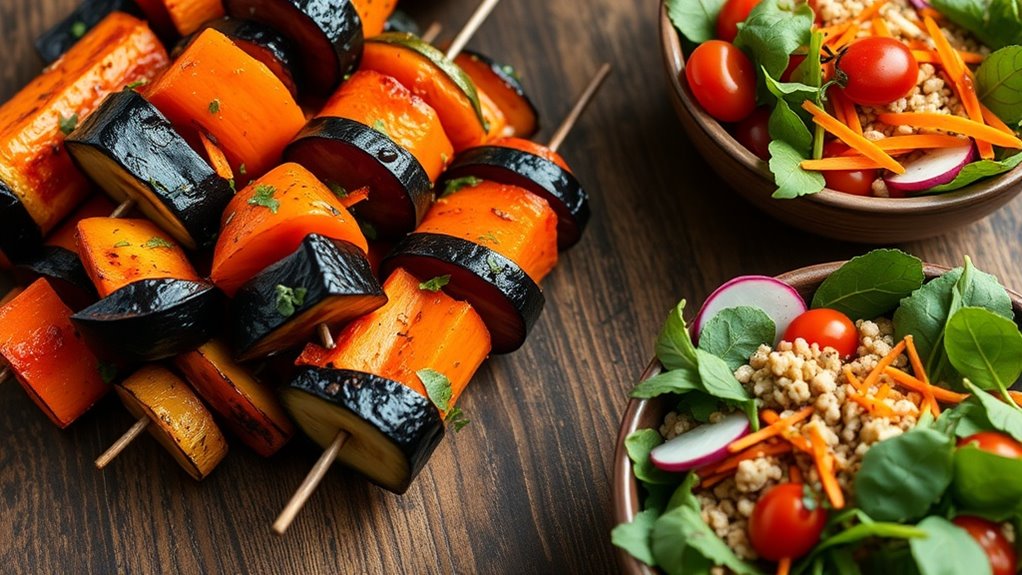
Incorporating more vegetables into your meals can be both simple and delicious when you use techniques like roasting, fresh salads, and sneaking them into recipes. Roasting vegetables with olive oil and herbs enhances their flavor, making them more appealing and encouraging healthy eating habits. Adding colorful vegetables like spinach, tomatoes, and cucumbers to salads boosts your nutrient intake and increases meal satisfaction. You can also puree vegetables into sauces, soups, or meatloaf to slip extra nutrients into dishes without changing the taste much. Including vegetables in smoothies with greens or hidden veggies makes it easy to boost fiber and vitamins effortlessly. Incorporating small servings of roasted or raw vegetables into every meal helps develop consistent healthy eating habits and improves your overall diet quality. These simple strategies make vegetables a more natural part of your daily routine, supporting balanced, nutritious days.
Choose Water Infused With Fresh Fruit Instead of Sugary Drinks and Sodas
Switching to water infused with fresh fruit can make hydration more enjoyable while cutting back on added sugars. Combining berries, citrus, or cucumber not only boosts flavor but also encourages you to drink more throughout the day. This simple swap can help reduce your sugar intake and support better overall health.
Flavorful Fruit Combinations
If you’re looking for a tasty way to stay hydrated, infusing water with fresh fruit is a smart alternative to sugary drinks and sodas. Fruit-infused water offers natural sweetness and a variety of flavor combos that can make hydration more enjoyable. Here are some ideas to get you started:
- Berries and Mint – a invigorating blend rich in antioxidants.
- Citrus and Cucumber – crisp, tangy, and hydrating.
- Pineapple and Basil – tropical with a fragrant twist.
These simple swaps not only make your water more appealing but also encourage higher intake, reducing the desire for sugary beverages. Using whole fruits in water maximizes benefits like vitamin C and antioxidants, supporting overall health.
Natural Hydration Boosts
Choosing water infused with fresh fruit is a simple yet effective way to boost hydration and cut back on sugary drinks. Natural hydration is essential for overall health, and flavored water makes it easier to stay hydrated throughout the day. By replacing sodas and sugary beverages with fruit-infused water, you eliminate empty calories and reduce sugar intake, lowering the risk of obesity and type 2 diabetes. Adding herbs like mint or basil enhances flavor without extra calories. Studies show that many people find flavored water more appealing, encouraging better hydration habits. This swap not only supports healthy drinks but also helps prevent tooth decay and improves digestion. Infused water is a delicious, low-calorie alternative that keeps you hydrated and healthier.
Reduce Sugar Intake
Replacing sugary drinks like soda and fruit juices with water infused with fresh fruit is an effective way to cut back on added sugars and improve your health. Simple swaps like these help you reduce sugar intake, lowering your risk of obesity and type 2 diabetes. Infused water with berries, lemon, or cucumber adds natural flavor without calories or artificial sweeteners, making hydration enjoyable. To deepen your understanding, consider these points:
- Replacing just one sugary drink daily can save around 150 calories.
- Infusing water helps satisfy sweet cravings naturally.
- Limiting added sugars to less than 10% of daily calories becomes easier.
Making this switch promotes better hydration and overall health by reducing unnecessary sugar consumption.
Use Healthy Oils Like Olive Oil for Cooking and Dressings Instead of Butter or Shortening
Using healthy oils like olive oil instead of butter or shortening is a smart way to improve your diet. Olive oil, especially extra virgin, is rich in monounsaturated fats that can help lower bad LDL cholesterol and reduce your risk of heart disease. Replacing saturated fats from butter or shortening with olive oil can markedly decrease your intake of unhealthy fats. Plus, olive oil contains antioxidants like vitamin E and polyphenols, which have anti-inflammatory benefits. When you use olive oil for cooking, sautéing, or dressings, you not only add flavor but also boost your intake of healthier fats. Research shows that swapping saturated fats for olive oil can improve your lipid profile and support long-term heart health. Making this simple change can be an effective step toward more balanced, nutritious days, helping you care for your heart while enhancing your meals.
Opt for Whole Grains Such as Quinoa, Brown Rice, or Wholemeal Bread Instead of Refined Carbs
Since refined carbs can cause rapid spikes in blood sugar and leave you feeling hungry sooner, choosing whole grains like quinoa, brown rice, or wholemeal bread makes healthier, more balanced days. Whole grains are high in dietary fiber, supporting digestion and helping maintain steady blood sugar levels. They’re also packed with vitamins, minerals, and antioxidants because they retain their bran and germ layers, unlike refined grains. Replacing refined carbs with whole grains can markedly lower your risk of type 2 diabetes and heart disease by improving cholesterol profiles. Plus, studies show that whole grains increase satiety, making it easier to control your weight. Here are a few simple ways to make healthier choices:
- Swap white bread for wholemeal bread at breakfast or sandwiches.
- Use brown rice instead of white rice for stir-fries and side dishes.
- Incorporate quinoa into salads or as a grain base.
This easy switch can considerably boost your overall nutrition.
Snack on Crunchy Vegetables With Flavorful Spreads Instead of Chips and Trail Mix
Opting for crunchy vegetables paired with flavorful spreads is a smart way to satisfy snack cravings healthfully. Vegetables like carrots, bell peppers, and celery provide fiber, vitamins, and fewer calories compared to chips and trail mix. Using flavorful spreads such as hummus, guacamole, or low-fat cheese boosts taste and makes snacking more enjoyable. Incorporating vegetables into your snacks increases nutrient intake and reduces reliance on processed, high-fat options. The satisfying crunch of raw vegetables helps curb cravings for less nutritious snacks, making it easier to stick to healthier choices. Plus, these swaps support balanced nutrition throughout your day, offering essential nutrients without excess calories or unhealthy fats. By choosing crunchy vegetables with tasty spreads, you can enjoy a more nourishing snack that keeps you full longer and fuels your body effectively. It’s an easy, evidence-based way to improve your snack game and support overall health.
Common Questions
What Is the 3 3 3 Rule for Eating?
Think of the 3 3 3 rule as your game plan for balanced eating. It means you aim for three servings of vegetables, three of fruit, and three of whole grains daily. By paying attention to meal timing and portion control, you can stay on track without feeling overwhelmed. This simple guideline helps guarantee you’re getting essential nutrients, supporting overall health, and keeping your energy steady throughout the day.
What Is the 80% Rule in Eating?
The 80% rule in eating means you stop when you’re roughly 80% full, helping you practice mindful snacking and better portion control. Instead of finishing everything on your plate, listen to your body’s hunger cues, which can prevent overeating and support healthier digestion. Applying this rule encourages you to eat more intuitively, reducing calorie intake and promoting more balanced, sustainable eating habits over time.
What Are Some Healthy Comfort Food Swaps?
Ever crave cozy comfort food without the guilt? You can make healthy ingredient substitutions like swapping mashed potatoes for roasted cauliflower or sweet potato mash, or choosing baked chicken instead of fried. For guilt-free snack ideas, try fruit crisps or yogurt with berries. These swaps let you enjoy your favorites while boosting fiber and reducing unhealthy fats. Isn’t it time to indulge smarter and feel better afterward?
What to Eat Every Day for a Balanced Diet?
To eat every day for a balanced diet, focus on meal prep with colorful vegetables, whole grains, and lean proteins like chicken or fish. Incorporate snack ideas like nuts, yogurt, or fresh fruit to keep energy steady. Stay hydrated with water or infused water, and limit processed foods and added sugars. Consistency is key—plan your meals and snacks ahead to guarantee you’re nourishing your body with nutrient-dense choices.