
To use aromatherapy for focus and calm, choose kid-safe essential oils like lavender, frankincense, or eucalyptus, and dilute them with a carrier oil at 1-5%. Diffuse these oils in a quiet space for 15-30 minutes or apply diluted blends to pulse points with roll-ons. Always patch test and monitor reactions to guarantee safety. Using these simple techniques can create a soothing environment—exploring more will help you optimize your routines.
Key Points
- Diffuse kid-safe essential oils like lavender, bergamot, or eucalyptus for 15-30 minutes to promote calm and mental clarity.
- Use portable inhalers or roll-on blends with diluted oils at 2-5% for quick, discreet focus or relaxation.
- Apply diluted essential oils to pulse points to help induce calmness or improve focus during activities.
- Create routines by diffusing calming oils before sleep or study and incorporating them into massages or baths.
- Monitor reactions and adjust blends or diffusion times to ensure safety and maximize their calming and focusing effects.
Selecting Kid-Safe Essential Oils for Focus and Calm
When choosing essential oils for helping children focus and feel calm, it’s important to stick with those that are considered kid-safe. Calm and gentle, essential oils like lavender, frankincense, and eucalyptus are popular calming oils that are safe when properly diluted. Always remember to use a carrier oil, such as coconut or jojoba, to dilute the essential oils to a maximum of 5%, reducing the risk of irritation or adverse reactions. This ensures the oils are gentle and safe for topical use on children. Be sure to select only 100% pure, high-quality essential oils from reputable sources to avoid contamination. Before regular use, conduct a patch test by applying a small amount of the diluted oil to your child’s skin and monitoring for any allergic reactions. Following these guidelines helps you create a safe, calming environment using essential oils that are both effective and kid-safe.
Diffusing Essential Oils to Create a Peaceful Environment
Have you ever wondered how diffusing essential oils can transform your environment into a peaceful sanctuary? Diffusing essential oils like lavender, eucalyptus, or bergamot disperses aromatic molecules evenly throughout your space, promoting a calming atmosphere. Ultrasonic diffusers are especially effective, breaking the oils into fine mist particles for sustained, even diffusion over time. Placing your diffuser in common areas ensures the scent fills the space without overwhelming, creating a truly peaceful environment. Using a diffuser for 15-30 minutes before work or study can help reduce stress levels and boost mental clarity. Regular cleaning of your diffuser prevents mold buildup and maintains ideal dispersion of therapeutic oils. By choosing the right location and diffuser, you can effortlessly cultivate a serene setting that enhances focus and relaxation, making your environment a true haven for calm and clarity.
Using Roll-On Blends for Quick Support During Activities
Roll-on blends offer a simple and effective way to get quick support during busy moments, thanks to their easy application directly on pulse points. You can customize these blends with your favorite essential oils to suit your needs, whether for focus or relaxation. Reapplying as needed helps maintain clarity and calm throughout your activities.
Easy Application Technique
Using roll-on blends is a simple and effective way to quickly support your focus and calmness during activities. To apply, gently roll the blend onto pulse points like your wrists, temples, or behind your ears. This allows the essential oils to absorb quickly and deliver immediate effects. Remember to use a pre-diluted roll-on that contains a safe concentration of essential oils, typically 2-5%, to ensure comfort and safety. Reapply every 1-2 hours as needed to maintain your focus or calm. To keep your roll-on effective, store it in a cool, dark place, protecting the integrity of the essential oils.
- Apply directly onto pulse points for rapid support
- Use a pre-diluted blend for safe application
- Reapply as needed, avoiding overuse
Customizable Aromatherapy Blends
Creating your own customizable aromatherapy roll-on blends allows you to tailor support for focus and calmness to suit your specific needs. By selecting essential oils like peppermint, rosemary, or lemon, you can craft blends that promote mental clarity and alertness. Use essential oils with carrier oils such as jojoba or coconut oil at 2-5% dilution for safe, skin-friendly application. Applying a few drops to pulse points like wrists, temples, or behind the ears can provide rapid relief during activities like studying or exercise. Pre-made or DIY roll-ons offer convenient, portable support, making it easy to incorporate aromatherapy into your daily routine. Regular use of personalized blends helps sustain focus and foster calmness, especially during demanding or stressful moments.
Incorporating Aromatherapy Bracelets and Inhalers for Portability
Because you’re often on the go, incorporating aromatherapy bracelets and inhalers into your routine provides a simple way to access calming or focusing scents whenever you need them. These accessories are designed for portability, making it easy to boost mental clarity during busy moments. Aromatherapy bracelets contain small vials or pads soaked with portable essential oils like peppermint or eucalyptus, delivering rapid benefits directly to your olfactory system. Inhaler sticks or roll-on inhalers offer a discreet, quick way to breathe in focus-enhancing scents without hassle. They’re especially useful for children and adults who want immediate calming or alertness support without bulky bottles. Regular use of these portable tools can reinforce routines for focus and calm throughout your day, whether during school, work, or travel.
- Conveniently carry your favorite essential oils everywhere
- Achieve rapid mental clarity with a quick sniff
- Easily integrate aromatherapy into your daily routine
Proper Dilution and Patch Testing for Safe Application
While portable aromatherapy tools make it easy to enjoy your favorite scents on the go, it’s important to guarantee safe application whenever you use essential oils on your skin. Always dilute essential oils with a carrier oil like coconut or jojoba at a ratio of 1-5%, which helps prevent skin irritation. Before applying, perform a patch test by placing a small amount of the diluted oil on a discreet skin area, such as the inside of your wrist. Wait 24 hours to check for any signs of allergic reaction or irritation. Use a freshly prepared mixture for each test to avoid contamination, and never apply undiluted essential oils directly to your skin, as they can cause burns or dermatitis. If you notice redness, itching, or swelling, discontinue use immediately. Proper dilution and patch testing are simple yet essential steps to ensure your aromatherapy experience remains safe, calming, and effective.
Using Aromatherapy in Routine Activities and Transitions
Incorporating aromatherapy into your daily routines and shifts can help foster focus and relaxation when you need it most. Using diffusers with calming oils like peppermint, lemon, or rosemary can energize your work or study sessions, creating a focused environment. During change routines, portable inhalers or aromatherapy roll-ons with chamomile or cedarwood can reduce stress and promote calmness, making it easier to shift gears. Applying diluted essential oils to your wrists or temples before activities supports mental clarity and eases transitions. Adding a few drops of calming oils to your bathwater or shower routine creates a soothing environment that helps you unwind after busy periods. Aromatherapy accessories such as bracelets or diffuser necklaces provide subtle, continuous scent exposure, keeping you centered throughout hectic days. These simple practices integrate seamlessly into your routine, enhancing focus and relaxation naturally.
Combining Essential Oils for Enhanced Focus and Relaxation

Blending essential oils can create powerful effects for focus and relaxation, but it’s important to use synergy and proper techniques. You’ll want to explore ideal diffusion methods and guarantee safe combinations to get the most benefit. With mindful blending, you can personalize your aromatherapy routine to support your mental clarity and calmness effectively.
Synergistic Oil Blends
Have you ever wondered how combining different essential oils can enhance your focus and promote relaxation simultaneously? Synergistic oil blends are designed to harness the power of multiple essential oils, creating a more effective aroma for your needs. For example, blending peppermint with lemon can improve focus while calming your mind. Rosemary combined with lavender or frankincense helps balance mental clarity with relaxation, reducing stress. Citrus oils like sweet orange paired with grounding oils such as vetiver can elevate mood and decrease anxiety. These blends produce a therapeutic response greater than individual oils alone. Just remember to dilute properly and test your blends to guarantee safety. With thoughtful combinations, you can enjoy a calming yet invigorating aromatherapy experience tailored to your focus and relaxation needs.
Optimal Diffusion Techniques
To maximize the benefits of aromatherapy, selecting ideal diffusion techniques is essential for creating a focused and relaxing environment. Using ultrasonic diffusers with adjustable mist settings guarantees even diffusion of essential oils like peppermint and lemon, boosting concentration and calm. Combining complementary oils, such as rosemary and bergamot, creates a balanced atmosphere that fosters mental clarity while reducing stress. Keep the concentration of essential oils low to moderate—about 1-3 drops per 100 ml of water—to optimize therapeutic effects without overwhelming your senses. Implementing intermittent diffusion cycles, like 30 minutes on and off, maintains a steady, calming ambiance and prevents desensitization. Enhancing diffusion with ambient lighting or ultrasonic technology elevates both the sensory experience and the effectiveness of your aromatherapy practice.
Safe Combination Practices
Combining essential oils thoughtfully can markedly enhance both focus and relaxation, provided you follow safe practices. Always dilute essential oils with a carrier oil to prevent skin irritation, especially when applying topically. When blending, consider the concentration—too strong can be overwhelming, while too weak might be ineffective. For example, mixing vetiver and bergamot in a carrier oil can promote relaxation without losing alertness. Diffusing citrus oils like lemon and orange can boost mood safely when blended properly.
- Use a proper carrier oil to dilute essential oils before topical application
- Maintain a balanced concentration to avoid skin irritation or overwhelming aromas
- Experiment with different blends, like frankincense and lavender, for calming focus
These practices ensure safe, effective use of essential oil combinations.
Monitoring Reactions and Adjusting Usage Accordingly
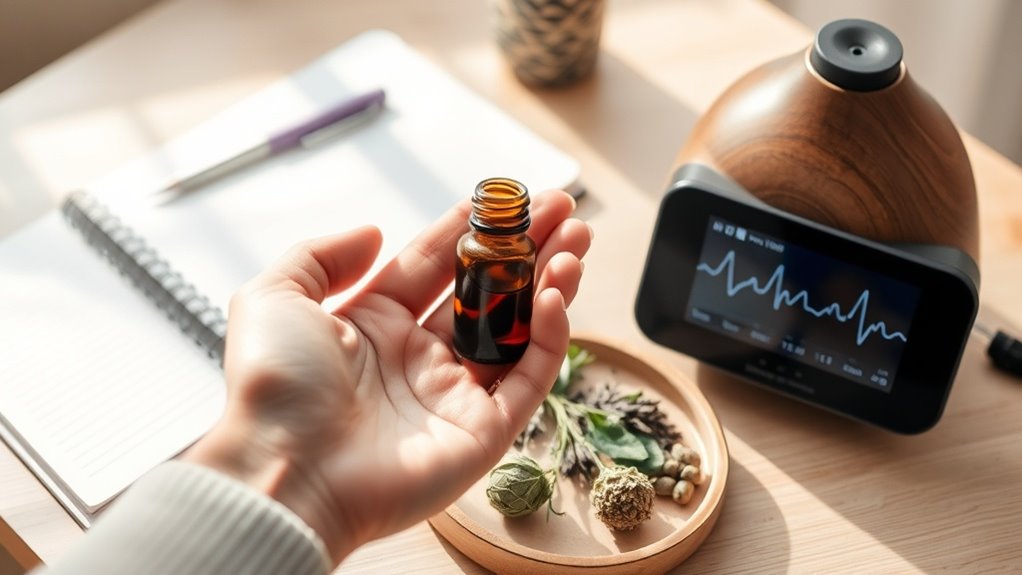
Monitoring how your body reacts to aromatherapy is essential for guaranteeing a safe and beneficial experience. Paying attention to reactions such as skin irritation, like redness or itching, helps you determine if you should discontinue use or adjust your approach. Keep track of any allergic responses, including sneezing, hives, or respiratory discomfort, especially when diffusing or inhaling oils. It’s a good idea to perform a patch test by applying a diluted oil to a small skin area beforehand to check for sensitivity. If you notice behavioral or physiological changes, like increased anxiety, fatigue, or discomfort, consider adjusting your usage or frequency. Reducing or stopping essential oil applications may be necessary if adverse reactions persist. Remember, listening to your body and monitoring these responses ensures that your aromatherapy practice remains safe and tailored to your needs. When in doubt, consult a healthcare professional for personalized guidance.
Creating a Calming Bedtime or Study Routine With Aromatherapy
Creating a calming routine with aromatherapy can help signal your mind that it’s time to relax or focus. Choosing soothing oils like lavender or chamomile and diffusing them before bed or study sessions can promote a peaceful environment. Incorporating these practices consistently can strengthen your routine and support better sleep or concentration.
Choosing Relaxing Oils
Choosing the right relaxing oils can considerably enhance your bedtime or study routine by fostering a tranquil environment. Calming oils like lavender, chamomile, and sandalwood are popular choices for promoting relaxation through aromatherapy. Diffusing essential oils in a quiet, dimly lit space creates a soothing ambiance that helps reduce stress and sharpen focus. You can also add a few drops of calming oils to a warm bath or mix them with a carrier oil for gentle massage, further supporting relaxation before sleep or study. To maximize their benefits, incorporate these oils into a consistent routine, such as diffusing 30 minutes prior to bedtime. This helps your mind associate these scents with calmness and focus, creating a peaceful, productive environment.
Diffusing Before Sleep
Have you ever wondered how a simple diffuser can transform your bedtime or study routine into a more peaceful experience? Diffusing calming essential oils like lavender or chamomile 30 minutes before sleep creates a relaxing environment that promotes faster sleep onset. Using a diffuser with ultrasonic technology disperses a fine mist, ensuring a consistent, soothing scent throughout the room. Incorporate a few drops into a warm bath or pillow spray to enhance relaxation. Proper ventilation is key—diffuse in a well-ventilated space for 20-30 minutes to avoid scent overload.
| Diffusing Calming Essential Oils | Benefits |
|---|---|
| Lavender, Chamomile | Promote sleep, reduce stress |
| Ultrasonic Diffuser | Even scent distribution |
| Duration | 20-30 minutes for ideal effect |
Incorporating Routine Practices
Incorporating routine practices with aromatherapy can enhance your bedtime or study sessions by fostering a sense of calm and focus. Consistency helps your mind associate specific scents with relaxation, making it easier to unwind or concentrate. You can achieve this by:
- Using a diffuser with calming essential oils like lavender or chamomile at the same time each day.
- Applying diluted essential oils such as frankincense or sandalwood to pulse points or the soles of your feet.
- Spraying pillowcases or bedding with aromatherapy sprays to create a peaceful environment.
These simple steps, integrated into your daily routine, deepen the calming effects of aromatherapy and help you establish a tranquil, focused atmosphere. Routine practices reinforce the soothing power of essential oils, making calmness a natural part of your day.
Tips for Safe Ingestion and Avoiding Common Mistakes
While it might be tempting to try ingesting essential oils for their benefits, it’s crucial to prioritize safety and proceed with caution. Always dilute oils thoroughly before any internal use, as undiluted oils can cause mucosal burns or irritation. Remember that not all essential oils are safe for ingestion—only use those confirmed as safe and always verify their purity. Avoid common mistakes like exceeding recommended doses, which can lead to toxicity or damage to your liver and nervous system. Oils like cinnamon, oregano, and clove are particularly risky and should only be consumed under professional guidance. Most reputable sources advise against at-home ingestion to prevent accidental poisoning or adverse reactions. If you’re considering internal use, consult a trained healthcare professional first. Your safety is paramount, so always take the time to research, dilute properly, and adhere to recommended guidelines for ingestion.
Common Questions
How to Use Essential Oils for Focus?
You can use essential oils for focus by diffusing energizing scents like peppermint or lemon, which boost mental clarity and provide an energy lift. Applying diluted oils like rosemary to pressure points helps with quick focus, while personal inhalers keep you alert on the go. These methods also support stress reduction and mood enhancement, making it easier to stay calm and concentrated during demanding tasks. Remember, consistency enhances their calming benefits over time.
What Is the 20 30 50 Rule for Essential Oils?
The 20-30-50 rule guides how you blend essential oils safely. Use 20% for sensitive skin, 30% for massage blends, and 50% for cleaning sprays. When blending, remember safety precautions like proper dilution and storage tips to keep oils fresh. Scent layering enhances your experience, but always start with lower concentrations. This approach guarantees safe, effective use of essential oils, creating a calming, balanced environment.
What Essential Oils Are Good for Calm and Focus?
If you want to unseal the secret to razor-sharp focus and deep relaxation, these oils are your magic potion. Lavender relaxation soothes your nerves, while peppermint alertness fuels your mental drive. Eucalyptus clarity clears away fog, and rosemary memory sharpens your mind. Use them in diffusers or diluted for a calming, focus-boosting experience. Proper use can transform your day from chaos to calm, effortlessly.
Does Aromatherapy Work for Focus?
Aromatherapy can indeed boost your focus, but it’s important to follow safety guidelines and store essential oils properly. Using diffusers like ultrasonic or nebulizing types helps disperse oils like peppermint or lemon effectively. Blending techniques allow you to create personalized scents, enhancing alertness while maintaining safety. When used correctly, aromatherapy can promote mental clarity and calm, making your work or study sessions more productive and enjoyable.