
To ease anxiety in the evening, try creating a calming routine with deep breathing or gentle stretches to release tension. Turn off screens at least an hour before bed and listen to soothing sounds or nature noises to relax your mind. Writing in a journal or using calming scents like lavender can help clear racing thoughts. Establishing a consistent bedtime and practicing mindfulness can strengthen your relaxation habits—continue exploring these calming practices to find what works best for you.
Key Points
- Practice deep breathing exercises combined with calming visualization to reduce stress and promote relaxation before bed.
- Engage in gentle stretching or yoga poses to physically relax the body and ease anxious tension.
- Establish a consistent bedtime routine, including dimming lights and avoiding screens, to signal the body to wind down.
- Incorporate soothing scents like lavender or chamomile through aromatherapy to create a calming environment.
- Journaling or reading relaxing material helps clear the mind and shift focus away from worries, fostering mental calmness.
Practice Deep Breathing Exercises
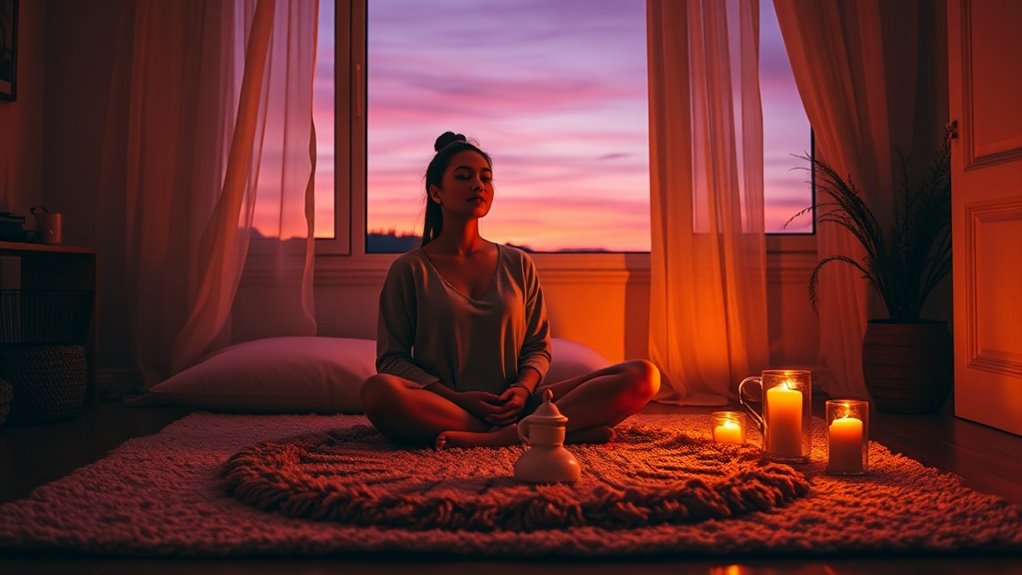
Practicing deep breathing exercises can be an effective way to unwind after a busy day and prepare your mind for restful sleep. By focusing on mindful breathing, you help calm your nervous system, reducing feelings of anxiety. Take slow, deliberate breaths, inhaling deeply through your nose, then exhaling fully through your mouth. As you breathe, incorporate calming visualization—imagine a peaceful scene or a soothing color—to enhance relaxation. This mental imagery guides your attention away from stressors and anchors you in the present moment. Consistent practice helps regulate your heart rate and lowers cortisol levels, creating a sense of tranquility. Remember, there’s no need to rush; simply dedicate a few minutes to this mindful exercise each evening. Over time, you’ll find it easier to shift into a restful state, making it a valuable part of your nightly routine for easing anxiety and promoting better sleep.
Engage in Gentle Stretching or Yoga
Gentle stretching or yoga can help your body relax and release tension after a busy day. Try relaxing poses like child’s pose or seated forward bend, combined with calm breathing techniques to enhance your sense of calm. These simple practices can improve your sleep quality and support overall well-being.
Relaxing Poses to Try
If you’re looking to unwind at the end of the day, trying some relaxing poses can make a considerable difference in calming your mind and body. Gentle stretches and restorative poses help release tension and promote restful sleep. Consider trying:
- Child’s Pose (Balasana) to gently stretch your back and hips
- Legs-Up-The-Wall Pose (Viparita Karani) to relax your legs and lower back
- Reclining Twist to release spinal tension and soothe your nervous system
These poses are easy to perform and require minimal effort, making them perfect for evening routines. Focus on slow, deep breaths as you hold each pose, allowing your body to fully relax. Incorporating these restorative poses into your nightly ritual can considerably ease anxiety and prepare you for a peaceful rest.
Breathing Techniques for Calm
Engaging in calming breathing techniques can substantially enhance your evening routine, especially when combined with gentle stretching or yoga. Focus on breath awareness to center yourself and reduce stress. Diaphragmatic breathing, also known as belly breathing, is particularly effective for calming the nervous system. To practice, place one hand on your chest and the other on your abdomen. Inhale slowly through your nose, allowing your diaphragm to expand and fill your lungs completely. Exhale gently through your mouth or nose, releasing tension with each breath. This simple technique helps lower cortisol levels and promotes relaxation. Incorporating breath awareness with gentle movements reinforces a sense of calm, making it easier to shift into restful sleep and easing anxiety before bed.
Create a Digital Detox Routine

Since screens can easily distract us from winding down, establishing a digital detox routine each evening is essential for promoting relaxation and better sleep. Excessive screen time, especially on social media, can interfere with your ability to relax and fall asleep. To create an effective routine, consider setting a specific time to turn off devices—ideally an hour before bed. This helps your mind unwind and reduces exposure to blue light, which hampers melatonin production.
Turning off screens an hour before bed supports relaxation and better sleep.
Here are some ways to implement your detox:
- Replace screens with a physical book or journal to quiet your mind.
- Engage in calming activities like gentle stretching or meditation.
- Limit social media use in the evening to prevent overstimulation and comparison.
Listen to Soothing Music or Nature Sounds
Listening to soothing music or nature sounds can be a gentle way to calm your mind and prepare for restful sleep. Music therapy and sound healing have been shown to reduce stress and lower cortisol levels, making it easier to unwind after a hectic day. Soft melodies or the sounds of rain, waves, or forest ambiance can shift your focus away from anxious thoughts, promoting relaxation. These auditory experiences activate the parasympathetic nervous system, which helps slow your heart rate and relax your muscles. Creating a calming soundscape before bed can establish a peaceful routine, signaling your brain that it’s time to rest. Whether you choose instrumental music or nature’s sounds, consistency is key. Incorporating this simple ritual into your evening can considerably ease anxiety, making it easier to fall asleep and stay asleep throughout the night.
Write in a Journal to Release Thoughts
Writing in your journal helps clear your mind and process the day’s events, making it easier to relax. It also allows you to track your emotions and notice patterns that might affect your well-being. Plus, setting intentions for tomorrow can bring a sense of purpose and calm before bed.
Clear Your Mind
If your mind feels cluttered after a busy day, journaling can be a simple yet effective way to release those racing thoughts. Engaging in mindful reflection through writing helps you achieve mental decluttering, making it easier to relax and prepare for sleep. To get started, find a quiet space and let your thoughts flow freely onto the paper. This process helps you acknowledge worries without judgment, reducing their hold on you. Consider these tips:
- Write without editing to promote genuine expression
- Focus on feelings and sensations rather than solutions
- Use your journal as a safe space to release lingering thoughts
Track Daily Emotions
Tracking your daily emotions in a journal can deepen your awareness of how different experiences affect your mood and overall well-being. Emotional journaling and mood tracking help you identify patterns, triggers, and progress over time. By dedicating a few minutes each evening to reflect, you give yourself permission to release thoughts and feelings that may be weighing you down. This practice encourages self-compassion and clarity, reducing anxiety and fostering emotional resilience. Writing about your day allows you to process events objectively and notice subtle shifts in your mood. Consistent mood tracking can reveal insights that guide healthier habits and coping strategies, making it easier to manage stress and cultivate a calmer, more balanced mind before sleep.
Set Intentions Tonight
As you prepare for sleep, setting intentions can help you release lingering thoughts and cultivate a sense of calm. Writing in a journal allows you to reflect on your day and intentionally set a positive tone for tomorrow. Focus on setting positive intentions that align with your values, and take a moment to cultivate gratitude for what went well. This practice can ease anxiety by shifting your mindset from worries to appreciation. To enhance this, try to:
- Write about what you’re grateful for today
- Clarify your intentions for tomorrow
- Release any thoughts or worries that feel heavy
Incorporate Aromatherapy With Calming Scents
Incorporating aromatherapy with calming scents can be a simple yet effective way to enhance your evening routine. When you choose the right scents, you may experience reduced stress, improved sleep, and a sense of relaxation. The key is selecting calming scents that resonate with you, as scent preferences vary and influence aromatherapy benefits. For example, lavender is widely recognized for its ability to soothe nerves, while chamomile promotes tranquility. Here’s a quick guide to calming scent selection:
| Scent | Benefits | Best Use |
|---|---|---|
| Lavender | Reduces anxiety, improves sleep | Diffuse or add to bath |
| Chamomile | Calms nerves, promotes relaxation | Use in pillow sprays or teas |
| Bergamot | Eases tension, uplifts mood | Diffuser or massage oil |
| Frankincense | Enhances meditation, reduces stress | Aromatherapy inhaler |
Choose scents based on your preferences and needs, and let the soothing aromas create a peaceful, anxiety-free evening.
Read a Relaxing Book or Poetry
Reading a relaxing book or poetry before bed can help calm your mind and signal to your body that it’s time to unwind. Engaging with soothing stories or gentle verses creates a peaceful atmosphere, easing stress accumulated throughout the day. It’s important to choose calming content—relaxing novels or poetry with soft rhythms can promote relaxation and better sleep.
Consider these tips:
- Select reading poetry that resonates with tranquility and comfort.
- Opt for light, positive stories to avoid overstimulation.
- Keep the reading session brief, around 15-20 minutes, to prevent alertness from increasing.
This practice helps shift your focus away from worries and racing thoughts. The gentle act of reading fosters mindfulness, making it easier to relax and prepare for restful sleep. Incorporating this calming activity into your evening routine can markedly reduce anxiety and promote overall well-being.
Establish a Consistent Bedtime Schedule

Establishing a consistent bedtime schedule is one of the most effective ways to improve your sleep quality. When you stick to a regular sleep and wake time, you reinforce your body’s natural circadian rhythm, making it easier to fall asleep and wake up refreshed. Good sleep hygiene involves creating bedtime routines that signal to your brain it’s time to wind down, such as dimming the lights or avoiding screens. Consistency reduces nighttime awakenings and helps regulate stress hormones that can interfere with relaxation. Even if your schedule varies slightly, maintaining a similar bedtime each night helps your body anticipate rest. Over time, this routine becomes a comforting ritual, easing anxiety around sleep. Remember, small changes in your sleep schedule can have a big impact on your overall sleep quality and mental well-being, making restful nights more attainable and less stressful.
Practice Mindfulness or Meditation
Practicing mindfulness or meditation before bed can considerably enhance your ability to unwind and prepare for restful sleep. These practices help calm the mind, reduce stress, and promote emotional balance. The mindfulness benefits include lowering cortisol levels and increasing relaxation, making it easier to let go of the day’s worries. Meditation techniques such as deep breathing, body scans, or guided imagery are simple to incorporate and highly effective.
To get started, try:
- Focusing on your breath, inhaling slowly and exhaling fully
- Performing a body scan, noticing sensations from head to toe
- Listening to calming guided meditations designed for sleep
Consistent practice can make a significant difference in your sleep quality and anxiety levels. Remember, even a few minutes of mindfulness or meditation can create a peaceful transitionfrom daytime stress to a restful night.
Common Questions
How Long Should Each Evening Ritual Ideally Last?
The ideal length for your evening ritual varies, but generally, 15 to 30 minutes is optimal. Longer durations might lead to fatigue or distraction, while shorter ones may not be enough to relax your mind. Duration guidelines suggest that consistency matters more than duration itself. Focus on creating a calming routine that fits your schedule, allowing your mind to unwind gradually without feeling rushed or overwhelmed.
Can These Rituals Be Combined for Greater Effect?
Yes, you can combine mindfulness meditation with calming music to enhance their effects. Listening to soothing music during meditation can deepen relaxation and reduce anxiety more effectively. It’s important to find a balance that feels comfortable for you—start with short sessions, maybe 10-15 minutes, and gradually increase. Personalizing your routine with both practices may help you experience greater calmness and ease before bed.
Are There Specific Scents That Work Best for Aromatherapy?
You might be surprised to learn that lavender essential oils are often considered the most effective for calming anxiety. When choosing scents, trust your personal scent preferences, as they play a key role in their effectiveness. Essential oils like chamomile, bergamot, and ylang-ylang also promote relaxation. Experiment with different scents to find what soothes your mind best, creating a personalized evening ritual that eases your anxiety.
How Can I Maintain Consistency With My Evening Routine?
To stay consistent with your evening routine, set a specific time each night and stick to it, making it a non-negotiable part of your day. Incorporate simple practices like bedtime journaling and gratitude exercises, which help signal to your brain that it’s time to unwind. Creating a calming environment and reducing screen time before bed can also reinforce these habits, making them easier to maintain over time.
What if I Can’t Fall Asleep Even After Practicing These Rituals?
If you can’t fall asleep despite practicing relaxation techniques, try incorporating sleep tips like maintaining a consistent schedule, avoiding screens before bed, and creating a calm environment. Sometimes, your mind needs extra help to unwind. Consider deep breathing, progressive muscle relaxation, or listening to calming music. If sleep issues persist, it might be helpful to consult a healthcare professional to explore underlying causes and personalized strategies.