
To use meditation for sleep preparation, establish a consistent routine in a quiet, clutter-free environment with soothing scents and dim lighting. Focus on techniques like mindful breathing, body scans, or mantra repetition to activate your relaxation response and reduce physiological arousal. Incorporate gentle stretches or guided imagery to deepen your calmness. Regular practice enhances mental clarity and emotional regulation, easing your progression into sleep. Continuing further reveals detailed strategies to optimize your nightly meditation sessions.
Key Points
- Create a calming environment with dim lighting, minimal noise, and soothing scents to facilitate relaxation during meditation.
- Choose a meditation technique like body scan or mantra repetition tailored to address your sleep barriers.
- Focus on slow, diaphragmatic breathing and guided imagery to activate the parasympathetic nervous system and promote sleep readiness.
- Establish a consistent bedtime routine, practicing meditation at the same time nightly to condition your mind and body for sleep.
- Use grounding techniques and maintain proper posture to reduce physical tension and enhance meditation effectiveness before sleep.
Understanding the Benefits of Meditation Before Bed
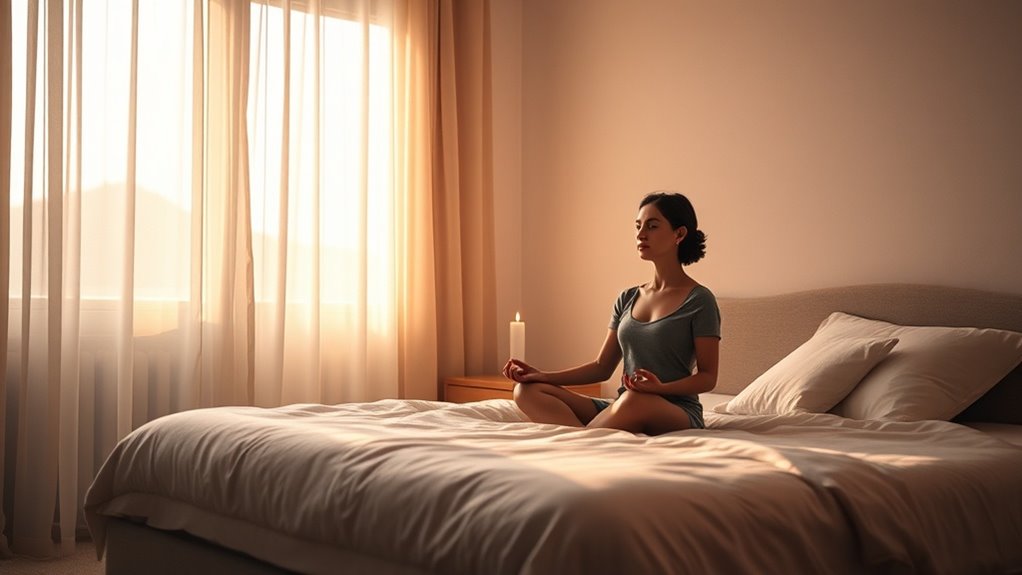
Engaging in meditation before bed can substantially enhance sleep quality by activating the body’s relaxation response and reducing stress-related physiological arousal. This process effectively lowers cortisol levels and decreases sympathetic nervous system activity, promoting a state conducive to sleep. Evidence indicates that regular evening meditation reduces perceived stress, which is a common barrier to falling asleep and maintaining sleep continuity. Additionally, meditation fosters mental clarity by quieting racing thoughts and emotional disturbances that can interfere with sleep onset. Neuroimaging studies show increased activity in prefrontal regions associated with focused attention and cognitive control after meditation, supporting improved mental clarity. By diminishing stress and sharpening mental focus, meditation creates an ideal psychological environment for sleep. Incorporating these practices into your nightly routine can lead to more restful, uninterrupted sleep cycles, ultimately benefiting overall health and well-being.
Creating a Calm Environment for Evening Meditation
Creating an ideal environment for evening meditation involves controlling sensory input to enhance relaxation, which is supported by research showing its impact on sleep quality. Using dim lighting reduces overstimulation of the visual system, while minimizing noise disruptions prevents arousal that can interfere with relaxation. Additionally, arranging a comfortable meditation space encourages sustained practice and facilitates shift into sleep.
Dim Lighting Options
Lighting plays a crucial role in setting the tone for evening meditation, as exposure to bright or harsh light can disrupt melatonin production and delay sleep onset. To optimize your environment, consider using ambient lighting that produces a soft, diffuse glow, which has been shown to promote relaxation and circadian alignment. Candle options are particularly effective, offering warm, low-intensity illumination that minimizes glare and creates a calming atmosphere. Research indicates that dim lighting stimulates parasympathetic nervous system activity, facilitating relaxation. Avoid fluorescent or overhead lights, as these emit blue light that can inhibit melatonin secretion. By carefully selecting dim lighting and candle options, you create an environment conducive to mindfulness and restful sleep, supporting the body’s transition from wakefulness to a restorative sleep state.
Minimize Noise Disruptions
Since noise disturbances can considerably interfere with the relaxation necessary for effective evening meditation, it’s essential to establish a quiet environment. Implement soundproofing techniques such as sealing gaps around doors and windows, adding heavy curtains, or using acoustic panels to absorb external sounds. White noise options—like a fan, diffuser, or dedicated white noise machine—can mask disruptive noises, promoting a consistent auditory backdrop that enhances focus and relaxation.
To create an ideal environment, consider:
- Using soundproofing materials to block external noise.
- Incorporating white noise devices for consistent sound masking.
- Positioning your meditation space away from busy areas to minimize interruptions.
These strategies can notably improve your ability to meditate peacefully before sleep.
Comfortable Meditation Space
A comfortable meditation space is essential for facilitating relaxation and promoting effective sleep preparation. Your meditation posture should support spinal alignment to reduce physical tension and enhance alertness in the initial stages, gradually shifting to relaxation. Using appropriate meditation accessories, such as cushions or mats, can improve comfort and stability, encouraging sustained postures without discomfort. Make certain the environment is free from distractions, with soft lighting and minimal clutter. The space should evoke a sense of calm, encouraging mindfulness and reducing stress. Incorporating elements like soothing scents or calming visuals can reinforce relaxation cues. A well-designed meditation environment optimizes physiological relaxation responses, facilitating the transition from wakefulness to sleep readiness. Consistency in setting up this space helps condition your mind and body for restful sleep.
Choosing the Right Meditation Technique for Sleep
Choosing the right meditation technique for sleep is essential because different methods target distinct aspects of relaxation and mental calmness. For example, mantra repetition can help quiet racing thoughts by focusing your mind on a specific sound or phrase, promoting mental clarity. Alternatively, a body scan involves systematically directing attention to different parts of your body, releasing tension and fostering physical relaxation.
Different meditation techniques, like mantra repetition and body scan, target mental calmness and physical relaxation for better sleep.
Consider these options:
- Mantra Repetition – Use calming phrases or sounds to anchor your mind, reducing intrusive thoughts.
- Body Scan – Progressively relax muscles by focusing on sensations in each body part, easing physical discomfort.
- Mindfulness Meditation – Observe your thoughts non-judgmentally, cultivating acceptance and reducing sleep-disturbing rumination.
Selecting the appropriate technique depends on your specific needs—whether mental chatter or physical tension hampers sleep. Evidence supports that personalized approaches, like mantra repetition or body scan, enhance sleep onset and quality.
Preparing Your Body and Mind for Meditation
Preparing your body and mind effectively for meditation involves establishing a conducive environment and adopting specific pre-meditation routines that promote relaxation. Evidence shows that mindfulness techniques, such as focused breathing or body scans, help anchor your attention and reduce cognitive clutter. Incorporate relaxation strategies like dim lighting, comfortable seating, and minimizing external distractions to enhance physiological calmness. Avoid stimulating activities, including screen use or vigorous exercise, at least 30 minutes before meditating. Engaging in gentle stretching or progressive muscle relaxation can further lower tension levels, facilitating a receptive mental state. Deep diaphragmatic breathing prior to meditation activates the parasympathetic nervous system, promoting restfulness. Consistency in these routines trains your body and mind to associate these cues with relaxation, making meditation more effective. Overall, a structured approach combining mindfulness techniques and relaxation strategies creates an ideal foundation for meditation aimed at improving sleep.
Step-by-Step Guide to a Bedtime Meditation Routine
Creating an effective bedtime meditation routine begins with selecting a comfortable, quiet spot that minimizes sensory input and promotes relaxation. Focus your attention on slow, diaphragmatic breathing to activate the parasympathetic nervous system, facilitating calming effects. Incorporating guided imagery can enhance relaxation, helping you shift mental focus away from intrusive thoughts and prepare your mind for sleep.
Find a Comfortable Spot
To effectively begin your meditation, it’s essential to settle into a comfortable and supportive position that minimizes physical distractions and promotes relaxation. Use soft cushions to elevate your hips and support your back, reducing tension. Incorporate calming aromatherapy scents like lavender or chamomile to create a soothing environment that enhances relaxation.
Consider these three key elements:
- Choose a quiet, dimly lit space free from interruptions.
- Sit or lie down in a position that supports your spine and allows your muscles to relax.
- Make sure your chosen spot is cozy and inviting, encouraging a sense of safety and calm.
This setup helps facilitate your body into a relaxed state, setting the foundation for effective meditation and better sleep preparation.
Focus on Breathing
Focusing on your breath is a fundamental component of bedtime meditation, as it activates the parasympathetic nervous system and promotes relaxation. Utilizing specific breathing techniques, such as mindful inhalation, can effectively reduce sympathetic activity associated with stress and arousal. Begin by observing your natural breath without attempting to change it, noting the sensation of air entering and leaving your nostrils or chest movement. Practice slow, deliberate inhalations, emphasizing the length and depth of each breath. This focused attention on breathing helps anchor your awareness, diminishing racing thoughts and physiological tension. Consistent application of mindful inhalation during bedtime can enhance parasympathetic engagement, facilitating a smoother shift into sleep and improving overall sleep quality.
Use Guided Imagery
Guided imagery is a powerful technique that leverages the mind’s ability to evoke calming mental scenes, thereby promoting relaxation and facilitating sleep onset. Using visualization techniques, you engage in mental rehearsal of peaceful environments, which reduces physiological arousal associated with stress and anxiety. This practice activates the parasympathetic nervous system, supporting sleep readiness. To deepen relaxation, consider these steps:
- Picture yourself in a tranquil setting, like a quiet beach or a lush forest, focusing on sensory details.
- Use mental rehearsal to imagine each step of your ideal sleep environment, enhancing emotional comfort.
- Incorporate slow, deliberate breathing in sync with your imagery to reinforce a state of calm.
This evidence-based approach fosters a sense of safety and serenity, easing the progression into sleep.
Incorporating Breathing Exercises to Promote Relaxation
Incorporating breathing exercises into your bedtime routine can greatly enhance relaxation and facilitate the shift into sleep. Evidence shows that controlled breathwork activates the parasympathetic nervous system, promoting stress reduction and calming physiological arousal. Techniques such as diaphragmatic breathing or box breathing enhance breath control, allowing you to consciously slow your respiratory rate and deepen each inhale and exhale. This deliberate regulation of breath influences heart rate variability, reducing cortisol levels and diminishing feelings of anxiety or tension. Research indicates that consistent practice of these exercises can decrease sleep onset latency and improve sleep quality over time. To maximize benefits, focus on maintaining a steady, even rhythm, with full expiration to stimulate relaxation responses. Incorporating specific breathing patterns before bed can serve as an effective, evidence-based method to lower stress and shift your body into a state conducive to restful sleep.
Tips for Maintaining Consistency and Deepening Your Practice

To maintain consistency and deepen your meditation practice, establishing a structured routine is essential, as regularity enhances neural pathways associated with relaxation and stress reduction. Consistent practice reinforces neural circuits involved in calming responses, leading to more effective sleep preparation.
Establishing a routine strengthens relaxation pathways, making meditation more effective for restful sleep.
Here are three strategies to support this:
- Habit tracking: Use a journal or app to monitor your meditation sessions. Tracking progress fosters accountability and provides motivation by visualizing improvements over time.
- Accountability partners: Share your goals with a friend or join a meditation group. External accountability encourages commitment and offers emotional support during challenging days.
- Scheduled sessions: Set specific times each evening dedicated solely to meditation. Consistent timing helps establish a habit, making it easier to deepen your practice over time.
Implementing these practices creates a sustainable routine, enhancing both consistency and the depth of your meditation, ultimately improving your sleep quality.
Troubleshooting Common Challenges in Evening Meditation
Even with consistent practice, many individuals encounter common obstacles that can hinder the effectiveness of evening meditation sessions. Distraction management is often a primary challenge, as intrusive thoughts or environmental noise can disrupt focus. To counter this, consider grounding techniques like focusing on your breath or a specific sensation to redirect attention. Additionally, posture adjustment plays an essential role; improper alignment can cause discomfort or drowsiness, reducing the quality of your meditation. Ensure your seated position supports spinal alignment and comfort, using props if necessary. Regularly evaluate and refine your posture to prevent physical tension. Combining effective distraction management with mindful posture adjustments enhances concentration and relaxation, making it easier to settle into a calming state conducive to sleep. Addressing these common challenges with targeted strategies can notably improve your evening meditation experience and its sleep-preparatory benefits.
Common Questions
Can Children Benefit From Meditation for Better Sleep?
Yes, children can benefit from meditation for better sleep. Evidence shows that children’s relaxation techniques, including age-appropriate meditation, can reduce anxiety and promote calming brain activity, leading to improved sleep quality. Incorporating simple meditation techniques into bedtime routines helps regulate their circadian rhythms and enhances overall sleep patterns. This approach supports emotional regulation and reduces sleep disturbances, making meditation a valuable tool for fostering restful sleep in children.
How Long Should I Meditate Before Bedtime?
You should aim for a meditation duration of about 10-20 minutes before bedtime as part of your bedtime routine. Research indicates that this length allows enough time to calm the nervous system and reduce cognitive arousal, promoting sleep onset. Consistency is key; integrating meditation into your nightly routine can enhance sleep quality over time. Adjust the duration based on your comfort, but keep it within this recommended window for ideal benefits.
Is Meditation Suitable for People With Sleep Disorders?
Meditation can be effective for certain sleep disorder types, such as insomnia, by reducing anxiety and promoting relaxation. Evidence suggests it may improve sleep quality and decrease sleep onset latency. However, its effectiveness varies based on individual conditions and disorder severity. For best results, consult a healthcare professional to tailor meditation practices to your specific sleep disorder, as some conditions may require additional or alternative interventions.
What if I Can’t Quiet My Mind During Meditation?
If you can’t quiet your mind during meditation, try using mindfulness techniques focused on accepting your thoughts without judgment. Guided imagery can also help by directing your attention to calming mental scenes, reducing mental chatter. Research shows that these methods can decrease cognitive arousal, making it easier to shift to sleep. Consistent practice enhances their effectiveness, so be patient and integrate these techniques into your nightly routine for better sleep quality.
Can Meditation Replace Medication for Sleep Issues?
While meditation can considerably improve sleep quality, it usually isn’t a complete replacement for medication, especially for severe insomnia. For example, a study showed those using meditation alongside other natural sleep remedies experienced better sleep than those relying solely on medication. Meditation vs medication depends on individual needs; for some, it’s a valuable complementary tool, but consulting a healthcare professional ensures safe, evidence-based treatment for sleep disorders.