
For natural support in rest and recovery, try calming herbs like chamomile and lavender, which promote relaxation and reduce stress through soothing aromatherapy and teas. Adaptogens such as ashwagandha and rhodiola can help your body manage stress more effectively, boosting resilience and energy. Incorporating anti-inflammatory options like turmeric and ginger supports tissue repair and reduces soreness. If you’d like to explore these gentle, evidence-based options further, there’s more to discover about nurturing your well-being.
Key Points
- Chamomile and lavender promote relaxation, reduce stress, and improve sleep quality through calming aromatherapy and herbal tea blends.
- Ashwagandha and Rhodiola are adaptogens that help the body manage stress, boost energy, and support overall resilience.
- Incorporating turmeric and ginger in your diet can reduce inflammation, enhance tissue repair, and support natural healing processes.
- Using herbal teas and aromatherapy with calming herbs can foster mental and physical relaxation for better rest.
- Always consult healthcare providers before combining adaptogens or herbs with medications to ensure safe and effective recovery support.
Chamomile and Lavender: Gentle Relaxation Aids
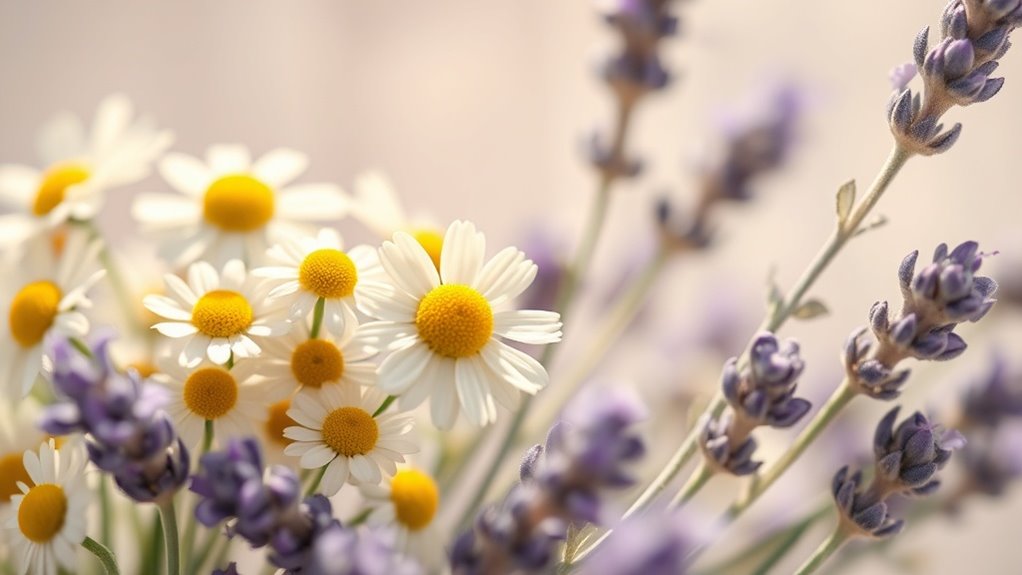
Have you ever wondered how simple herbs can promote deep relaxation and help your body recover? Herbal tea blends featuring chamomile and lavender are gentle yet powerful tools for calming your mind and body. These herbs are renowned for their aromatherapy benefits, which can reduce stress and improve sleep quality. When you sip chamomile and lavender tea, you’re not only hydrating but also engaging in a holistic practice that nurtures your nervous system. Their soothing properties may ease anxiety and promote restful sleep, essential for recovery. The aroma of lavender, in particular, has been shown to lower cortisol levels, further supporting relaxation. Incorporating these herbs into your routine offers a compassionate, evidence-based approach to self-care, helping you unwind naturally. Whether through herbal tea blends or aromatherapy, chamomile and lavender provide a gentle pathway to restore balance and foster deep, restorative rest.
Ashwagandha and Rhodiola: Adaptogenic Support for Stress and Fatigue
Did you know that certain herbs can naturally help your body adapt to stress and combat fatigue? Ashwagandha and Rhodiola are powerful adaptogens that support your resilience during challenging times. These herbs work by helping regulate your stress management techniques, allowing you to respond more calmly and effectively to daily pressures. Incorporating them into your routine may boost energy levels and reduce feelings of exhaustion without the jitters associated with stimulants. However, it’s crucial to be mindful of herbal supplement interactions, especially if you’re taking medications or other supplements. While generally gentle, these herbs can influence hormone levels and neurotransmitters, so consulting with a healthcare provider ensures safe use. By embracing adaptogenic herbs like Ashwagandha and Rhodiola, you nurture your body’s natural ability to recover, fostering a sense of balance and vitality necessary for restful rest and sustainable recovery.
Turmeric and Ginger: Natural Anti-Inflammatory Powerhouses
Building on the idea of supporting your body’s resilience, incorporating natural anti-inflammatory herbs like turmeric and ginger can substantially enhance your recovery process. These herbs work through herbal synergy, amplifying their anti-inflammatory benefits and promoting healing from within. Turmeric’s active compound, curcumin, is renowned for reducing inflammation and oxidative stress, while ginger’s bioactive compounds help soothe soreness and improve circulation. Together, they offer a holistic approach to managing inflammation, supporting tissue repair, and easing discomfort. Consider adding these powerful herbs to your diet regularly for sustained benefits. To deepen your understanding, here’s a quick comparison:
| Herb | Main Anti-Inflammatory Compound | Key Benefits |
|---|---|---|
| Turmeric | Curcumin | Reduces inflammation, boosts immunity |
| Ginger | Gingerol | Eases muscle soreness, improves circulation |
| Synergy | Combined effect | Enhanced anti-inflammatory response |
This herbal duo nurtures your body’s natural healing, fostering resilience and balance.
Common Questions
Are Natural Herbs Safe for Long-Term Use?
Herb safety for long-term use varies depending on the herb and your individual health. While many natural herbs can support your well-being, it’s important to be cautious with long-term use, as some may cause adverse effects or interact with medications. Always consult with a healthcare professional to guarantee safe, evidence-based use. Your holistic approach should include moderation, proper dosages, and attentive listening to your body’s signals.
Can Herbs Replace Prescribed Medications for Rest and Recovery?
Can herbs truly replace prescribed medications for rest and recovery? While herbal efficacy varies, they often serve as gentle, holistic alternative treatments that can support your body’s natural healing processes. However, don’t overlook the importance of consulting healthcare professionals, especially for serious conditions. Herbs can complement, but shouldn’t necessarily replace, prescribed treatments—your overall well-being depends on a balanced, informed approach rooted in compassion and evidence.
How Should Herbs Be Properly Dosed for Optimal Benefits?
To guarantee ideal herbal intake, follow herb dosing guidelines carefully, starting with small doses and gradually increasing as needed. Always consult a healthcare professional or herbalist for personalized advice, especially if you’re on medications or have health conditions. Listen to your body and monitor for any adverse effects. Proper dosing is key to harnessing herbs’ natural benefits safely and effectively, supporting your overall rest and recovery holistically.
Are There Any Known Interactions Between Herbs and Supplements?
Imagine you’re taking St. John’s Wort for mood, but you also use blood thinners; herb-drug interactions could increase bleeding risks. Yes, herb-drug interactions and supplement-herb conflicts are real and can affect your health. It is crucial to consult a healthcare professional before combining herbs and supplements, as some may interfere with medications or reduce efficacy. Staying informed and cautious ensures your natural remedies support your well-being safely.
Which Herbs Are Best Suited for Specific Sleep Disorders?
For specific sleep disorders, herbal sleep aids like valerian root and passionflower can help with chronic insomnia, promoting relaxation and deeper rest. If you struggle with difficulty falling asleep, melatonin-rich herbs like lavender and chamomile are gentle remedies. Always consider individual needs and consult a healthcare professional to guarantee safety and effectiveness. These natural remedies can support your journey toward restorative sleep, fostering overall well-being with compassion and holistic care.