
To train your body for consistent sleep, establish a fixed sleep schedule by going to bed and waking up at the same time daily, including weekends. Optimize your environment with blackout curtains, comfortable temperature, and minimal noise. Limit blue light exposure and screen time 30-60 minutes before bed. Incorporate regular physical activity and manage stress with relaxation techniques. Avoid stimulants and heavy meals in the evening. Mastering these practices will markedly improve your sleep consistency; uncover more effective strategies below.
Key Points
- Establish a consistent sleep schedule with fixed bedtimes and wake times daily, including weekends.
- Optimize your sleep environment by controlling light, noise, and temperature, and develop calming pre-sleep routines.
- Limit screen exposure at least 30-60 minutes before bed and use blue-light filters to support melatonin production.
- Incorporate regular physical activity during the day and avoid stimulants like caffeine and heavy meals before sleep.
- Practice relaxation techniques such as deep breathing or meditation 20-30 minutes before bed to reduce stress and promote sleep.
Establish a Consistent Sleep Schedule
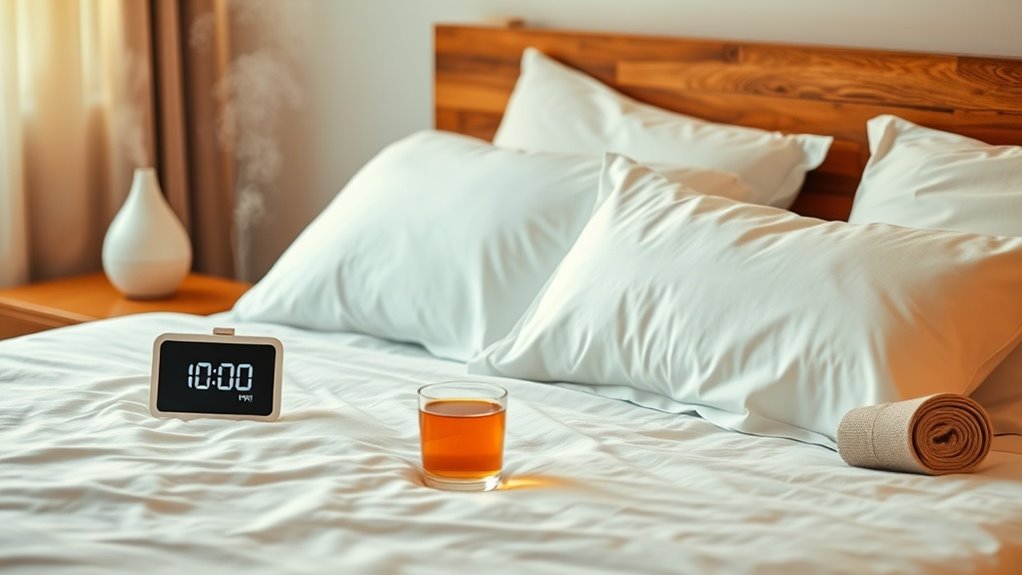
Establishing a consistent sleep schedule is fundamental to optimizing sleep quality and regulating your circadian rhythm. Achieving sleep consistency involves maintaining a fixed bedtime and wake time daily, even on weekends, to reinforce your body’s internal clock. Variability in sleep timing disrupts circadian alignment, leading to fragmented sleep and diminished restorative processes. A stable schedule enhances sleep efficiency and reduces sleep latency, enabling you to fall asleep faster and achieve deeper sleep stages. To support this, your bedtime routine should be synchronized with your sleep schedule, aiding in conditioned sleep cues. Consistency in sleep timing stabilizes hormonal fluctuations, such as melatonin and cortisol, which govern sleep-wake cycles. By enforcing a predictable pattern, you optimize your body’s natural circadian signals, resulting in more restorative sleep and improved daytime alertness. Ultimately, sleep consistency is a foundational element that underpins all other sleep hygiene practices.
Create a Relaxing Bedtime Routine
Creating a relaxing bedtime routine is essential for signaling your body that it’s time to wind down and prepare for sleep. Establishing consistent calming activities helps reinforce your circadian rhythm and reduces physiological arousal. Incorporate bedtime aromatherapy with essential oils such as lavender or chamomile, which have proven sedative properties that promote relaxation. Complement this with a calming music selection—preferably slow-tempo, instrumental tracks—to lower heart rate and cortisol levels. Avoid stimulating activities and bright lights, focusing instead on creating an environment conducive to rest. The routine should be predictable and short, ideally 20 to 30 minutes, to condition your body for sleep onset. Consistency is critical; over time, these cues will become associated with sleep, enhancing your ability to fall asleep more quickly and maintain restorative sleep cycles. This deliberate approach optimizes your sleep hygiene and supports overall sleep quality.
Limit Exposure to Screens Before Bed
Reducing exposure to screens before bed is essential because the blue light emitted by smartphones, tablets, and computers suppresses melatonin production, the hormone responsible for regulating sleep-wake cycles. Excessive screen time during the evening disrupts the circadian rhythm, making it more difficult to fall asleep and reducing sleep quality. Bedtime electronics emit high levels of blue light that interfere with natural melatonin secretion, prolonging sleep onset and fragmenting sleep architecture. To optimize sleep, it’s crucial to establish a cut-off time for screen use at least one hour before bed. Implementing this limit minimizes blue light exposure, allowing melatonin levels to rise naturally. This practice not only enhances sleep latency but also improves overall sleep architecture. Reducing screen time before sleep is a vital step in establishing a consistent sleep schedule and ensuring restorative rest. Maintaining disciplined bedtime electronics use directly supports healthier circadian alignment and sleep quality.
Optimize Your Sleep Environment
Enhancing your sleep environment involves controlling light levels, temperature, and noise to promote better sleep quality. Proper light management signals your body’s circadian rhythm, while maintaining an ideal temperature prevents disruptions. Minimizing noise distractions ensures a quieter setting, facilitating deeper and more restorative sleep.
Control Light Levels
Controlling light exposure in your sleep environment is essential for maintaining circadian rhythm integrity and ensuring restorative sleep. Proper management of light levels influences circadian cues, signaling your body when to sleep and wake. Use blackout curtains or eye masks to reduce external light, especially during early morning or nighttime. Dimming artificial lights before bed minimizes disruption of melatonin production, aligning your circadian clock with natural cycles. Consider using warm, low-intensity lighting in the evening to support melatonin secretion. The table below summarizes key strategies:
| Light Exposure Minimization | Timing Recommendations | Devices/Tools |
|---|---|---|
| Use blackout curtains | Dim lights 1-2 hours before bed | Eye masks |
| Reduce blue light from screens | Avoid screens 30-60 mins before sleep | Night mode apps, blue-light filters |
Regulate Bedroom Temperature
Maintaining a stable bedroom temperature is essential for achieving consistent, restorative sleep. Proper regulation minimizes disruptions caused by temperature fluctuations, ensuring your body can maintain ideal thermoregulation. To achieve this, focus on enhancing air circulation and insulation quality. Adequate air circulation prevents heat buildup and promotes even temperature distribution, while high-quality insulation reduces heat transfer, maintaining a consistent environment.
- Ensure good air circulation with fans or ventilation systems
- Use insulation that prevents drafts and heat loss
- Adjust thermostat settings to maintain a temperature between 60-67°F (15-19°C)
Minimize Noise Distractions
Since noise disruptions can substantially impair sleep quality, creating a quiet environment is critical for consistent rest. Implementing soundproof windows can markedly reduce external noise infiltration, ensuring a more stable sleep environment. Additionally, noise canceling devices—such as white noise machines or active noise control headphones—effectively mask disruptive sounds, promoting deeper sleep cycles. Properly sealing gaps around doors and windows further minimizes sound penetration. It’s essential to evaluate your specific noise sources and choose appropriate solutions, integrating both structural modifications and electronic devices for ideal results. By proactively managing noise distractions, you establish a consistent sleeping environment that enhances sleep quality and supports overall health. This strategic approach ensures that external disturbances do not compromise your sleep continuity.
Be Mindful of Your Diet and Hydration
Your diet and hydration levels directly influence your sleep quality, as certain foods and fluids can either promote restful sleep or disrupt it. Proper nutrient timing ensures that your body receives essential compounds, like tryptophan and magnesium, which facilitate melatonin production. Maintaining ideal hydration levels prevents nocturnal awakenings caused by dehydration or overhydration. Consuming heavy meals or caffeine close to bedtime can impair sleep onset, while light, sleep-promoting snacks can enhance sleep quality. Adequate hydration supports metabolic processes that regulate sleep-wake cycles but should be balanced to avoid frequent nighttime bathroom visits.
- Prioritize nutrient timing by consuming sleep-supportive foods in the evening.
- Monitor hydration levels to prevent dehydration without overdrinking before bed.
- Avoid stimulants and heavy meals near bedtime to minimize sleep disruptions.
Incorporate Regular Physical Activity

Incorporating regular physical activity enhances sleep quality by promoting deeper, more restorative rest. It also helps regulate your circadian rhythm, aligning your sleep-wake cycle with natural light patterns. Consistent exercise is a proven strategy to optimize sleep efficiency and overall circadian health.
Boosts Sleep Quality
Regular physical activity has been shown to markedly enhance sleep quality by promoting the regulation of circadian rhythms and reducing sleep-disrupting factors such as stress and anxiety. This exercise stimulates the production and balance of sleep hormones, particularly increasing melatonin levels, which facilitate the onset and maintenance of restorative sleep. Additionally, regular activity can improve sleep architecture, leading to more vivid dream recall and deeper sleep phases. Engaging in consistent exercise also reduces arousal levels, contributing to fewer awakenings during the night. To optimize these benefits, incorporate moderate-intensity activity into your routine consistently.
- Enhances sleep hormone regulation, supporting easier sleep onset
- Improves sleep architecture, increasing dream recall
- Reduces stress, minimizing sleep disruptions
Regulates Circadian Rhythm
Consistent physical activity plays a crucial role in synchronizing your internal biological clock, known as the circadian rhythm. Regular exercise influences light exposure patterns, promoting optimal timing and intensity that reinforce your body’s natural cues. This activity also enhances melatonin regulation by supporting the circadian system’s response to environmental signals, ensuring melatonin production occurs at appropriate times. Engaging in moderate exercise, especially during daylight hours, helps reset your internal clock, reducing circadian misalignment. Precise timing of physical activity can reinforce wakefulness during the day and facilitate sleep onset at night. By consistently incorporating exercise into your routine, you strengthen the mechanisms that govern your circadian rhythm, ultimately promoting more stable sleep-wake cycles and improved sleep consistency.
Manage Stress and Practice Relaxation Techniques
Since stress and anxiety can substantially disrupt sleep patterns, implementing effective stress management and relaxation techniques is essential for establishing a stable sleep routine. Engaging in mindfulness meditation can help reduce cortisol levels, promoting a calm mind conducive to sleep. Deep breathing exercises activate the parasympathetic nervous system, decreasing physiological arousal and easing progression into rest. Consistent practice enhances emotional regulation and diminishes sleep-disrupting tension. To optimize results, incorporate these techniques into your pre-sleep routine, preferably 20-30 minutes before bed. Consistency is key; over time, relaxation practices become more effective, leading to more restorative sleep cycles. Prioritizing stress management not only improves sleep quality but also bolsters overall well-being. By systematically reducing stress through these evidence-based techniques, you create a physiological environment favorable for sustained, uninterrupted sleep. This approach forms a foundational component of your holistic sleep training regimen.
Avoid Stimulants and Heavy Meals in the Evening

Consuming stimulants such as caffeine and nicotine or heavy, high-fat meals close to bedtime can markedly impair sleep quality by increasing physiological arousal and delaying sleep onset. Elevated caffeine intake, especially within six hours of sleep, prolongs alertness by antagonizing adenosine receptors, disrupting circadian regulation. Similarly, nicotine acts as a stimulant, stimulating the sympathetic nervous system and reducing sleep efficiency. Heavy dinners, characterized by high-fat content, slow gastric emptying and elevate core body temperature, both of which interfere with sleep initiation and maintenance. To optimize sleep, it is essential to limit caffeine intake in the late afternoon and evening and avoid heavy dinners at least two to three hours before bedtime. These measures reduce physiological arousal, facilitate natural sleep onset, and promote restorative sleep cycles. Adherence to these guidelines supports the body’s shift into a relaxed, sleep-ready state, contributing to overall sleep consistency and quality.
Stick to Your Routine Even on Weekends
Maintaining your sleep routine throughout the week, including weekends, reinforces your body’s circadian rhythm and minimizes disruptions to sleep quality. Consistency in sleep and wake times helps regulate hormonal processes and promotes restorative sleep, even amidst varying weekend habits or social commitments. To achieve this, set a fixed bedtime and wake time, regardless of social activities or weekend plans. This constancy ensures your body adapts and sustains a stable sleep pattern.
- Limit late-night social commitments to avoid altering sleep timing.
- Maintain similar sleep schedules on weekends as weekdays.
- Use alarms to reinforce wake times and prevent oversleeping.
Common Questions
How Does Temperature Affect Sleep Quality and Duration?
Temperature crucially impacts sleep quality and duration through temperature regulation within your sleep environment. Ideal sleep occurs when the ambient temperature is between 60-67°F (15-19°C), facilitating core body temperature decreases essential for sleep onset and maintenance. An environment that’s too hot or cold disrupts this regulation, leading to fragmented sleep and shorter duration. Maintaining a consistent, cool sleep environment supports better sleep by promoting natural thermoregulation and reducing sleep disturbances.
Can Certain Scents Improve Sleep Consistency?
Yes, certain scents can improve sleep consistency through aromatherapy benefits. Scent relaxation, achieved with essential oils like lavender or chamomile, promotes the parasympathetic nervous system, reducing stress and enhancing sleep quality. Scientific studies support that aromatherapy benefits include decreased sleep onset latency and increased sleep duration. Incorporating these scents into your bedtime routine can create a calming environment, thereby fostering more consistent, restful sleep patterns over time.
What Role Do Natural Light Exposure and Circadian Rhythms Play?
Think of natural light exposure as the sun’s guiding hand, aligning your circadian rhythms like a conductor directing an orchestra. Proper light therapy during the day boosts melatonin regulation, signaling your body when to wake and sleep. This synchronization guarantees your internal clock runs smoothly, enhancing sleep consistency. Prioritize morning sunlight and limit artificial light at night to reinforce this natural rhythm, optimizing your sleep-wake cycle effectively.
How Does Sleep Consistency Impact Overall Mental Health?
Maintaining sleep consistency greatly enhances your mental health by stabilizing mood and reducing anxiety. It supports effective stress management and promotes cognitive function. Incorporating mindfulness meditation can improve sleep quality and consistency, further benefiting mental health. Disrupted sleep patterns impair neural processes related to emotional regulation, increasing vulnerability to mental health disorders. Consequently, establishing a regular sleep schedule is vital for essential psychological resilience and overall well-being, especially when combined with stress reduction techniques.
Are There Specific Sleep Training Techniques for Shift Workers?
Shift workers should prioritize optimizing their sleep environment through blackout curtains, noise reduction, and cool temperatures to promote restful sleep. Implementing consistent sleep scheduling, even on days off, helps regulate circadian rhythms. Strategic light exposure and avoiding stimulants before sleep are essential. These targeted sleep training techniques enhance sleep quality, reduce fatigue, and improve overall health, ensuring shift workers maintain alertness and performance despite irregular schedules.